
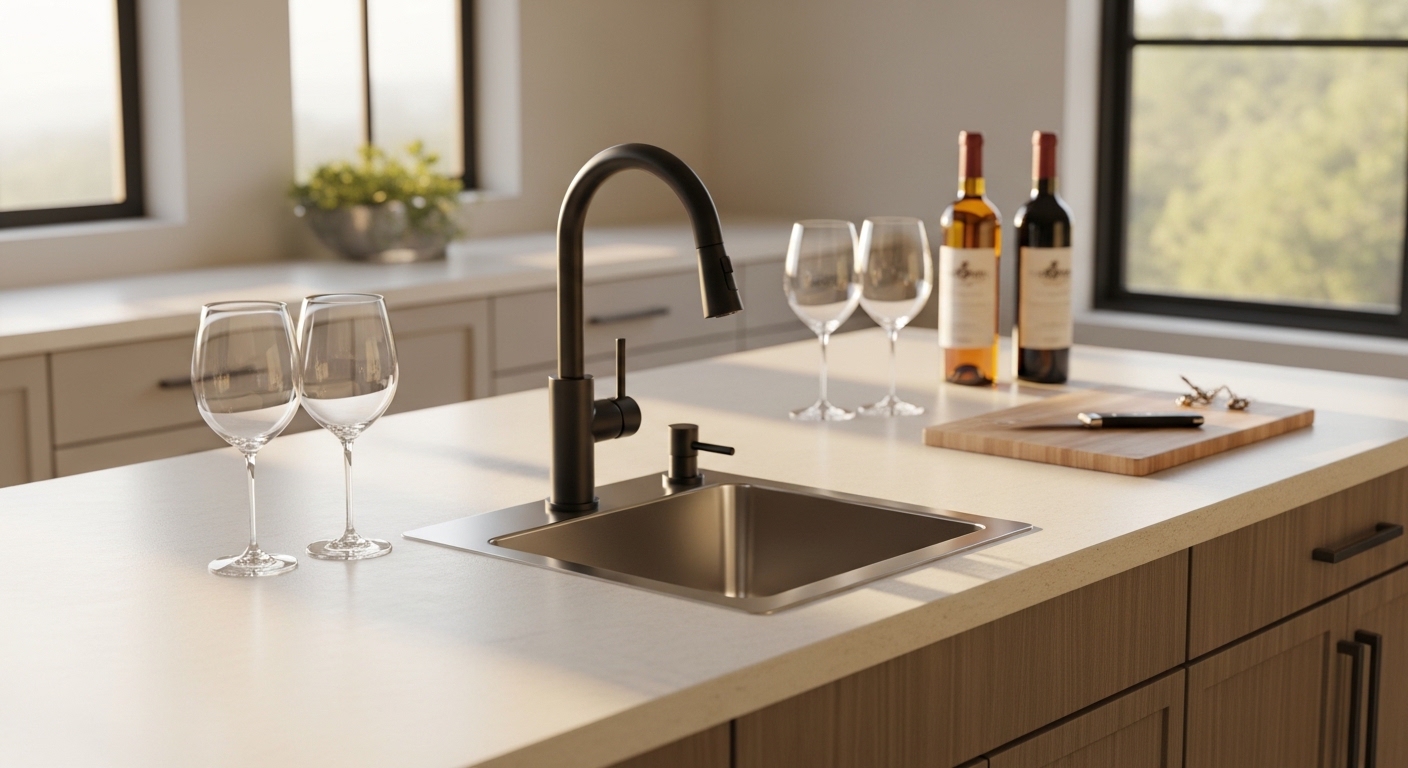
If you’re building a wet bar, an island prep station, or a coffee corner, your bar tap menu is simply the short list of bar faucet options worth considering for that small, secondary sink — not a beer list. A bar tap (also called a bar faucet or prep faucet) is a compact, lower-flow faucet built for a bar sink that’s usually 9 to 15 inches wide. Get the sizing and mounting right and it works flawlessly; get it wrong and the spout either splashes the countertop or can’t reach the drain. This guide walks through every real decision on that menu, with concrete specs and prices so you can pick once and be done.
What exactly is a bar tap, and how is it different from a regular kitchen faucet?
A bar tap is a scaled-down kitchen faucet made for a small secondary sink — think wet bars, butler’s pantries, coffee stations, and island prep sinks. The difference is size and flow: bar faucets are shorter, narrower, and typically flow at 1.0–1.5 gallons per minute, versus 1.8 GPM for a full kitchen faucet. They’re designed to rinse a glass, fill a cocktail shaker, or wash a few berries — not to fill a stockpot.
That smaller footprint matters. A bar sink is often only 6–7 inches deep and sits close to a backsplash or the edge of an island, so a towering commercial-style faucet looks out of scale and sprays water everywhere. The bar tap menu exists precisely because a standard kitchen faucet is usually the wrong tool for a compact sink.
- Spout height: Bar faucets range from low (8–10″) to high-arc gooseneck (12–15″). High-arc gives clearance for filling tall bottles and pitchers.
- Reach: The spout should drop water into the center of the drain — usually 6–9 inches of horizontal reach for a small sink.
- Flow: 1.0–1.5 GPM is standard; lower flow saves water and reduces splashing in a shallow basin.
- Function: Some are cold-water-only (common for pure prep/rinse bars); most home installs use hot and cold.
Which bar tap style is best for my sink — pull-down, gooseneck, or single-lever?
For most home wet bars, a single-handle gooseneck bar faucet is the best all-rounder; add a pull-down spray head only if you regularly rinse produce or wash tall glassware. The right pick depends on how you actually use the sink, not on what looks most dramatic in a showroom.
Here’s the honest breakdown of the four styles you’ll see on almost any bar tap menu:
| Bar tap style | Best for | Typical price | Watch out for |
|---|---|---|---|
| Single-lever gooseneck (high-arc) | Wet bars, coffee stations, small island sinks | $70–$160 | Can splash in very shallow (under 6″) basins |
| Pull-down bar faucet | Rinsing produce, washing pitchers and shakers | $110–$220 | Needs clearance behind sink for the hose to retract |
| Low-profile single-hole | Bars under a window or low upper cabinet | $60–$130 | Limited bottle-fill clearance |
| Two-handle bridge / vintage | Traditional and farmhouse-style bars | $150–$350 | Needs a 2- or 3-hole sink; harder to install |
If you’re cross-shopping full-size options too, it’s worth reading through real-world kitchen faucet reviews buyers actually trust — the same cartridge and finish lessons apply to bar taps, just in a smaller body.
How tall and how far should a bar faucet reach for a small prep sink?
Aim for a spout that clears the tallest thing you’ll fill (usually a 10–12″ bottle or pitcher) while the water lands in the center of the drain — for most bar sinks that means 10–14″ of spout height and 6–9″ of reach. Measure before you buy; this is where the most returns happen.
Three quick measurements save you the headache:
- Clearance above: Measure from the sink deck to the bottom of any window sill or upper cabinet. Your faucet’s total height must fit with a few inches to spare so the handle can lift fully.
- Reach to drain: Measure from the mounting hole to the center of the drain. The spout’s reach should match this so water doesn’t hit the basin wall and splash.
- Basin depth: Deeper is quieter. A 6″+ basin with a high-arc spout dramatically reduces splash versus a shallow 4″ bar sink.
If your bar sink is deep or vessel-style, the same reach math applies as it does for bathrooms — our guide to the best long spout reach faucet for a deep or vessel sink breaks down exactly how to match reach to basin depth so you never fight splashing.
What finish should I pick so my bar tap matches my kitchen?
Match your bar tap to your existing kitchen faucet and cabinet hardware, not to a trend — matte black and brushed nickel are the safest, most forgiving finishes for a bar because they hide water spots and fingerprints. A bar sink sits in the open on an island or back counter, so it’s very visible; a mismatched finish reads as an afterthought.
- Matte black: Modern, hides spots best, pairs with almost any counter. The most popular bar tap finish in 2026.
- Brushed / satin nickel: Warm-neutral, extremely forgiving of fingerprints, works with stainless appliances.
- Chrome: Cheapest and easiest to clean, but shows water spots on a bar that’s used with hard water.
- Champagne bronze / brushed gold: Warm and upscale for statement wet bars; make sure your cabinet hardware matches.
- Oil-rubbed bronze: Rich, traditional, great for farmhouse and transitional bars.
If you’re leaning modern and monochrome, the same rules we cover in the best matte black faucet for a vessel sink guide apply to a bar tap — look for a genuine PVD or powder-coat finish, not a painted one, so it survives daily wiping. For warm-metal bars, the finish durability lessons in our oil rubbed bronze kitchen faucet with sprayer buyer’s guide carry over directly.
Cold-only or hot-and-cold — which bar tap do I actually need?
Get a hot-and-cold bar tap unless your bar is purely for rinsing and filling water, in which case a cold-only tap is cheaper and simpler to plumb. Most home wet bars benefit from hot water for cleaning glassware and mixing, but a dedicated ice/water rinse station doesn’t need it.
The practical trade-offs:
- Hot and cold: Standard single-lever or two-handle mixer. Needs both hot and cold supply lines run to the bar sink. Best for versatility.
- Cold-only: A single-supply tap. Cheaper, simpler, and common at pure prep or beverage stations. Just confirm the faucet is sold as a single-hole cold tap.
- Filtered water add-on: Many bars add a small filter or a dedicated filtered-water tap. If clean drinking water is the goal, our tap water filter buyer’s guide explains what actually improves taste and safety.
How do I install a single-hole bar tap myself?
Most single-hole bar taps install in under an hour with basic tools — you drop the faucet through the sink’s mounting hole, secure it from below with a mounting nut, and connect the flexible supply lines to your shutoff valves. No plumber needed for a straightforward swap.
Here’s the sequence for a typical single-hole bar faucet:
- Shut off the hot and cold supply valves under the bar sink and open the old faucet to release pressure.
- Disconnect the supply lines and remove the old faucet’s mounting nut, then lift it out.
- Feed the new faucet’s supply lines and threaded shank down through the mounting hole (use the deck plate only if you’re covering extra holes).
- Tighten the mounting nut from below by hand, then a quarter-turn with a basin wrench — don’t overtighten.
- Connect the flexible supply lines to the shutoff valves; hand-tight plus a snug wrench turn.
- Turn the water back on, remove the aerator, and run the faucet 30 seconds to flush debris before reinstalling the aerator.
If your existing setup uses rigid copper instead of braided supply lines, the process is a little different — our walkthrough on how to replace a kitchen faucet with copper supply lines shows exactly how to adapt them safely.
What should I actually spend on a bar tap in 2026?
For a home wet bar, $80–$180 buys a genuinely good solid-brass bar tap with a ceramic-disc cartridge that will last 10+ years; below $50 you’re usually getting a zinc or plastic body that pits and leaks within a couple of years. Spending more than $200 mostly buys designer styling and premium finishes, not better function.
What separates a durable bar tap from a disposable one:
- Body material: Solid brass is the gold standard. Zinc-alloy bodies are cheaper but corrode faster — the same reason we push buyers toward brass in our best basin tap brands guide.
- Cartridge: A ceramic-disc cartridge gives drip-free performance for years. Rubber-washer valves fail sooner. If yours ever drips, our guide on how to fix a leaking tap valve in under an hour covers the repair.
- Aerator: Look for a replaceable, standard-thread aerator so you can swap it for a low-flow or filter model later.
- Warranty: Reputable bar taps carry a limited lifetime warranty on the finish and cartridge. If there’s no warranty, that tells you what the maker thinks of it.
The avovida bar tap menu at a glance
Here’s how the main bar tap choices stack up so you can match one to your setup quickly:
| Your setup | Recommended bar tap | Finish pick | Budget |
|---|---|---|---|
| Modern island prep sink | Single-lever high-arc gooseneck | Matte black | $90–$150 |
| Busy wet bar, lots of rinsing | Pull-down bar faucet | Brushed nickel | $130–$200 |
| Bar under a window | Low-profile single-hole | Chrome or nickel | $60–$110 |
| Farmhouse / traditional bar | Two-handle bridge | Oil-rubbed bronze | $160–$300 |
| Pure water/rinse station | Cold-only single tap | Any | $45–$90 |
FAQ
Is a bar tap the same as a bar faucet?
Yes. “Bar tap,” “bar faucet,” and “prep faucet” all refer to the same thing: a compact faucet made for a small secondary sink at a wet bar, coffee station, or island prep area. The word “tap” is more common in the UK and “faucet” in the US, but they describe the identical product.
Can I use a regular kitchen faucet on a bar sink instead of a bar tap?
You can, but it’s usually a bad fit. A full-size kitchen faucet is taller and has a longer reach than a small bar sink needs, so it looks oversized and splashes water onto the counter. It also flows faster (1.8 GPM vs. 1.0–1.5 for a bar tap), which overwhelms a shallow basin. Stick with a purpose-built bar faucet unless your bar sink is genuinely large.
Do bar taps need hot water?
Not always. If your bar is only for rinsing glasses and filling water, a cold-only tap is cheaper and simpler. But most home wet bars run both hot and cold so you can clean glassware and mix drinks with warm water. Check whether your bar sink location already has a hot supply line before deciding.
What size mounting hole does a bar tap need?
Most single-hole bar taps fit a standard 1⅜-inch (35 mm) sink hole. Two-handle and bridge styles need two or three holes, typically on 4-inch or 8-inch centers. Always confirm your sink’s hole count and spacing against the faucet’s spec sheet before buying — this is the number-one cause of returns.
How long should a good bar faucet last?
A solid-brass bar tap with a ceramic-disc cartridge should last 10–15 years or more with normal home use, and reputable brands back the finish and cartridge with a limited lifetime warranty. Cheap zinc or plastic-bodied taps often start leaking or pitting within 2–3 years, which is why the body material matters more than the price tag.
Can I add a soap dispenser or filter to my bar tap setup?
Absolutely — many bar sinks have an extra hole for a matching soap dispenser or a dedicated filtered-water tap. If you want a coordinated look, our guide to a brushed nickel faucet with soap dispenser shows how to match the dispenser finish to your tap so the whole bar looks intentional.
The bottom line on building your bar tap menu
Your ideal bar tap comes down to matching four things to your actual sink: the right spout height and reach, single-hole mounting for most installs, a finish that echoes your existing hardware, and a solid-brass body with a ceramic-disc cartridge. Nail those and a $90–$180 bar faucet will serve your wet bar reliably for a decade or more. Measure first, match your finish, and buy the quality build — that’s the whole menu.
Author note: This guide was written by the avovida fixtures team, which has spent years testing kitchen, bar, and bathroom faucets for real-world durability, flow, and finish wear. avovida is a specialist faucet and bathroom-fixtures retailer at avovida.net; our recommendations prioritize solid-brass construction, ceramic-disc cartridges, and finishes that meet standard salt-spray and abrasion testing, and we favor products backed by a manufacturer limited lifetime warranty on the finish and cartridge.