
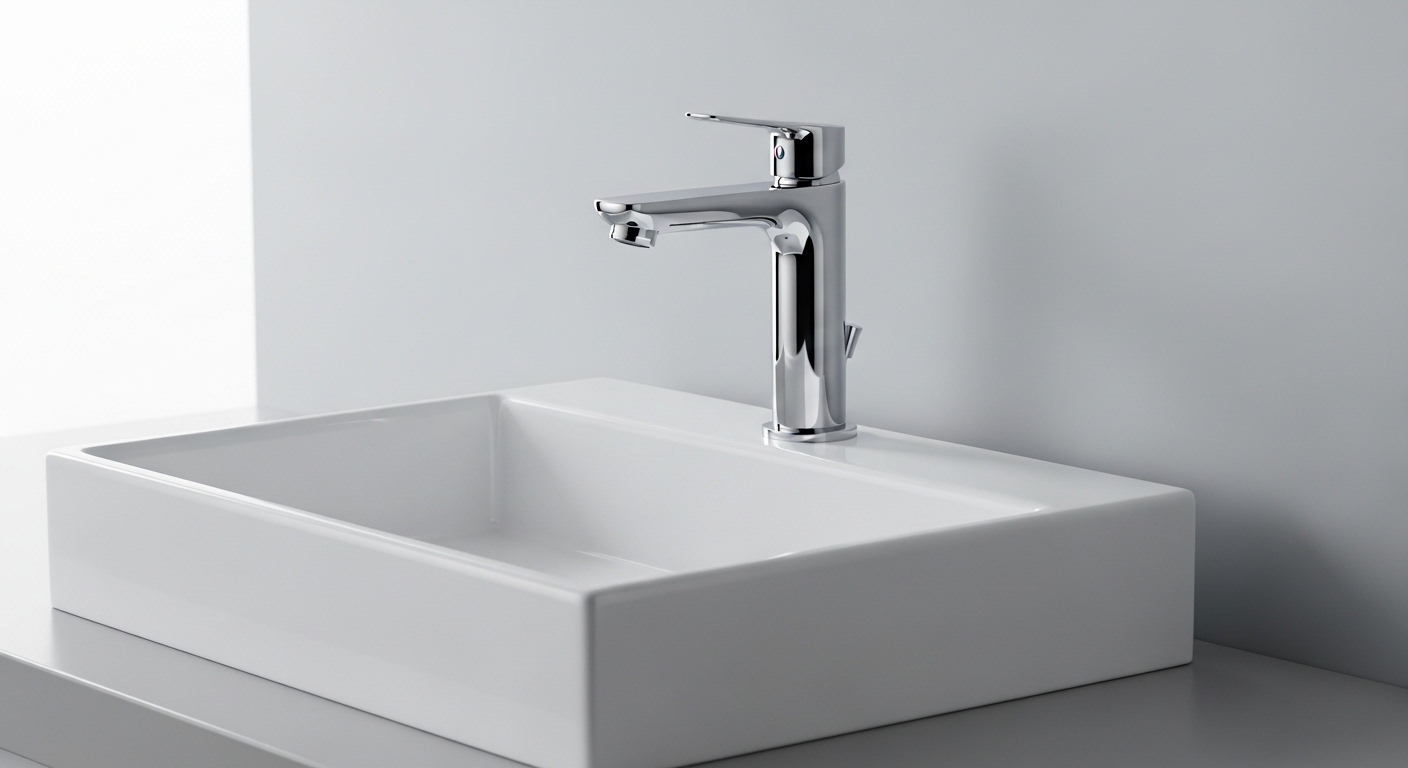
If you’ve been shopping for a clean, minimalist basin tap, the baril zip single hole faucet keeps coming up — and for good reason. It’s a single-lever, deck-mounted bathroom faucet from Baril Design, a Quebec-based fixture manufacturer, built around a narrow cylindrical body that suits contemporary vanities, floating sinks, and small powder rooms where a bulky spout would look out of place. Below, we’ll walk through who it’s actually for, what you’re paying for, how it compares to the alternatives, and the real-world gotchas nobody mentions until after you’ve installed it.
What exactly is the Baril Zip single hole faucet, and who is it for?
The Baril Zip is a single-hole, single-handle bathroom lavatory faucet with a compact upright body and a side-mounted or top-mounted lever, designed for one pre-drilled hole in the sink or countertop. It’s aimed at homeowners and designers doing modern or transitional bathrooms who want a discreet, uncluttered faucet that doesn’t dominate a small basin.
Baril (full name Baril Design Ltée) has been making faucets in Saint-Hyacinthe, Quebec since the 1980s, and the Zip sits in their mid-range “designer” tier — nicer than a big-box builder-grade tap, but below high-end European names like Vola or Dornbracht. The “Zip” name refers to the family/collection; within it you’ll usually find matching tub fillers, shower trims, and bidet fixtures, which matters if you want your whole bathroom to match.
Concretely, this faucet is a good fit if you:
- Have a single pre-drilled hole (standard 1-3/8″, or 35 mm) in your sink or vanity top.
- Want a slim, tall, modern silhouette rather than a wide-spread or a chunky waterfall spout.
- Care about a real brass body and a ceramic disc cartridge instead of a plastic-heavy budget tap.
- Are matching other fixtures in the same Baril collection for a coordinated look.
It’s a weaker fit if you have a three-hole (8″ widespread or 4″ centerset) sink, if you need an extra-tall spout to clear a deep vessel bowl, or if you’re on a tight builder budget where a $60 faucet will do the job.
How much does the Baril Zip cost, and is it worth the price?
Expect to pay roughly CAD $250–$450 (about USD $185–$330) for the Baril Zip single hole faucet, depending on finish and retailer — chrome is cheapest, while brushed gold, matte black, and brushed nickel run higher. For that money you’re getting a solid-brass body, a ceramic disc cartridge rated for hundreds of thousands of open/close cycles, and Canadian assembly with a lifetime warranty on the cartridge and finish.
Is it worth it? For a mid-range modern bathroom, yes — you’re paying a real premium over a $60 hardware-store tap, but you’re getting materials and a cartridge that should outlast two or three cheap faucets. Where it stops being “worth it” is if you’d be equally happy with a generic single-hole tap and don’t care about the collection match or the brass weight in your hand. If you’re weighing metals more broadly, our breakdown of whether a zinc bathroom faucet is worth buying versus spending more on brass explains exactly why the body material justifies a chunk of that price gap.
What do you actually get in the box?
A typical Baril Zip single-hole order includes the faucet body and handle, the ceramic cartridge pre-installed, a mounting kit (threaded stud, washer, and a bottom nut for under-counter tightening), two flexible supply hoses (usually 3/8″ compression), and — depending on the SKU — a matching pop-up or push (click-clack) drain assembly. Always check the product listing, because some Baril single-hole SKUs ship without the drain, and adding a matching finish drain separately can cost another $60–$120.
Baril Zip vs. other single hole faucets: how does it compare?
The honest answer: the Baril Zip competes on build quality and finish selection, not on price. Against a big-box builder faucet it wins on brass content and cartridge longevity; against a European designer faucet it wins on price and Canadian availability but gives up some of the ultra-premium engineering. Here’s how the main options stack up for a single-hole bathroom sink.
| Faucet | Body material | Cartridge | Typical price (CAD) | Best for |
|---|---|---|---|---|
| Baril Zip single hole | Solid brass | Ceramic disc | $250–$450 | Modern mid-range bathrooms, collection matching |
| Big-box builder tap | Zinc/brass mix, plastic parts | Ceramic or plastic | $50–$120 | Rentals, tight budgets, quick swaps |
| Moen/Delta designer single-hole | Brass or zinc | Ceramic (Moen 1255 / Delta DIAMOND) | $180–$350 | Wide parts availability, US warranty support |
| European premium (Vola/Dornbracht) | Solid brass | Ceramic disc | $700–$1,600+ | High-end design builds, budget no object |
Notice the middle-ground position: the Zip lands right where Moen and Delta’s nicer single-hole faucets live on price, so the real decision often comes down to design language (Baril’s is more European-minimalist) and whether you want a whole matching Baril suite. If cross-brand debates help you decide, the same tradeoffs show up in our look at what Reddit actually says about Moen vs. Kohler — the material-and-cartridge logic is identical even though that one’s about kitchen taps.
What finishes does the Baril Zip come in, and which lasts longest?
The Baril Zip is typically offered in polished chrome, brushed nickel, matte black, and a brushed/PVD gold, with availability varying by season and retailer. If you want the most durable, forgiving finish, go with brushed nickel or a PVD-coated finish — they hide water spots and toothpaste splatter far better than polished chrome or matte black, both of which show every fingerprint and mineral speck.
A quick reality check on each:
- Polished chrome — cheapest, extremely durable, but shows water spots badly in hard-water homes.
- Brushed nickel — the “set it and forget it” choice; hides spots and scratches, easiest to keep looking clean.
- Matte black — striking on a white basin, but hard water leaves visible chalky rings, and it needs regular wipe-downs.
- Brushed gold (PVD) — warm and on-trend; a proper PVD coating resists tarnish well, but confirm the listing says PVD, not plated.
If matte black is what you’re picturing on a bowl-style basin, it’s worth reading our guide to the best matte black faucet for a vessel sink first — spout height and reach matter a lot more on a raised bowl than on a drop-in basin, and the Zip’s compact body isn’t always tall enough.
Will the Baril Zip fit my sink, and how hard is it to install?
It fits any sink or vanity top with a single hole around 1-3/8″ (35 mm) and a deck thickness the included stud can clamp — which covers the vast majority of modern vessel and drop-in basins. Installation is a genuine DIY job for most people: budget about 45–60 minutes with basic tools, no soldering required.
Before you buy, measure three things: the hole diameter (must be ~35 mm), the spout height and reach versus your basin (a low spout over a tall vessel bowl means splashing), and the deck thickness (very thick stone countertops occasionally need a longer stud). Also confirm your supply line connections — the Zip uses standard 3/8″ flexible hoses, so you’ll want 3/8″ compression shutoff valves under the sink or the right adapter.
How do you install a Baril Zip single hole faucet step by step?
Here’s the short version of a standard single-hole install:
- Shut off the hot and cold angle valves under the sink and open the old faucet to release pressure.
- Disconnect the supply lines and remove the old faucet’s mounting nut, then lift it out.
- Feed the Zip’s supply hoses and threaded stud down through the single hole; seat the base gasket so it’s flat.
- Tighten the bottom washer and nut by hand, then snug with a wrench — firm, not gorilla-tight, so you don’t crack the base seal.
- Connect the hoses to the hot and cold valves (hot on the left), using thread tape on threaded fittings.
- Turn the water back on slowly, run the faucet, and check every joint for drips before you walk away.
If a joint weeps after you turn the water on, don’t panic — most leaks are a loose compression nut or an unseated washer. Our walkthrough on how to fix a leaking tap valve yourself in under an hour covers exactly these post-install drips, and the essential chrome faucet parts guide is handy if you ever need to identify a cartridge, aerator, or washer for a replacement down the line.
What are the downsides of the Baril Zip you should know before buying?
The honest weak spots: parts and service can be slower than mainstream US brands, the drain isn’t always included, and the compact spout can be too short for tall vessel bowls. None of these are dealbreakers, but they’re the things people wish they’d known.
A few specifics worth weighing:
- Parts availability. Baril is a smaller Canadian brand, so a replacement cartridge is easy to order from Baril or a Canadian plumbing supplier, but you won’t grab one off a US big-box shelf like a Moen 1255. Keep your model number.
- Spout reach and height. The Zip’s slim body is on the shorter side; over a deep or tall vessel sink, water can land close to the back wall of the bowl and splash. Measure first.
- Drain sold separately on some SKUs. Factor in $60–$120 for a matching pop-up if it’s not bundled.
- Finish care. Matte black and polished chrome both show hard-water spotting; if you’re on well water or hard municipal water, lean brushed nickel.
How do you keep a Baril Zip looking new?
Wipe it down with a soft, damp cloth and dry it after use — that single habit prevents 90% of the water-spotting and mineral buildup people complain about. Avoid abrasive pads, ammonia, or acidic descalers directly on the finish; for stubborn limescale on the aerator, unscrew it and soak just the aerator in a 50/50 white vinegar solution, then rinse.
For the cartridge, the good news is a quality ceramic disc barely needs attention. If flow drops over time, it’s almost always a clogged aerator (mineral debris), not the cartridge — clean the aerator first before assuming anything’s broken. If the handle gets stiff or drips, that’s when the cartridge may need swapping, and Baril’s lifetime cartridge warranty typically covers the part.
FAQ
Is the Baril Zip single hole faucet made of solid brass?
Yes. The Baril Zip body is solid brass, which is why it feels heavier than a comparable zinc or plastic-bodied budget faucet and why it resists corrosion better over the long term. The brass core is what justifies much of its mid-range price.
Does the Baril Zip come with a drain?
It depends on the SKU. Some Baril Zip single-hole listings bundle a matching pop-up or click-clack drain in the same finish, while others sell the faucet body alone. Always confirm on the product page, and budget an extra $60–$120 for a matching drain if it isn’t included.
What size hole does the Baril Zip need?
A single hole of about 1-3/8 inches (35 mm), which is the industry standard for single-hole bathroom faucets. If your existing sink has three holes (a centerset or widespread configuration), you’ll need a deck plate/escutcheon to cover the extra holes, and not all single-hole faucets support one — check before buying.
Is Baril a good faucet brand?
Baril is a well-regarded mid-range Canadian manufacturer known for solid-brass bodies, ceramic disc cartridges, and a good range of modern finishes, backed by a lifetime cartridge warranty. It’s not a bargain brand, and it’s not ultra-luxury European either — it sits in the sweet spot for design-conscious bathrooms that still want reasonable value.
How long does the Baril Zip faucet last?
With a solid-brass body and a quality ceramic disc cartridge, a well-maintained Baril Zip can easily last 15–20 years or more; the cartridge is a wear part but is covered under Baril’s lifetime warranty and is inexpensive to replace if it ever drips. Regular aerator cleaning and drying the finish are the two habits that extend its life the most.
The bottom line
The Baril Zip single hole faucet is worth it if you want a slim, modern, solid-brass basin tap with a genuine ceramic cartridge and the option to match a full bathroom suite — and you’re okay paying a mid-range price and ordering the occasional part from a Canadian supplier rather than a US big-box shelf. Measure your hole size, spout clearance, and deck thickness, confirm whether the drain is included, and pick brushed nickel or PVD if you’re in a hard-water home. Do that, and it’s an easy fixture to live with for the better part of two decades.
Author’s note: This guide was written by the Avovida fixtures team, who specialize in faucets, shower systems, and bathroom fixtures. We evaluate faucets on body material, cartridge type, finish durability, and real-world installation — and we cross-check manufacturer specs against ANSI/NSF/CSA plumbing standards and each brand’s published warranty terms. Avovida is an independent bathroom-fixtures resource; we aim to give you the same straight answer we’d give a friend, not a sales pitch. Always confirm current specs, finish availability, and warranty terms directly with Baril before purchasing, as SKUs and inclusions change by season and region.