
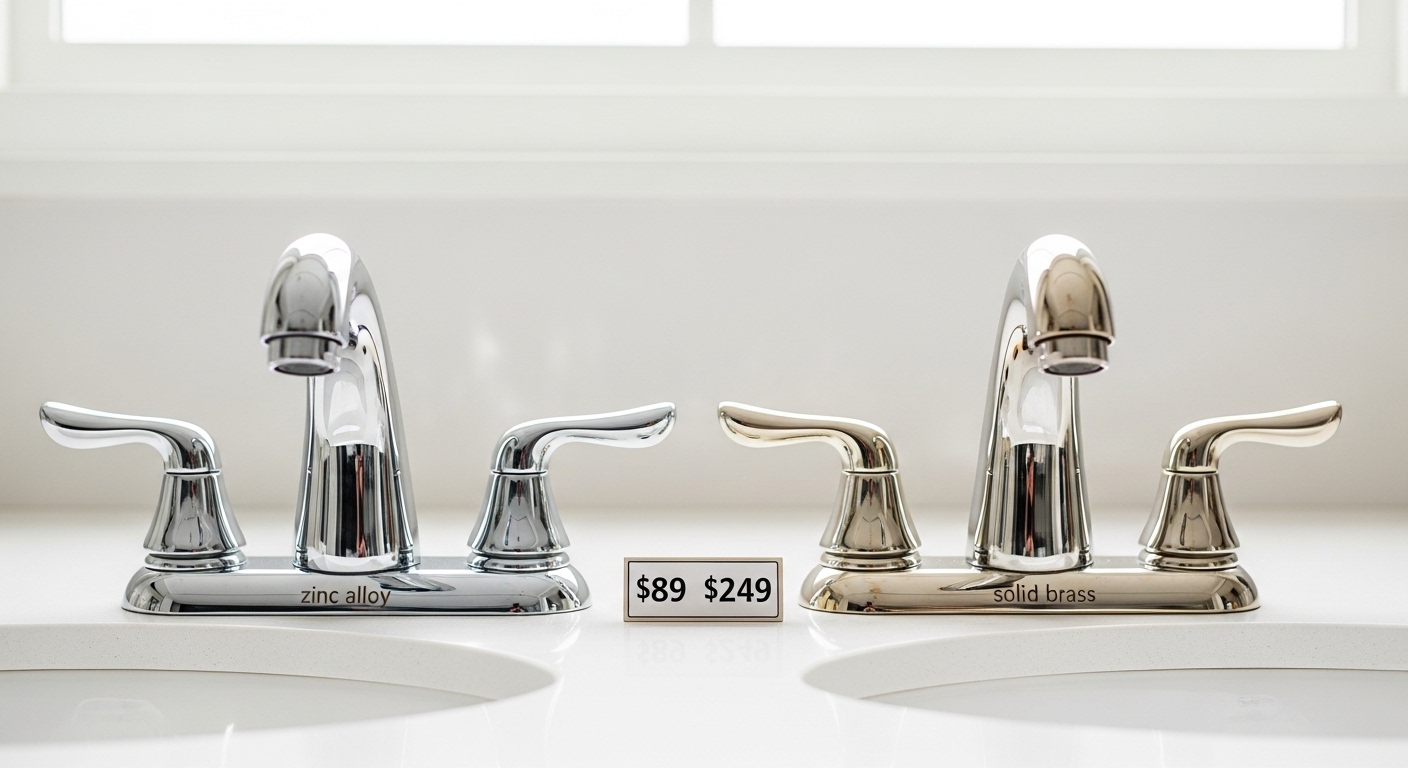
If you’ve been comparing faucets online, you’ve almost certainly run into a zinc bathroom faucet priced well below the brass models sitting right next to it — sometimes half the cost for what looks like the exact same fixture. That price gap is real, and so is the trade-off behind it. Zinc alloy (often labeled “zinc alloy,” “Zamak,” or just “metal”) is a legitimate faucet material used by major brands, but it behaves very differently from brass once it’s living with your water, your humidity, and your daily handle-cranking. This guide breaks down exactly what you’re getting, where zinc genuinely makes sense, and where it’ll cost you more in the long run.
What exactly is a zinc bathroom faucet made of?
A zinc bathroom faucet is built from zinc alloy — usually Zamak, a mix of zinc, aluminum, magnesium, and a little copper — die-cast into the faucet body and handles, then plated with chrome, brushed nickel, or another finish. The shiny surface you see and touch is almost never the zinc itself; it’s the plating sitting on top of a cast zinc core.
This matters because the material under the finish does the real work. Zinc alloy is poured molten into molds, which makes it cheap to mass-produce in complex shapes. That’s why so many decorative, budget, and mid-range faucets are zinc: it’s easy to cast into curvy spouts and detailed handles. Brass, by contrast, is usually machined or forged, which costs more but yields a denser, tougher part.
A few quick ways to tell what you’re holding:
- Weight: Pick it up. Zinc is noticeably lighter than solid brass of the same size. A suspiciously light “all-metal” faucet is usually zinc.
- The spec sheet: Look for “lead-free brass,” “C46500 brass,” or “stainless steel” if you want non-zinc. “Zinc alloy,” “Zamak,” or a vague “metal/alloy” almost always means zinc somewhere in the build.
- Price: Under roughly $40–60 for a full bathroom faucet, you’re very likely looking at zinc body and/or plastic internals.
- Magnet test (limited): Neither zinc nor brass is magnetic, so a magnet only rules out cheap steel — it won’t separate zinc from brass.
How long does a zinc faucet actually last compared to brass or stainless?
A zinc bathroom faucet typically lasts 5–10 years before corrosion, plating failure, or a cracked body becomes a problem, while solid brass commonly runs 15–25+ years and stainless steel can outlast the bathroom itself. Your water and installation quality swing those numbers a lot, but the ranking holds.
The reason comes down to chemistry. Zinc is more reactive than brass or stainless, so it’s more vulnerable to two failure modes:
- Dezincification-style corrosion: In hard or mineral-heavy water, zinc alloy can corrode internally over time, leading to weak spots, pinhole leaks, or a chalky white buildup where the metal meets water.
- Plating failure: Because the visible finish is plated over zinc, once that plating chips or wears through — often near handles and the base where hands and cleaning happen most — the exposed zinc oxidizes and you get bubbling, pitting, or a dull gray crust that no amount of polishing fixes.
Brass resists both of these far better, which is why premium fixtures lean on it. If you’re weighing a true heirloom-grade material upgrade, our deep-dive on whether a deVOL brass faucet is worth the splurge walks through exactly what that extra money buys in longevity and feel. And if you’re shopping the warmer metallic look specifically, our guide to a polished nickel faucet bath setup covers how those finishes hold up day to day.
Zinc vs. brass vs. stainless: which faucet material is best for my bathroom?
For most primary bathrooms, lead-free brass is the best all-around material; zinc is the best value for low-traffic or temporary installs; and stainless steel is the best for hard water and durability if you like its look. Here’s how the three stack up head to head.
| Factor | Zinc alloy (Zamak) | Solid brass | Stainless steel |
|---|---|---|---|
| Typical lifespan | 5–10 years | 15–25+ years | 20–30+ years |
| Corrosion resistance | Fair | Very good | Excellent |
| Hard-water tolerance | Lower | High | Highest |
| Weight / feel | Light | Heavy, solid | Medium |
| Finish options | Wide (plated) | Widest | Narrower |
| Typical price (bath faucet) | $25–80 | $90–300+ | $80–250 |
| Best for | Guest baths, rentals, short remodels | Primary baths, long-term homes | Hard water, modern/minimal looks |
One nuance worth knowing: many “brass” faucets actually use a brass body with zinc handles or a zinc trim ring to cut cost, and many “zinc” faucets use a brass cartridge inside even when the body is zinc. The cartridge — the valve that actually controls the water — often matters more for leak-free performance than the body metal. A zinc-body faucet with a quality ceramic-disc brass cartridge can outlast a brass-body faucet saddled with a cheap cartridge. Always check both.
Is a zinc bathroom faucet safe to drink from / lead-free?
Yes — a reputable zinc bathroom faucet sold in the U.S. must meet lead-free law, so it’s safe for a bathroom. Since 2014, U.S. faucets have been required to be “lead-free” under the Safe Drinking Water Act (the Reduction of Lead in Drinking Water Act), meaning no more than a 0.25% weighted average lead content on wetted surfaces.
For bathrooms specifically, look for faucets certified to NSF/ANSI 61 and NSF/ANSI 372 (lead content), and ideally NSF/ANSI 372 “lead-free” marking. Most bathroom faucets are not used for drinking anyway, but the certification still tells you the manufacturer ran the part through real testing rather than skipping it. The bigger safety question with cheap zinc isn’t lead — it’s whether the plating and internals were made to standard, which is exactly what these certifications verify. Buy from a brand that publishes its compliance, and skip no-name listings that show no certification at all.
When does a zinc bathroom faucet actually make sense to buy?
Buy a zinc bathroom faucet when the install is low-stakes, low-traffic, or temporary — and skip it when the faucet has to last decades or live in hard water. Here are the real-world scenarios where zinc is the smart call:
- Rental properties: When you need a clean, presentable faucet that looks great at move-in and is cheap to swap if a tenant trashes it, zinc’s low cost wins.
- Guest or powder bathrooms: A faucet used a few times a week sees a fraction of the wear of a primary bath. Zinc easily outlasts your patience for the décor.
- Short-term remodels or flips: If you’re selling within a couple of years, a $50 zinc faucet that photographs identically to a $200 brass one is a rational budget move.
- Decorative, ornate styles: Some intricate vintage-look designs only exist as cast zinc because the shape is hard to machine in brass. If you love the look, zinc may be your only option.
- Soft-water homes: If your water is soft or you run a softener, zinc’s biggest weakness — mineral-driven corrosion — is largely neutralized.
On the flip side, steer toward brass or stainless if this is the faucet your family uses every single day, if you have aggressive hard water, or if you simply hate the idea of redoing the job in eight years. If you’re comparing trusted brand options in that durable tier, our roundups of the best Delta bathroom faucet picks for 2026 and the basin tap brands buyers actually trust are good next stops.
How do I make a zinc faucet last as long as possible?
To stretch a zinc faucet to the high end of its lifespan, protect the plating and keep mineral water from sitting on it — those two habits prevent the corrosion and finish failure that kill zinc faucets early. Plating is the faucet’s armor; once it’s breached, the clock speeds up.
The practical playbook:
- Clean with a soft, damp cloth only. Skip abrasive pads, scouring powders, and anything with bleach, ammonia, or acid. These eat plating faster than water ever will.
- Wipe it dry after heavy use. Standing water and dried mineral spots are where corrosion starts. A quick wipe after the morning routine genuinely adds years.
- Avoid scratches around the handles and base. Rings, cleaning tools, and grit are the usual culprits. Our guide on how to protect faucet finishes from scratches covers the specifics — and it matters more on zinc than on anything else, because there’s no second chance once you’re through the plating.
- Address hard water. A whole-home softener or even regular descaling with a mild vinegar solution (rinsed quickly, not left to soak) keeps minerals from attacking the alloy.
- Don’t over-tighten the handles. Zinc is softer than brass, so threads and posts strip more easily. Snug, not gorilla-tight.
Does a zinc faucet come with a real warranty?
Some do, but the warranty length is one of the most honest signals of how confident a maker is in its zinc. Budget zinc faucets often carry 1–5 year warranties, while solid-brass fixtures from major brands frequently come with limited lifetime warranties on finish and function. Read the fine print: many warranties exclude “wear,” “improper cleaning,” and “hard water damage,” which conveniently covers the exact ways zinc tends to fail.
At avovida, we test fixtures across finish durability, cartridge cycle life, and corrosion resistance before we recommend them, and we’re upfront about which material tier a faucet belongs to. A zinc faucet isn’t a scam — it’s a tool for a specific job. Our position is simple: match the material to the room. We’d rather sell you the right $50 zinc faucet for a guest bath than the wrong $200 one, and the right brass faucet for the bathroom you use every day.
FAQ
Is a zinc bathroom faucet good quality?
It can be good quality for the price, especially for low-traffic bathrooms, but it’s a step below brass and stainless in durability. A well-made zinc faucet with a ceramic-disc cartridge and proper certification will serve a guest bath well for years. Just don’t expect it to match the 20-year lifespan of solid brass in a heavily used primary bathroom.
How can I tell if my faucet is zinc or brass?
Weight is the fastest test — brass is noticeably heavier than zinc of the same size. Beyond that, check the spec sheet for “lead-free brass” versus “zinc alloy” or “Zamak,” and note the price: full faucets under about $50 are usually zinc-bodied. Once a finish wears through, exposed brass turns yellow-gold while exposed zinc turns dull gray.
Will a zinc faucet rust or corrode?
Zinc doesn’t rust like iron, but it does corrode — especially in hard water and once the plating is breached. You’ll see it as bubbling or flaking finish, white chalky buildup, or pitting near the handles and base. Soft water, gentle cleaning, and drying the faucet after use dramatically slow this down.
Is a zinc faucet worth it for a primary bathroom?
Usually not, if you plan to keep the home long-term. A primary bathroom faucet gets used multiple times daily, and that’s exactly where zinc’s shorter lifespan shows up fastest. For a faucet you’ll live with for a decade or more, lead-free brass or stainless is the better value despite the higher upfront cost.
Can I replace just a corroded zinc faucet myself?
Yes — swapping a bathroom faucet is a very doable DIY job with a basin wrench and an hour of time, and it’s often cheaper than repairing a corroded zinc unit. If your current faucet is leaking rather than corroded, you may be able to fix it instead; see our walkthrough on fixing a leaky two-handle faucet without calling a plumber before you replace the whole thing.
Does a more expensive zinc faucet last longer than a cheap one?
Often yes, because the price difference usually buys thicker, better-applied plating and a brass cartridge instead of plastic internals. Those two upgrades — finish quality and cartridge quality — drive most of the real-world durability difference between a $30 and an $80 zinc faucet, more than the body metal itself.
Author note: This guide was written by the avovida fixtures team, which has hands-on tested and reviewed hundreds of kitchen and bathroom faucets across zinc, brass, and stainless builds. We evaluate finish wear, cartridge cycle life, and corrosion behavior against NSF/ANSI standards rather than relying on marketing claims. Our goal is to match the right faucet to the right room — not to upsell the most expensive option.