
If you’re shopping for a brass faucet for a bathroom sink, you’ve probably noticed the price gap: some taps cost $35, others cost $180, and the listings all seem to say “brass” somewhere. The truth is that brass is the material serious plumbers and fixture brands trust for anything that carries water for decades — but the word “brass” gets stretched across three very different things. This guide breaks down what you’re actually paying for, which finishes hold up, how to spot fake solid brass, and whether the upgrade makes sense for your specific sink and budget.
At Avovida we test and write about bathroom fixtures full-time, and brass is the single material we get the most questions about — so let’s answer the real ones people ask, in plain language.
Why choose a brass faucet for a bathroom sink over zinc or stainless?
Choose brass because it resists corrosion, handles hard water and daily temperature swings without cracking, and keeps its threads and seals tight for 15–20+ years — far longer than zinc-alloy or plastic-body faucets, which typically start leaking or pitting in 3–8 years. Brass is the “buy it once” material for a bathroom sink tap.
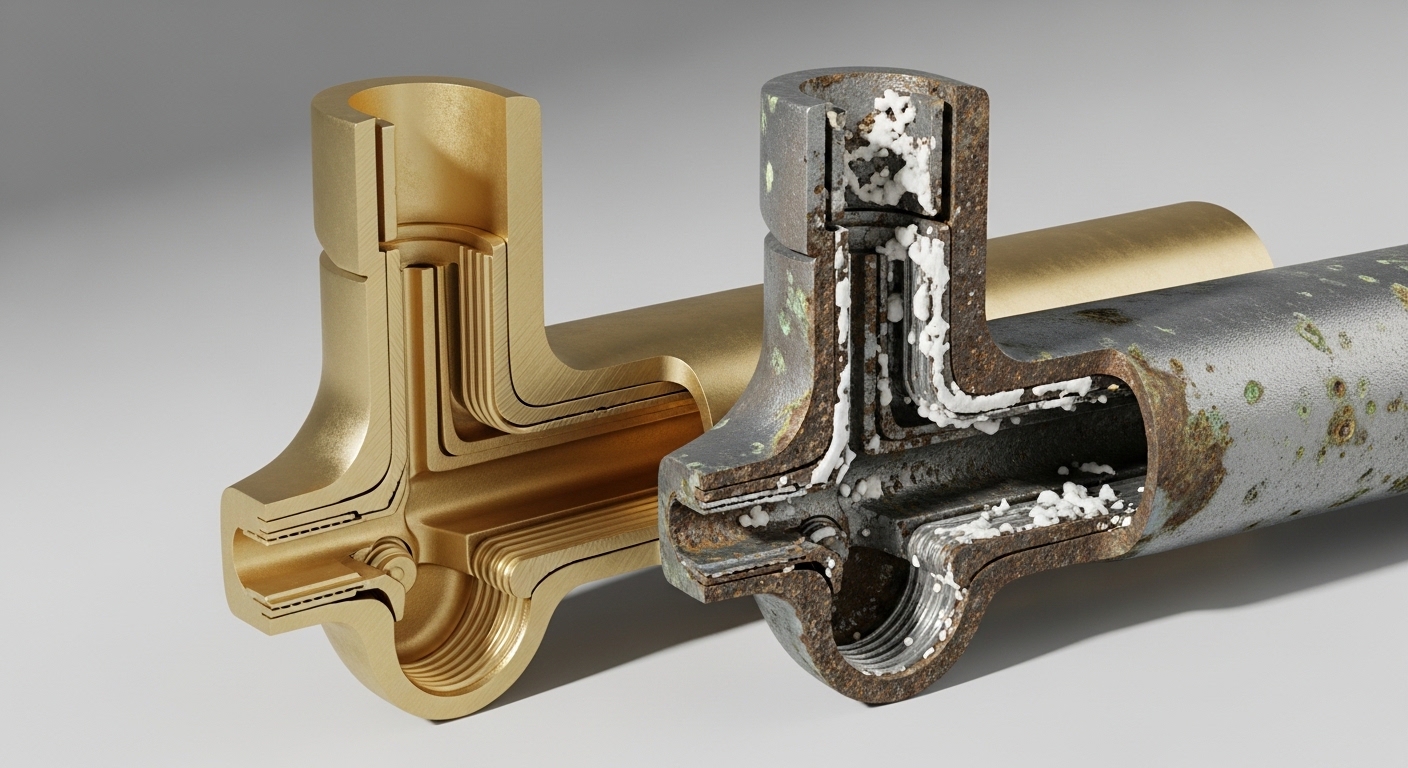
Here’s what’s actually happening inside the faucet. Brass is a copper-zinc alloy that’s naturally resistant to the constant wet-dry cycling and mineral-heavy water that destroys cheaper metals. Zinc alloy (often sold as “zamak” or “die-cast metal”) looks identical on the shelf and even feels heavy in your hand, but it’s far more prone to dezincification — a process where minerals leach the zinc out and leave the body brittle and porous. That’s the pinhole leak that shows up under your sink three years in. If you want the full breakdown of that trade-off, we compared them head-to-head in our guide on whether a zinc bathroom faucet is worth buying or whether you should spend more on brass.
Stainless steel faucets exist and are genuinely good — food-safe and lead-free by nature — but for bathroom sinks (as opposed to kitchens), stainless is less common, usually pricier, and harder to cast into the curved, decorative shapes people want in a bathroom. For a bathroom basin specifically, brass hits the sweet spot of durability, availability, and finish variety.
What’s the difference between “solid brass,” “brass waterway,” and “brass finish”?
Solid brass means the entire body is machined or cast from brass; brass waterway means only the internal water channel is brass (usually over a zinc exterior); and “brass finish” or “brass-colored” means the faucet just looks like brass but is made of zinc or plastic underneath. For a bathroom sink you want at minimum a certified lead-free brass waterway — and ideally a solid brass body.
This is the single most important thing to understand before you spend money, so here’s how the three tiers compare:
| Term on the listing | What it actually is | Typical lifespan | Typical price (single-hole basin tap) |
|---|---|---|---|
| Solid brass | Whole body cast/forged from brass alloy | 15–25+ years | $90–$220 |
| Brass waterway / brass core | Brass internal channel, zinc or brass-plated exterior | 8–15 years | $55–$120 |
| “Brass finish” / brass-colored | Zinc or plastic body with a brass-look coating | 2–6 years | $25–$60 |
Notice that “brass finish” is describing a color, not a material — and that’s the trap. A brushed-gold or “antique brass” faucet can be made entirely of cheap zinc. The finish name tells you nothing about what’s underneath. Always read the material line separately from the color line.
How do you tell them apart before buying? Look for these signals:
- Weight, but verify it. Solid brass is heavy, but so is zinc — so weight alone isn’t proof. Use it as a first filter, not a verdict.
- The spec sheet’s material line. Reputable brands state “solid brass body” or “lead-free brass (C46500)” outright. Vague listings that only say “premium metal” or “durable alloy” are almost always zinc.
- A magnet. Brass and zinc are both non-magnetic, so a magnet won’t distinguish them — but it will instantly out a steel body pretending to be metal. A strong stick = not brass.
- Certification marks. Look for cUPC, NSF/ANSI 61, or NSF/ANSI 372 (lead-free) listings. Faucets that pass those tests almost always disclose their real waterway material.
- Warranty length. A brand willing to put a lifetime or 10-year warranty on the finish and function is telling you it’s real brass. A 1-year warranty is telling you it isn’t.
Is a brass bathroom faucet safe — does it leach lead into the water?
Modern brass bathroom faucets are safe as long as they’re certified lead-free to NSF/ANSI 372, which caps lead content at 0.25% of wetted surfaces. Traditional brass did contain lead to make it easier to machine, but since the U.S. Reduction of Lead in Drinking Water Act took effect in 2014, any faucet legally sold for potable water must meet the lead-free standard.
So the honest answer is: brass itself isn’t the problem — old, uncertified brass was. When you buy a current-model faucet from a legitimate retailer, the “lead-free brass” (sometimes called eco-brass or bismuth brass) has been reformulated so the wetted waterway is compliant. This matters most for a bathroom sink you actually drink or brush your teeth from. Two practical tips:
- Buy faucets that explicitly list NSF/ANSI 61 and 372 certification — not just “lead-free” as marketing text.
- If you’re installing after the faucet sat unused, run the tap for 30–60 seconds first thing in the morning to flush any water that sat overnight in the fixture and supply lines. This is good practice with any metal faucet.
Which brass finish holds up best for a bathroom sink — brushed, polished, or antique?
Brushed brass (also called satin or brushed gold) is the most forgiving finish for a bathroom sink because it hides water spots, fingerprints, and light scratches better than polished brass, and it doesn’t show mineral etching the way high-shine finishes do. Polished brass looks stunning but demands frequent wiping; unlacquered “living finish” brass intentionally patinas over time, which some people love and others hate.
Finish is where brass gets fun, because the same durable metal underneath can be dressed up many ways. Here’s how the popular options behave in a real, splash-heavy bathroom:
| Finish | Look | Maintenance | Best for |
|---|---|---|---|
| Brushed / satin brass | Warm matte gold | Low — hides spots and prints | Family bathrooms, hard-water areas |
| Polished brass (lacquered) | Bright mirror gold | Medium — wipe after use | Formal or vintage-style powder rooms |
| Unlacquered / living brass | Ages to a darker patina | Low but “changes” over time | Farmhouse, heritage, character homes |
| Antique / oil-rubbed over brass | Dark bronze-brass tone | Low | Traditional and rustic bathrooms |
Whatever finish you pick, the coating is what you’re really protecting day to day — the brass beneath is nearly bulletproof, but a scratched-through lacquer or PVD layer is what dates a faucet. We put together a full routine on how to protect faucet finishes from scratches that applies directly here: skip abrasive pads, skip acidic bathroom cleaners, and wipe dry after use. If you’re weighing warm gold tones against a cooler metal, our comparison of a polished nickel faucet bath setup is a useful side-by-side.
How much should you spend on a brass bathroom faucet — and when is cheaper fine?
Plan on $80–$150 for a genuinely solid brass single-hole bathroom faucet from a reliable brand — that’s the range where you get a real brass body, a ceramic-disc cartridge, and a warranty worth having. Spending under $50 almost always means a zinc body with a brass look, and spending over $200 is usually paying for a designer name or specialty living finish rather than better function.
Where the money goes actually matters more than the total. A well-priced brass faucet spends its budget on three things: a solid brass or lead-free-brass body, a ceramic disc cartridge (the part that controls flow and is the most common thing to fail), and a durable PVD or quality lacquer finish. A cheap faucet cuts corners on all three, which is why it leaks and tarnishes early.
When is cheaper genuinely fine? A few honest scenarios:
- A rarely-used guest powder room. If the tap gets used twice a month, a mid-tier brass-waterway faucet is a reasonable compromise.
- A short-term rental or flip. You may not need 20-year durability if you won’t own it in five years.
- A vanity you plan to fully remodel soon. No sense over-investing in a faucet you’ll replace with the sink.
But for a primary or family bathroom you’ll use every day for the next decade, solid brass is the classic case where spending a bit more is genuinely cheaper over time. If you want to see what the high end looks like and whether the splurge is justified, we reviewed the deVOL brass faucet and whether it’s worth the premium — a good reference point for what you’re paying extra for above $200.
What size and configuration brass faucet fits your bathroom sink?
Match the faucet to your sink’s mounting holes and depth: single-hole faucets fit most modern basins and vessel sinks; widespread (3-hole, 8 inches apart) and centerset (3-hole, 4 inches apart) faucets fit traditional drilled countertops; and tall or high-arc spouts suit deep or vessel sinks that need extra clearance. Measure your hole spacing and sink depth before you buy.
This is where a lot of returns happen, so nail it down first:
- Count and measure your holes. One hole = single-hole faucet. Three holes = measure center-to-center of the outer two: 4 inches is centerset, 8 inches is widespread.
- Check your spout height and reach. A shallow basin with a tall faucet splashes; a deep vessel sink with a short faucet makes washing your hands awkward. For deep or raised bowls, a taller spout with more forward reach is worth targeting — our guide to a long spout reach bathroom faucet for deep or vessel sinks walks through the exact measurements.
- Confirm the drain type. Many brass faucets ship with a matching pop-up drain — buying the set keeps your finish consistent.
- Verify supply-line compatibility. U.S. sinks use standard 3/8-inch compression supply connections; most brass faucets include or accept standard braided hoses.
Author note & how we test
This guide was written by the Avovida fixtures team. We’ve been reviewing and pressure-testing bathroom and kitchen faucets since 2019, and our brass evaluations look at four things: verified body material (we confirm solid brass vs. plated zinc), cartridge quality (we prefer ceramic-disc over rubber-washer designs), finish durability under repeated wet-dry and mild-abrasion cycles, and independent certification — specifically cUPC listing and NSF/ANSI 61 and 372 (lead-free) compliance. We prioritize faucets backed by at least a 5-year, and ideally lifetime, limited warranty on finish and function, because a manufacturer’s warranty length is one of the most honest signals of how the product will actually hold up. Avovida is an independent bathroom-fixtures resource; we write to help you buy once and buy right.
FAQ
How long does a brass bathroom faucet last?
A solid brass bathroom faucet typically lasts 15–25 years, and often longer if you replace the ceramic cartridge when flow gets weak. The brass body itself rarely fails; it’s the internal cartridge or the surface finish that wears first, and both are usually serviceable rather than a reason to replace the whole tap.
Is brass better than stainless steel for a bathroom faucet?
For a bathroom sink, brass is generally the better all-around choice because it’s easier to cast into decorative shapes, comes in more finishes, and resists corrosion beautifully. Stainless steel is excellent and naturally lead-free, but it’s more common (and arguably better) in kitchens; for a bathroom basin, certified lead-free brass gives you more style options at a similar durability level.
Do brass faucets tarnish or turn green?
Lacquered and PVD-coated brass faucets don’t tarnish under normal use because the coating seals the metal. Only unlacquered “living finish” brass patinas — and that’s intentional, not a defect. Green verdigris only appears on bare brass exposed to moisture for long periods, so as long as your faucet is coated or you maintain a living finish, greening isn’t a concern.
Can I install a brass bathroom faucet myself?
Yes — most single-hole brass bathroom faucets are a straightforward 30–60 minute DIY job with an adjustable wrench and a basin wrench. Shut off the supply valves, disconnect the old faucet, drop the new one through the mounting hole, tighten the mounting nut, connect the braided supply lines, and test for leaks. If your setup has corroded or non-standard connections, that’s the point to call a plumber.
Is a heavier faucet always solid brass?
No — weight is a useful hint but not proof, because zinc alloy is also dense and can feel just as heavy in your hand. To confirm solid brass, rely on the manufacturer’s stated material line, certification marks like NSF/ANSI 372, and a substantial warranty rather than heft alone.
What’s the best brass finish for hard-water areas?
Brushed or satin brass is best for hard water because its matte texture hides the white mineral spotting and etching that show up glaringly on polished finishes. Pair it with a quick dry-wipe after use and you’ll rarely see water marks, even on very hard water.