
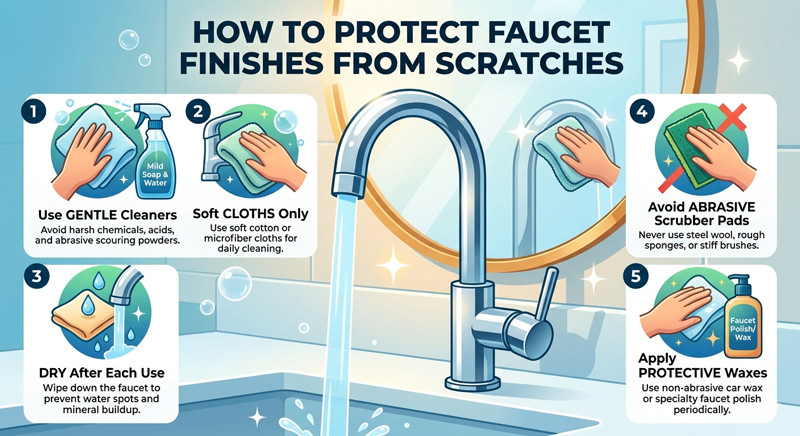
Faucets are one of the most frequently used fixtures in any kitchen or bathroom, and over time, they can easily develop scratches that dull their appearance. Whether you have a sleek chrome finish, a trendy matte black design, or a luxurious brushed gold faucet, keeping it scratch-free is essential for maintaining both its beauty and longevity. The good news is that with the right care and habits, you can prevent most scratches before they ever happen.
Why Faucets Get Scratched So Easily
Faucets may look durable, but their finishes are often more delicate than they seem. Many are coated with protective layers designed to enhance appearance and resist corrosion. However, these finishes can still be damaged by abrasive materials, improper cleaning, or everyday wear and tear.
Common causes of faucet scratches include:
- Using rough sponges or steel wool
- Cleaning with harsh chemicals
- Accidental contact with metal objects like pots or tools
- Mineral buildup that leads to aggressive scrubbing
- Improper installation or maintenance
Understanding these causes is the first step toward preventing damage.
Choose the Right Cleaning Tools
One of the easiest ways to avoid scratches is by using gentle cleaning tools. Abrasive materials may remove dirt quickly, but they can also leave behind permanent marks.
Best options for cleaning faucets:
- Soft microfiber cloths
- Non-abrasive sponges
- Soft-bristled brushes
Avoid steel wool, scouring pads, or stiff brushes. Even if they seem effective, they can strip away the faucet’s finish over time.
A simple habit like keeping a dedicated soft cloth near your sink can make a big difference in daily maintenance.
Use Gentle Cleaning Solutions
Harsh cleaners are a major culprit when it comes to scratched or damaged faucets. Products containing bleach, ammonia, or strong acids can weaken protective coatings and make the surface more prone to scratches.
Instead, opt for mild and natural cleaning solutions:
- Warm water with dish soap
- White vinegar (diluted) for removing mineral deposits
- Baking soda paste (used gently and sparingly)
Always test any cleaner on a small, hidden area first. This ensures it won’t damage the finish.
Clean Regularly to Prevent Buildup
It might seem counterintuitive, but neglecting regular cleaning can actually lead to more scratches. When dirt, grime, and mineral deposits build up, they often require more aggressive scrubbing to remove—raising the risk of damage.
A simple routine can help:
- Wipe down your faucet daily with a soft cloth
- Dry it after use to prevent water spots
- Perform a deeper clean once a week
Consistent, gentle cleaning reduces the need for harsh scrubbing later.
Be Careful with Nearby Objects
Many faucet scratches happen accidentally during everyday use. In the kitchen, heavy pots, pans, and utensils can easily bump against the faucet. In the bathroom, items like razors, jewelry, or metal containers can cause similar damage.
To minimize risk:
- Avoid placing heavy objects too close to the faucet
- Be mindful when washing large cookware
- Use sink mats or protective barriers when needed
Small adjustments in how you use your sink area can significantly reduce accidental scratches.
Install and Maintain Properly
Improper installation can lead to loose or unstable faucets, which may move slightly during use and increase the chance of surface damage. Ensuring your faucet is securely installed helps maintain its integrity.
Regular maintenance is also important:
- Check for loose parts and tighten them as needed
- Inspect for early signs of wear or damage
- Replace worn components before they cause further issues
A well-maintained faucet is less likely to develop problems that lead to scratches.
Protect Special Finishes
Different faucet finishes require different levels of care. Some are more resistant to scratches, while others need extra attention.
Chrome and stainless steel:
These are relatively durable but can still scratch if cleaned improperly. Stick to soft cloths and mild cleaners.
Matte black:
This finish is stylish but can show scratches more easily. Avoid abrasive materials and wipe gently.
Brushed gold or brass:
These finishes often have protective coatings that can be damaged by harsh chemicals. Use only gentle cleaning solutions.
Knowing your faucet’s finish helps you choose the right care methods and avoid unnecessary damage.
Avoid Over-Polishing
Polishing can enhance shine, but overdoing it can wear down the protective layer of your faucet. This makes the surface more vulnerable to scratches.
If you choose to polish:
- Use products specifically designed for your faucet’s finish
- Apply lightly and infrequently
- Follow manufacturer recommendations
Sometimes, less is more when it comes to maintaining a flawless look.
Deal with Minor Scratches Early
Even with the best care, small scratches can occasionally happen. Addressing them early can prevent them from becoming more noticeable.
For minor surface scratches:
- Use a specialized polish designed for your faucet finish
- Apply gently with a soft cloth
- Avoid aggressive buffing
Deep scratches may require professional repair or part replacement, so it’s best to act quickly when you notice any damage.
Consider Protective Coatings
Some homeowners choose to apply protective coatings or sealants to their faucets. These products create an additional barrier against scratches and wear.
While not always necessary, they can be helpful in high-use areas like busy kitchens. Just make sure the product is compatible with your faucet’s material and finish.
Final Thoughts
Keeping your faucet free from scratches doesn’t require complicated techniques—just consistent care and attention to detail. By using gentle cleaning tools, avoiding harsh chemicals, and being mindful of everyday use, you can preserve your faucet’s appearance for years to come.
A scratch-free faucet not only looks better but also reflects the overall cleanliness and quality of your space. With a few simple habits, you can protect your investment and keep your kitchen or bathroom looking polished and well-maintained.