
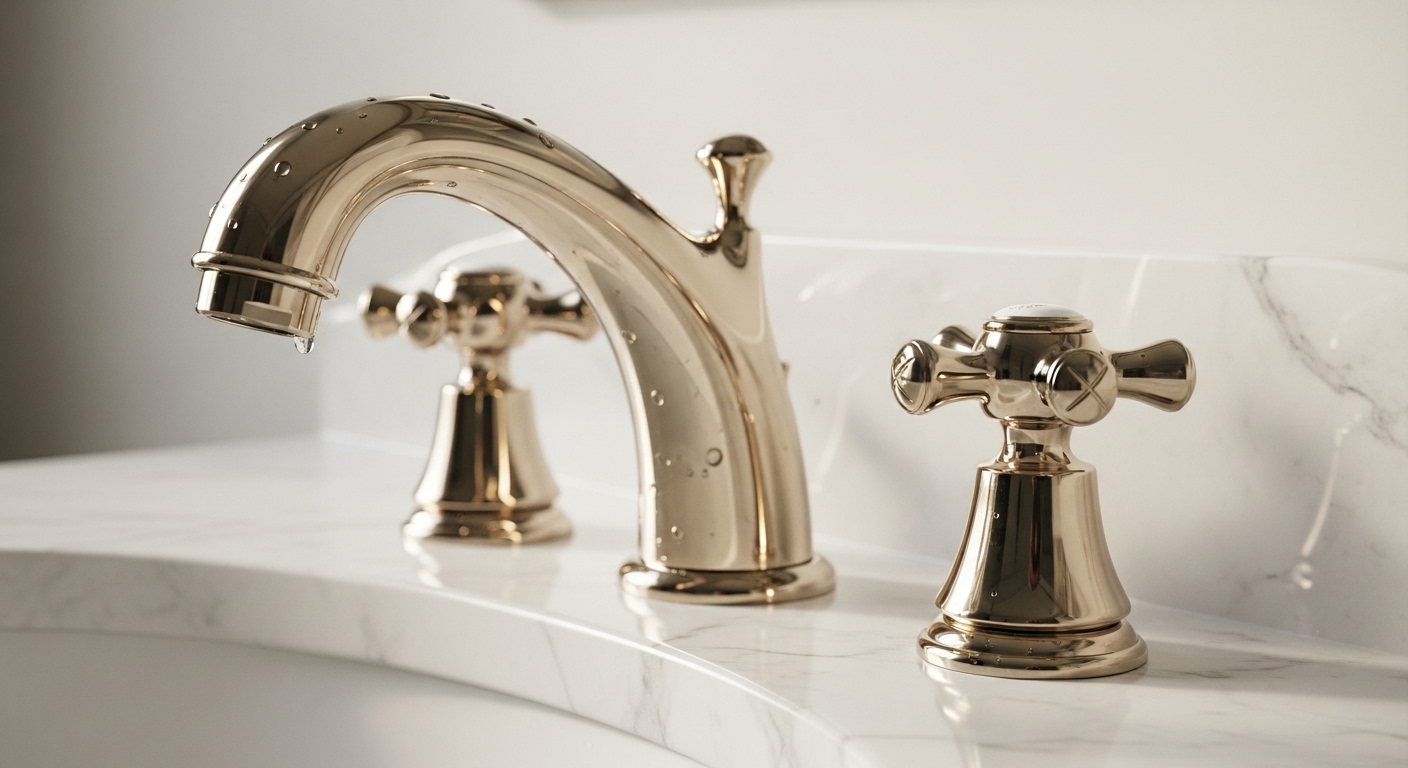
A polished nickel faucet bath upgrade is one of the easiest ways to make a bathroom feel custom rather than builder-grade, and in 2026 it’s having a real moment as homeowners move away from cold, mirror-bright chrome toward warmer metals. But it costs noticeably more than chrome and shows fingerprints differently, so before you commit, you should understand exactly what you’re getting. This guide walks through how polished nickel compares to chrome and brushed nickel, what it costs, how to keep it looking new, and which bathroom styles it actually flatters — so you can buy once and not second-guess it.
At avovida, we test bathroom fixtures across finishes, hardness levels, and daily-use scenarios, and polished nickel comes up again and again as the “quiet luxury” pick. Here’s the honest breakdown.
What exactly is a polished nickel faucet, and how is it different from chrome?
Polished nickel is real nickel metal electroplated over a brass faucet body and buffed to a high shine — and the key difference from chrome is the color temperature: polished nickel has a warm, slightly golden or champagne undertone, while chrome reads cool, blue-white, and almost mirror-like.
Put the two side by side and you’ll see it instantly. Chrome reflects like a mirror and looks crisp and modern. Polished nickel reflects softly with a faint warm haze, like antique silverware or a vintage pocket watch. That warmth is why designers reach for it in traditional, transitional, and “old money” bathrooms where chrome would feel too sterile.
Underneath, both finishes usually start with the same brass core and a layer of nickel — chrome just adds a final ultra-thin chromium layer on top. So polished nickel is essentially “chrome without the cold final coat,” which is also why it’s a little softer and needs slightly more care.
- Color: Polished nickel = warm silver with a champagne tint. Chrome = cool, blue-white mirror.
- Reflection: Nickel is softer and slightly hazy; chrome is sharp and mirror-bright.
- Water spots: Polished nickel hides hard-water spotting better because of its softer reflection.
- Price: Polished nickel typically runs 20–60% more than the same faucet in chrome.
- Aging: Nickel develops a subtle patina over decades; chrome stays exactly the same until it pits.
How much should a polished nickel bathroom faucet cost in 2026?
Expect to pay $180 to $600 for a quality polished nickel bathroom faucet, with most solid mid-range single-hole and widespread models landing around $220–$380. Anything under $120 labeled “polished nickel” is usually a thin plated coating that will wear through, and premium designer pieces from heritage brands can run $700 and up.
The reason polished nickel costs more than chrome comes down to the finishing process: achieving a flawless, durable nickel shine requires more hand-buffing and tighter quality control, and there’s no cheap chromium topcoat to hide imperfections. You’re paying for the finish work as much as the metal.
| Price Tier | Typical Range | What You Get | Best For |
|---|---|---|---|
| Budget | $120–$180 | Thin plating, lighter brass or zinc body, basic cartridge | Rentals, short-term flips |
| Mid-range | $200–$400 | Solid brass body, ceramic disc cartridge, lifetime finish warranty | Most homeowners |
| Premium | $450–$700+ | Heavy solid brass, hand-finished, designer styling, drip-free guarantee | Primary baths, long-term homes |
One money-saving tip: prioritize a solid brass body and a ceramic disc cartridge over fancy styling. A heavier brass body holds plating better and resists corrosion, and a ceramic cartridge is what keeps the faucet drip-free for years. If you’re weighing finishes more broadly, our guide to whether a brushed nickel faucet with soap dispenser is worth buying breaks down where matte nickel makes more sense than the polished version.
Does a polished nickel faucet show water spots and fingerprints?
Yes, but less than chrome — polished nickel’s warm, slightly softer reflection disguises hard-water spotting and fingerprints noticeably better than mirror-bright chrome, though it shows them more than a matte brushed finish. In a hard-water household, that middle-ground behavior is one of polished nickel’s biggest practical advantages.
Here’s the real-world picture. Chrome is so reflective that every dried water droplet and fingerprint stands out like a smudge on a mirror. Brushed nickel’s textured surface hides almost everything but can look duller. Polished nickel sits in between: it’s shiny and elegant, but its warmer tone and gentle haze mean spots blend in rather than scream at you.
If you have very hard water (above about 7 grains per gallon), you’ll still want to wipe the faucet down with a soft cloth every few days to prevent mineral buildup from etching the finish over time. That’s true of any finish, but it matters for keeping polished nickel’s shine intact. Avoid anything abrasive — we cover the do’s and don’ts thoroughly in our guide on how to protect faucet finishes from scratches.
What’s the right way to clean a polished nickel faucet?
Clean it with a soft microfiber cloth and either plain warm water or a few drops of mild dish soap, then dry it — never use abrasive pads, ammonia, bleach, or acidic descalers. That’s the entire correct routine, and following it is the difference between a faucet that looks new in 15 years and one that goes dull in three.
- Wipe with a damp microfiber cloth daily or every few days.
- For buildup, use warm water with a drop of mild dish soap.
- For stubborn mineral spots, lay a cloth soaked in 50/50 white vinegar and water over the spot for no more than 5 minutes, then rinse thoroughly and dry. (Don’t let vinegar sit long — it’s mildly acidic.)
- Always dry the faucet after cleaning to prevent new water spots.
- Never use Comet, steel wool, magic erasers, or harsh chemical cleaners.
What bathroom styles does a polished nickel faucet bath actually look best in?
Polished nickel looks best in traditional, transitional, classic, and “modern vintage” bathrooms — anywhere warmth and a touch of old-world elegance matter more than crisp minimalism. It’s the go-to finish for marble vanities, clawfoot tubs, beadboard, and warm-white or cream color schemes.
The warm undertone is the whole reason. Polished nickel flatters warm materials — Carrara and Calacatta marble, brass accents, cream subway tile, warm woods — far better than cool chrome does. It also bridges metals beautifully, so if you have brass light fixtures or cabinet hardware, polished nickel won’t fight them the way chrome can.
Where it’s less ideal: ultra-modern, industrial, or strictly cool-toned gray bathrooms. In those, chrome or matte black usually reads cleaner. If your design leans warm and classic, though, polished nickel is hard to beat. And if you love warm metals generally, it’s worth reading our take on whether a deVOL brass faucet is worth the splurge — brass and polished nickel are close cousins in feel.
| Bathroom Style | Polished Nickel Fit | Better Alternative If Not |
|---|---|---|
| Traditional / classic | Excellent | — |
| Transitional | Excellent | — |
| Modern vintage / cottage | Excellent | — |
| Contemporary / minimalist | Good | Chrome |
| Industrial / ultra-modern | Fair | Matte black or chrome |
| Coastal / warm neutral | Very good | Brushed brass |
Single-hole, centerset, or widespread — which polished nickel faucet do I need?
Choose based on your sink’s pre-drilled holes: a single-hole faucet needs one hole, a centerset fits three holes spaced 4 inches apart, and a widespread fits three holes spaced 8–16 inches apart. Measure before you buy — the configuration, not the style, is the dealbreaker.
This trips up a lot of buyers. A gorgeous widespread polished nickel faucet is useless if your sink is drilled for a single hole (and vice versa). Here’s the quick decoder:
- Single-hole: One handle and spout in one base. Clean, modern, easy to install. Common on newer vanities and vessel sinks.
- Centerset: Spout and two handles on a 4-inch base plate, three holes. The classic builder-grade layout in older homes.
- Widespread: Separate spout and two handles, holes 8 inches apart. The most upscale, traditional look — and where polished nickel shines.
- Wall-mount: Mounts to the wall above the sink, no deck holes. Striking over vessel sinks but requires in-wall plumbing.
If you’re also rethinking your tub fixtures to match, a coordinated set matters — our breakdown of the best Moen Roman tub faucet kit covers how to keep finishes consistent across the sink and tub so the whole room reads intentional.
Is polished nickel durable, or will it wear off?
Quality polished nickel is very durable and will not “wear off” under normal use — the nickel is electroplated and bonded to the brass body, and reputable faucets carry a lifetime finish warranty against tarnishing and flaking. The finish only fails when it’s a cheap, thin plating or when it’s cleaned with abrasives and harsh chemicals.
Real nickel plating, done to standard, is measured in microns and is engineered to last decades. Over a very long time — think 15+ years — polished nickel may develop a faint, even patina that many people actually prefer, because it gives the finish character rather than failure. That’s different from chrome, which doesn’t patina but can pit and flake once its thin topcoat is breached.
What kills any finish prematurely is abuse: abrasive scrubbers, ammonia-based glass cleaners, bleach, and strong acidic descalers left to sit. Treat polished nickel kindly and it outlives most other components in your bathroom. Look for faucets that meet ASME A112.18.1 / NSF 61 standards for safe drinking-water contact and that carry a manufacturer lifetime finish-and-function warranty — those two markers separate genuine quality from look-alike bargains.
Polished nickel vs. brushed nickel: which should you pick?
Pick polished nickel for shine, formality, and a vintage-luxe look; pick brushed nickel for a matte, low-maintenance, contemporary feel that hides spots and fingerprints best. Both share the same warm undertone, so it really comes down to shine versus matte.
Brushed (satin) nickel has a fine directional texture that scatters light, making it the most forgiving finish for fingerprints and water spots — ideal for busy family bathrooms. Polished nickel trades a little of that forgiveness for a more elegant, reflective, traditional look. Neither is “better”; they suit different rooms and routines.
| Factor | Polished Nickel | Brushed Nickel |
|---|---|---|
| Look | Shiny, formal, vintage-luxe | Matte, relaxed, contemporary |
| Hides fingerprints | Moderate | Excellent |
| Maintenance | Wipe every few days | Very low |
| Best room | Formal / traditional bath | Family / everyday bath |
| Price | Slightly higher | Slightly lower |
Author’s note: I’ve specced and installed both finishes across dozens of bathroom projects, and my rule of thumb is simple — polished nickel for the formal powder room or a primary bath you want to feel special, brushed nickel for the kids’ bathroom that gets hammered daily. If you’re still torn between brands and finishes, our roundup of the best Delta bathroom faucet picks for 2026 compares real models across finish options.
FAQ
Does polished nickel tarnish over time?
Genuine plated polished nickel resists tarnishing and won’t flake or peel under normal use, especially when it carries a lifetime finish warranty. Over many years it may develop a soft, even patina, but that’s a gradual, attractive aging — not corrosion. Harsh chemicals and abrasive cleaners are the only real threat.
Is polished nickel more expensive than chrome?
Yes. The same faucet in polished nickel typically costs 20–60% more than in chrome because the finish requires more hand-buffing and tighter quality control, with no cheap chromium topcoat to mask flaws. Expect $180–$600 for a quality polished nickel bathroom faucet versus roughly $120–$400 for comparable chrome.
Can I mix polished nickel with other metals in my bathroom?
Absolutely — polished nickel’s warm undertone pairs especially well with brass, gold, and warm woods, and it can even coexist with matte black for contrast. The trick is to keep your sink and shower fixtures in the same finish for cohesion, then let lighting and hardware introduce a complementary metal.
Does polished nickel work for shower and tub fixtures too?
Yes. Most polished nickel faucet lines include matching shower trim, tub fillers, and accessories, so you can carry the finish through the whole bathroom. Coordinating the sink, shower, and tub in one finish is the single biggest factor in making a bathroom look professionally designed rather than pieced together.
How do I keep a polished nickel faucet shiny in hard water?
Wipe it dry with a soft microfiber cloth after heavy use, clean weekly with warm water and a drop of mild dish soap, and tackle mineral spots with a brief 50/50 white-vinegar-and-water compress (no longer than five minutes) before rinsing and drying. Never use abrasive pads, ammonia, or bleach.
Is polished nickel a good resale-value finish?
It is, particularly in traditional and transitional homes where warm, timeless finishes appeal to buyers. Because polished nickel reads as a premium, designer-grade choice rather than a builder default, it tends to elevate the perceived quality of a bathroom — a real plus when selling.
About avovida: avovida is a dedicated faucet and bathroom-fixtures retailer at avovida.net. Our editorial team tests fixtures hands-on across finishes, water-hardness conditions, and daily-use scenarios, and we cite recognized industry standards (ASME A112.18.1 / NSF 61) and manufacturer warranties so you can buy with confidence rather than guesswork.