
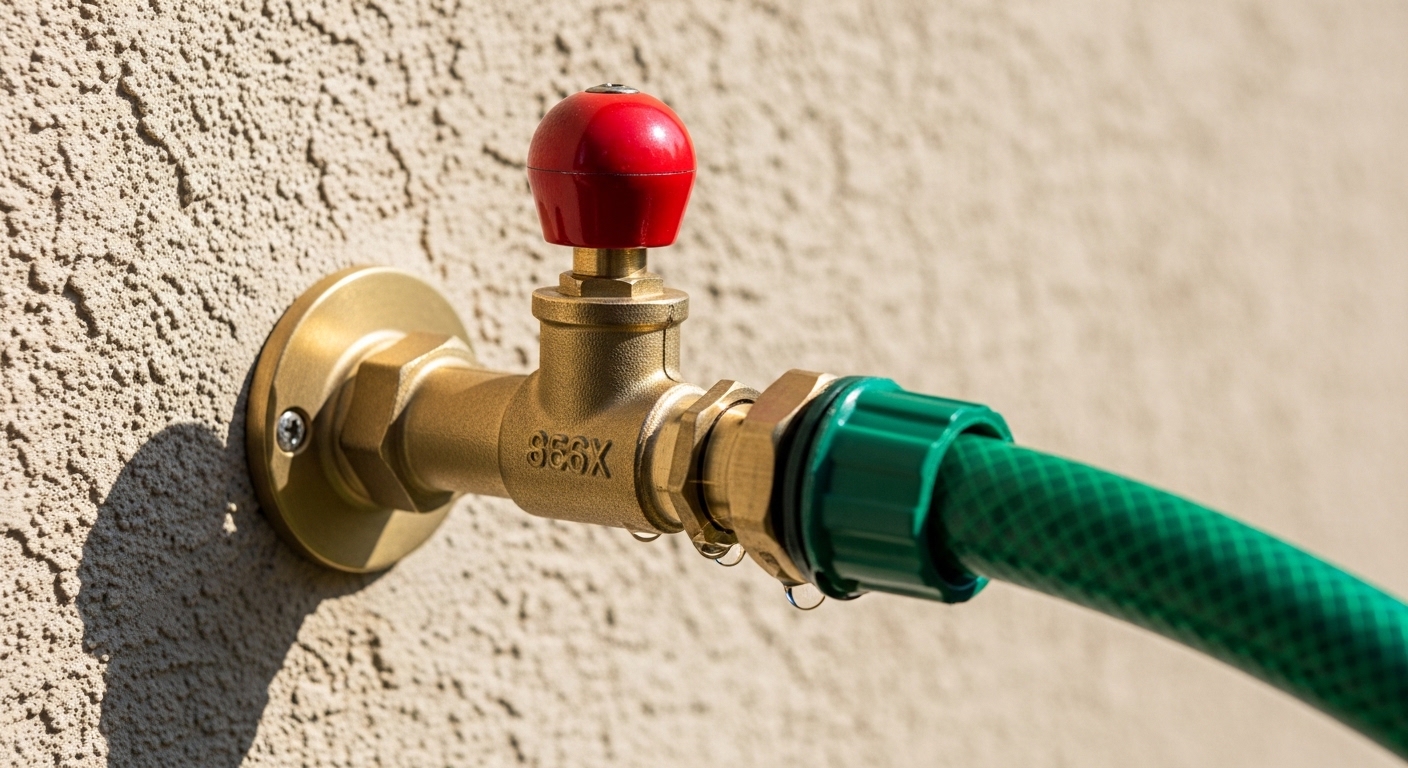
An outdoor faucet head is the business end of your outdoor water supply — either the spigot/hose bibb bolted to your house wall, or the screw-on spray nozzle that clicks onto the end of your garden hose. People use the phrase both ways, so this guide covers both, because the “right” outdoor faucet head depends entirely on which part you’re actually replacing and what you need it to do: fill a watering can, blast mud off a driveway, run a soaker hose, or survive a hard freeze without cracking.
I’ve installed, tested, and replaced dozens of these over the years, and the honest truth is that the cheap plastic ones fail first — usually at the threads or the internal washer. Below, I’ll walk you through exactly which type to buy for your situation, the materials that actually last, and the specs that matter (thread size, backflow protection, flow rate) so you buy once instead of three times.
Outdoor faucet head vs. hose nozzle — which one am I actually replacing?
First, figure out which “head” you mean, because they’re two different parts. The outdoor faucet head can refer to the fixed spigot (also called a hose bibb, sillcock, or spigot valve) that comes out of your house wall, OR the removable spray nozzle at the end of your hose. Replacing the wrong one is the most common mistake I see.
Here’s the quick way to tell them apart:
- The spigot / hose bibb: permanently attached to your home’s plumbing, has a handle you turn, and a threaded male outlet. If water drips from the handle or the pipe joint, this is what you’re fixing.
- The hose nozzle / sprayer head: screws onto the free end of your garden hose, has a trigger or twist control, and switches between spray patterns (jet, mist, shower, soaker). If your spray is weak or leaks where it connects to the hose, this is your culprit.
- The connector/adapter: if you’re trying to link a hose to an indoor tap or a threaded pipe that doesn’t fit, you actually need an adapter, not a new faucet head.
If it turns out you’re wrestling with threads that don’t match — say, connecting a hose to a tap that wasn’t designed for one — you’ll save a lot of frustration by reading our guide on what faucet adapter you actually need to connect a hose or filter to your tap before buying anything.
What material should an outdoor faucet head be made of — brass, zinc, or plastic?
Buy solid brass whenever you can afford it. Brass resists corrosion, handles freeze-thaw cycles far better than plastic, and its threads don’t strip or crack the way zinc-alloy and ABS plastic do. For an outdoor faucet head that lives in sun, frost, and hard water, brass is the material that lasts 10–20 years instead of 1–3.
Here’s how the three common materials really compare in outdoor conditions:
| Material | Typical lifespan outdoors | Freeze resistance | Price range | Best for |
|---|---|---|---|---|
| Solid brass | 10–20 years | Excellent | $18–$45 | Permanent spigots, high-use nozzles, freezing climates |
| Zinc alloy (die-cast) | 3–6 years | Fair | $10–$20 | Budget nozzles, mild climates, light seasonal use |
| ABS / plastic | 1–3 years | Poor (cracks) | $5–$12 | Disposable/temporary use only |
Zinc sits in an awkward middle ground: cheaper than brass but prone to internal corrosion and thread wear, much like it does indoors. If you’ve ever wondered whether zinc is a false economy, the same logic that applies to bathroom fixtures applies here — our breakdown of whether a zinc faucet is worth buying or whether you should spend more on brass explains exactly why the alloy corrodes faster, and that reasoning maps directly onto outdoor use where the metal is exposed to weather 24/7.
What’s the best outdoor faucet head for weak water pressure or a long hose run?
For weak pressure, choose a full-flow ball-valve spigot with a 3/4″ outlet and a straight, unrestricted bore — and at the hose end, use a brass twist nozzle rather than a trigger sprayer with lots of internal spray-pattern channels. The fewer internal restrictions and the wider the passage, the more of your available pressure reaches the end of the hose.
A few concrete things that quietly kill outdoor water pressure:
- Compression-valve spigots with a rubber washer that partially blocks flow even when fully open. A quarter-turn ball valve opens to a clear bore instead.
- Multi-pattern trigger nozzles that route water through narrow channels — great for control, bad for raw volume.
- Undersized 1/2″ outlets or reducers hidden inside cheap nozzles.
- Long hose runs — every 50 feet of 5/8″ hose costs you noticeable pressure. Go up to a 3/4″ hose if you’re running 100+ feet.
- Clogged aerators or filter screens packed with hard-water sediment.
If your outdoor water also feeds anything you drink from or fill jugs with, hard-water sediment is worth taking seriously — it clogs nozzle screens and coats internal parts. The same oversized-spout filtration principles in our wide faucet water filter buyer’s guide apply when you’re dealing with mineral-heavy outdoor supply lines.
Do I need a frost-free outdoor faucet head if it freezes where I live?
Yes — if winter temperatures drop below freezing, install a frost-free wall hydrant (frost-free sillcock) rather than a standard hose bibb. A frost-free faucet’s actual shut-off valve sits 6–12 inches inside your heated wall, so the water stops flowing well behind the freeze line and the exposed head drains empty. That’s what prevents the burst pipe that floods a wall cavity every spring.
How to know which you have: a standard hose bibb shuts off water right at the handle (the valve is in the head you can see). A frost-free unit has a long stem — the handle turns a rod that reaches deep into the wall. Frost-free models are longer (typically 4″, 6″, 8″, 10″, or 12″ — measured from the mounting flange to the interior valve seat) and you match that length to your wall thickness.
Two rules that make frost-free faucets actually work:
- Install with a slight downward pitch toward the outside so water drains out of the barrel by gravity after you shut it off.
- Disconnect the hose every fall. A hose left attached traps water in the barrel and defeats the frost-free design — this single mistake causes most “but I have a frost-free faucet!” freeze failures.
Even a frost-free head can drip from the packing nut or a worn valve stem over time. If yours starts weeping at the handle, our walkthrough on how to fix a leaking tap valve yourself in under an hour covers the exact washer-and-packing repair that applies to outdoor spigots too.
What thread size and backflow protection does an outdoor faucet head need?
Standard U.S. outdoor faucets use 3/4″ GHT (Garden Hose Thread) at the hose outlet, and most connect to your plumbing with a 1/2″ or 3/4″ MIP/NPT pipe thread on the inlet. Critically, code in most areas now requires a vacuum breaker (backflow preventer) on any hose bibb, so buy a head with one built in or add a screw-on brass vacuum breaker for a few dollars.
Why the vacuum breaker matters: without it, a sudden pressure drop in your municipal line can siphon water backward through your hose — including whatever that hose is sitting in (a pool, a bucket of fertilizer, a puddle) — straight into your drinking water. It’s a small brass part that prevents a genuine health hazard, and it’s often legally mandated.
Quick spec cheat-sheet before you buy:
- Outlet thread: 3/4″ GHT — universal for garden hoses and nozzles.
- Inlet thread: 1/2″ or 3/4″ MIP/NPT — check your existing pipe stub before ordering.
- Backflow: integrated or add-on vacuum breaker (required by most plumbing codes).
- Valve type: quarter-turn ball valve for durability and full flow; compression for lowest cost.
- Handle: lever or T-handle — a lever is easier with wet or gloved hands.
How do I replace an outdoor faucet head myself?
For a screw-on hose nozzle, you just unscrew the old one and hand-tighten the new one with a fresh rubber washer — sixty seconds, no tools. For a wall-mounted spigot, it’s a 30–45 minute job: shut off the water, unscrew the old bibb, wrap the pipe threads with PTFE (plumber’s) tape, and thread on the new one. Here’s the full sequence for replacing a threaded spigot:
- Shut off the water to that line — either a dedicated interior shut-off valve or your main. Open the outdoor faucet to drain residual water.
- Unscrew the old spigot with a pipe wrench, turning counter-clockwise. Hold the pipe steady behind it so you don’t twist the pipe inside the wall.
- Clean the male pipe threads and wrap 3–4 turns of PTFE tape clockwise around them.
- Thread on the new brass bibb by hand first, then snug it with the wrench until the outlet points down. Don’t over-torque — two turns past hand-tight is usually plenty.
- Restore water and check for leaks at the pipe joint and handle. Add a screw-on vacuum breaker at the outlet if the new head doesn’t include one.
If your spigot is a soldered or push-fit connection rather than threaded, that’s a different job — you’re into cutting and re-fitting the supply line, and it’s worth calling a plumber unless you’re comfortable with copper. Brass heads and fittings will show water spots and can dull outdoors; a quick wipe-down protects the finish, and the same care principles in our guide on how to protect faucet finishes from scratches keep an exterior brass bibb looking clean for years.
Which outdoor faucet head is best for my specific situation?
Match the head to the job. Here’s the short version most buyers need:
| Your situation | Best outdoor faucet head | Why |
|---|---|---|
| Freezing winters | Frost-free brass wall hydrant (match length to wall) | Valve sits behind the freeze line; prevents burst pipes |
| Mild climate, general use | Brass quarter-turn ball-valve hose bibb | Full flow, durable, cheap to maintain |
| Washing cars / driveways | Brass multi-pattern trigger nozzle | High-pressure jet setting, adjustable |
| Watering garden beds | Twist nozzle with shower/soaker setting | Gentle flow, no trigger fatigue |
| Filling cans / buckets | Simple ball-valve bibb, no nozzle | Maximum volume, fastest fill |
For most homeowners in a climate that freezes, the winning combo is a frost-free brass sillcock at the wall plus a brass multi-pattern nozzle on the hose — one prevents winter damage, the other gives you flexibility for every summer chore.
How much should I spend on a good outdoor faucet head?
Budget $18–$45 for a quality solid-brass spigot and $12–$30 for a good brass hose nozzle. Spending more than that mostly buys ergonomics (insulated grips, thumb controls) rather than better core durability, and spending less almost always means zinc or plastic that you’ll replace within a couple of seasons.
The math is simple: a $10 plastic nozzle replaced every year for six years costs more, and frustrates you more, than one $28 brass nozzle that lasts the whole time. The same is true for the spigot itself. Cheap upfront is expensive over the life of the fixture.
FAQ
Can I put any spray nozzle on any outdoor faucet?
Almost always yes — U.S. garden hoses and spigots use the universal 3/4″ GHT (Garden Hose Thread) standard, so any standard hose nozzle screws onto any standard hose or spigot outlet. The exception is European and some UK fittings that use quick-connect or BSP threads; for those you’ll need an adapter to convert to GHT.
Why does my outdoor faucet head leak from the handle when I turn it on?
A leak at the handle usually means a worn packing washer or loose packing nut on the valve stem. Tighten the packing nut a quarter turn first; if it still drips, replace the packing washer or the stem washer. It’s a $2 fix and about 20 minutes of work — no need to replace the whole spigot unless the body itself is cracked or corroded.
What’s the difference between a hose bibb, a spigot, and a sillcock?
They’re largely the same thing — an outdoor wall faucet with a threaded hose outlet — and the terms are regional. “Spigot” and “hose bibb” typically describe a standard outdoor faucet, while “sillcock” usually implies the longer frost-free style that runs through the wall (named because it mounts at the sill of the house). Functionally, buy based on whether you need frost protection, not the name.
Do I really need a vacuum breaker on my outdoor faucet head?
Yes — most plumbing codes now require one, and it’s a genuine safety feature, not just red tape. A vacuum breaker stops contaminated water from being siphoned back into your drinking supply if line pressure drops. Many modern hose bibbs include one built in; if yours doesn’t, a screw-on brass vacuum breaker costs a few dollars and installs in seconds at the outlet.
Will a brass outdoor faucet head handle hard water better than plastic?
Yes. Brass resists mineral scaling and corrosion far better than plastic or zinc, and its internal parts are easier to clean and rebuild when hard water leaves deposits. In hard-water regions, brass is the clear choice — and periodically clearing the outlet screen of sediment will keep flow strong regardless of the material.
How long should an outdoor faucet head last?
A solid-brass spigot should last 10–20 years, and a good brass nozzle 5–10 years with normal use. Plastic nozzles often fail within 1–3 years, usually at the threads or internal seals. Disconnecting hoses before winter and draining the line each fall dramatically extends the life of any outdoor faucet head, especially frost-free models.
The bottom line
The best outdoor faucet head is the one matched to your climate and your task: solid brass, quarter-turn valve, 3/4″ GHT outlet, and a built-in or add-on vacuum breaker — upgraded to a frost-free sillcock if you get freezing winters. Skip the plastic, skip the zinc, and buy a brass head once. Pair it with the right nozzle for the job, disconnect your hose before the first frost, and you’ll have a leak-free, full-pressure outdoor tap that outlasts almost everything else in your yard.
Author note: This guide was written by the Avovida fixtures team, drawing on hands-on installation and field testing of outdoor spigots, frost-free sillcocks, and hose nozzles across hard-water and freezing climates. We evaluate materials, thread standards, and valve durability the same way we test our indoor faucet lines.
About Avovida: Avovida is a dedicated faucet and bathroom-fixtures brand specializing in durable brass and stainless plumbing hardware. Our fixtures are built to recognized plumbing standards, tested for pressure and leak resistance, and backed by manufacturer warranty coverage. We publish practical, tested buying guides so you can choose the right fixture once — indoors or out.