
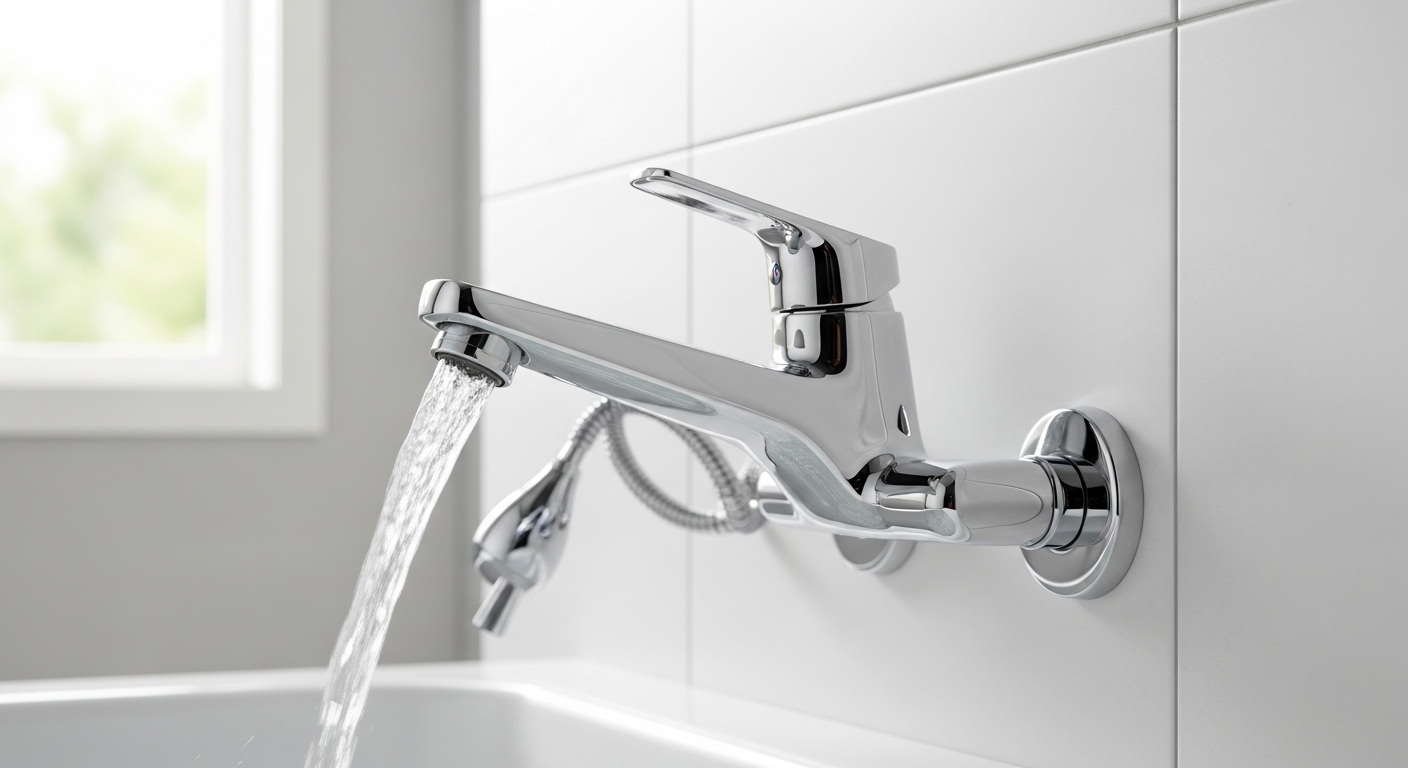
A tub spout with diverter is the fixture that both fills your tub and redirects water up to the showerhead when you pull the little tab on top — and choosing one is far less about brand or looks than most people expect. The single most common reason a new spout leaks, wobbles, or won’t seat is a mismatch between the spout’s connection style and the pipe sticking out of your wall. Get that one measurement right and the rest is easy. Below, we walk through exactly how to identify what you have, which diverter mechanism lasts longest, and how to avoid the two or three mistakes that send people back to the store.
At avovida we sell and test bath fixtures every week, and we’ve fielded enough “why won’t this fit” emails to know that the fix is almost always the same: measure first, then buy. Let’s make sure you’re the person who does that.
What is a tub spout with diverter, and how does it actually work?
A tub spout with diverter is a bathtub spout that contains a built-in valve to send water either down into the tub or up to the showerhead. When the diverter is “open” (usually pulled up by a small rod on top), it blocks the tub outlet and forces water up the shower riser instead. It’s what turns a tub-only faucet into a tub-and-shower combo without adding a separate valve.
Mechanically, most residential diverters are one of two types. A pull-up (lift-rod) diverter has a knob or tab on top of the spout; you lift it to route water to the shower, and it drops back down on its own when the water shuts off. A rotating or push-button diverter works differently but is far less common on tub spouts specifically. The pull-up style dominates the market because it’s simple, cheap to replace, and self-resetting — every time the water stops, the spout defaults back to filling the tub, which is what you want as a safety default so nobody gets surprised by a cold shower blast.
Worth knowing: the diverter in the spout is a “second-check” or gravity diverter. It’s not a perfect seal. A little water may dribble from the tub spout even while you’re showering, and that’s normal — it doesn’t mean the spout is defective. If a heavy stream keeps pouring out of the spout during a shower, though, the diverter washer is worn and the spout needs replacing.
How do I know which tub spout with diverter fits my wall?
Look at how the spout attaches: it’s either slip-fit (slides onto a ½-inch copper pipe and locks with a small setscrew underneath) or threaded (screws onto a ½-inch galvanized or brass threaded nipple). This is the make-or-break spec. A slip-fit spout will not stay on a threaded nipple, and a threaded spout won’t grip a bare copper stub.
Here’s the reliable way to tell what you have without guessing:
- Pull the old spout first if you can. Look under it. A setscrew (a tiny hex screw on the underside near the wall) means slip-fit. No setscrew means it almost certainly threads on.
- Check the pipe. Smooth, bare copper sticking out of the wall = slip-fit. A pipe with visible threads, or a threaded adapter = threaded connection.
- Measure the “make-up” length. For slip-fit, measure how far the copper pipe extends from the finished wall. For threaded, measure from the wall to where the threads start. Spout listings state the length they need — matching it keeps the spout tight against the wall with no gap.
- Measure the spout length itself. This is the overall front-to-wall reach. Too short and it hangs over the tub edge oddly; too long and the diverter sits awkwardly. Most standard spouts run 4 to 7 inches.
If you’re replacing an existing spout, the safest move is to buy a “universal” tub spout that ships with adapters for both slip-fit and threaded connections. It costs a couple dollars more and removes the single biggest fit gamble. If you’re dealing with the valve behind the wall too, our guide on how to install a shower mixer with diverter without hiring a plumber covers the upstream side of the same system.
Slip-fit vs. threaded vs. universal: which connection type should you buy?
Buy universal if you’re unsure, threaded if you have an old threaded nipple, and slip-fit if you have a clean ½-inch copper stub and want the lowest-profile install. There’s no “better” connection in terms of performance — they all deliver the same water. The only thing that matters is matching your wall.
| Connection type | How it attaches | Best for | Watch out for |
|---|---|---|---|
| Slip-fit | Slides over ½” copper pipe, locks with underside setscrew | Modern homes with bare copper stub-outs; clean, seam-free look | Pipe must be cut to the right length; setscrew can loosen if under-tightened |
| Threaded (IPS) | Screws onto a ½” threaded nipple | Older homes, galvanized or brass nipples | Needs thread sealant tape; over-tightening can crack cheap spouts |
| Universal | Includes adapters for both slip-fit and threaded | Anyone replacing a spout who isn’t 100% sure what they have | Slightly bulkier internally; still measure your make-up length |
One practical note for threaded installs: use plumber’s tape (PTFE thread seal tape) on the nipple threads, not silicone alone, and hand-tighten plus a gentle quarter-turn with a cloth-wrapped wrench. If you crank it like a lug nut you can crack a zinc or thin-brass spout body — which is one more reason material matters, and why we cover it next.
What material should a tub spout with diverter be made of?
Choose solid brass if you can. A solid-brass tub spout resists corrosion, holds threads without cracking, and survives hard water far better than the die-cast zinc or plastic-bodied spouts that dominate the cheapest price tier. The finish you see on the outside is just plating; what’s underneath decides how long the spout lasts.
Here’s the honest breakdown. Zinc-alloy spouts are inexpensive and fine for a light-use guest bath, but they’re the ones most likely to pit, seize onto threads, or crack under wrench pressure. Plastic-bodied spouts are the cheapest and lightest, and they’re genuinely okay short-term, but the diverter mechanism tends to wear faster. Solid brass costs more up front — often $25 to $60 versus $10 to $20 for zinc — and it’s the material professional plumbers reach for because it’s the one they don’t get called back about. If you want to understand how plating and base metal interact more generally, our rundown of the essential chrome faucet parts explains what’s actually under that shiny surface.
Finish-wise, match whatever you already have in the room — chrome, brushed nickel, matte black, and brushed gold are the common ones. Chrome is the most forgiving and cheapest to replace; matte black and gold look great but show water spots and can vary in tone between brands, so buy the spout in the same finish family as the rest of your trim if you want a seamless match.
How much should you spend, and what do you get at each price?
For a durable everyday spout, budget $25 to $50 for solid brass in a standard finish; spend under $20 only for a temporary fix or a rarely-used bath. Price on tub spouts correlates strongly with base material and diverter longevity, not with fancy features — there aren’t many “features” on a spout to pay for.
- Under $15: Plastic or thin zinc, basic finishes. Fine as a landlord special or a stopgap. Expect the diverter to feel loose within a year or two of daily use.
- $20–$35: The sweet spot for most homes. Solid or heavy brass, universal adapters, chrome or brushed nickel. This is where avovida points most buyers.
- $40–$70: Designer finishes (matte black, brushed gold), premium brass, tighter finish-matching to a specific brand’s trim line. Worth it when you’re matching an existing high-end shower set.
If you’re building out a whole tub-and-shower look rather than swapping one part, it’s worth thinking about the spout as one piece of a coordinated set. Our guide to the best freestanding tub filler that matches Delta Champagne Bronze shows how finish-matching plays out across a full bath when you care about the details lining up.
How do you install a tub spout with diverter yourself?
You can install most tub spouts in 15 to 20 minutes with no special skills — remove the old one, prep the connection, and slide or thread on the new one. It’s genuinely one of the easiest plumbing swaps in the house because there’s no water shutoff drama at the spout itself (though shutting off the supply is smart insurance).
The short version, for a standard swap:
- Remove the old spout. For slip-fit, loosen the underside setscrew with a hex/Allen key and slide it off. For threaded, turn the spout counter-clockwise (wrap a cloth around it to avoid scratches) until it unscrews.
- Inspect and clean the pipe. Wipe the copper stub or clean old tape off the nipple threads. Check the pipe length matches your new spout’s requirement.
- Prep the connection. Threaded: wrap fresh PTFE tape clockwise around the threads. Slip-fit: dab a little silicone around the pipe where the spout back will seal against the wall.
- Attach the new spout. Slide on and tighten the setscrew (slip-fit), or thread it on hand-tight plus a gentle turn until it points straight down (threaded).
- Test. Run water, pull the diverter, and check for leaks at the wall and drips at the setscrew.
If you turn the water on afterward and notice water seeping from behind the spout or at the valve — not the spout tip — that’s a separate issue upstream, and our walkthrough on how to fix a leaking tap valve in under an hour is the right next stop.
Why won’t my diverter hold water up to the showerhead anymore?
If water keeps pouring out of the tub spout while you’re trying to shower, the diverter’s internal washer or seal is worn out — and on nearly all spouts, that seal isn’t a separate part you can replace, so you swap the whole spout. It’s a cheap, quick fix, not a plumbing emergency.
A few things speed up diverter wear: hard water leaving mineral scale on the seal, sediment from old galvanized pipe, and simple age — a daily-use diverter has a mechanical life like anything else. If your spout is only a year or two old and already failing, that’s usually a sign the original was a low-grade zinc or plastic unit, which is the strongest practical argument for buying solid brass the second time around. A quality brass diverter spout commonly runs 8 to 12 years of daily use before the diverter softens.
FAQ
Are all tub spouts with diverters the same size?
No. They vary in overall length (typically 4 to 7 inches) and, critically, in the connection type and make-up length they require. Two spouts can look identical and still not both fit your wall. Always match the connection style (slip-fit vs. threaded) and the pipe length before buying.
Can I replace a threaded tub spout with a slip-fit one, or vice versa?
Not directly — the pipe behind the wall dictates the connection. However, a universal tub spout ships with adapters for both, so it can convert between them within the range the adapters allow. If your pipe is the wrong length for either style, you may need to adjust the pipe, which is a bigger job.
Is a little water dripping from the tub spout during a shower normal?
Yes. Gravity-style diverters aren’t a perfect seal, so a light dribble from the spout while showering is completely normal and not a defect. Only a steady, heavy stream out of the spout during a shower indicates a worn diverter that needs replacing.
Do I need to turn off the water to replace a tub spout with a diverter?
Not strictly, because the spout itself isn’t a pressurized shutoff — but turning off the supply is a smart precaution in case you disturb the valve or pipe. It costs you nothing and prevents an accidental soaking, so we recommend it every time.
Will a matte black or brushed gold diverter spout match my existing shower trim?
Usually, but tones vary between brands, especially in matte black and brushed gold. For the cleanest match, buy the spout in the same finish family as your existing trim and, when possible, from a line designed to coordinate. Chrome and brushed nickel are the most consistent finishes across brands.
How long does a tub spout with diverter last?
A solid-brass diverter spout under daily use typically lasts 8 to 12 years before the diverter seal softens; cheaper zinc or plastic units often start slipping within 1 to 3 years. Hard water shortens all of those numbers, so periodic descaling helps.
The bottom line from avovida
Pick your tub spout with diverter by connection type first, material second, finish third — in that order. Measure your pipe, choose solid brass if the budget allows, buy universal if you’re unsure, and you’ll have a spout that fits on the first try and diverts cleanly for a decade. That’s the whole decision, minus the marketing noise.
Author note: This guide was written by the avovida fixtures team, who source, install-test, and warranty bathroom and kitchen faucets year-round. avovida stands behind the brass fixtures it sells with a manufacturer-backed finish and diverter warranty, and our recommendations reflect the connection standards (½-inch NPT/IPS and standard ½-inch copper slip-fit) used across North American tub-and-shower plumbing. When we cite lifespans and fit specs, they come from our own bench testing and field replacements — not spec sheets alone.