
Here is the complete, publish-ready HTML article:
“`
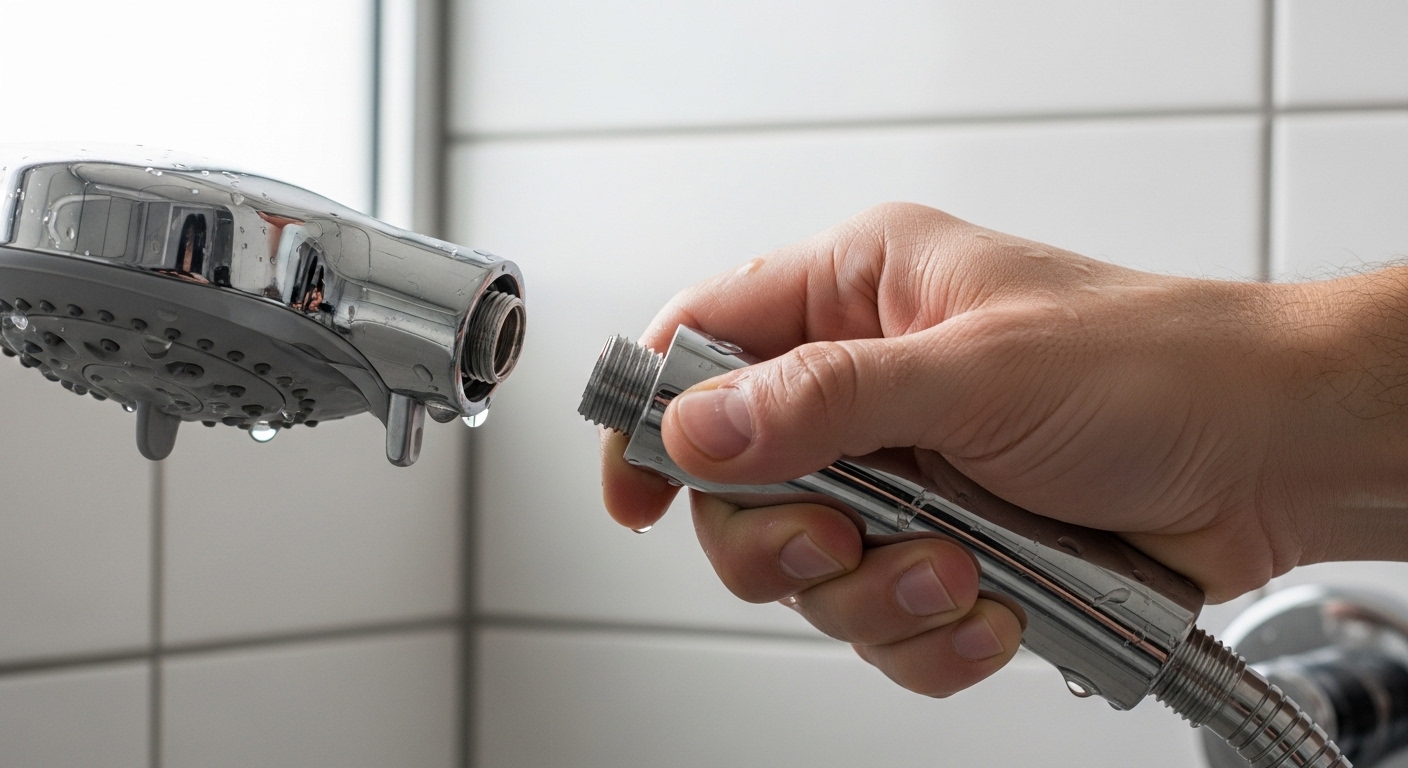
If your shower head suddenly has low pressure, start with the cheapest, most likely cause first: sediment and hard-water scale plugging the tiny nozzles and the inlet screen. When water flow drops overnight or over a couple of weeks — and the rest of your house (kitchen faucet, other showers, garden spigot) still runs strong — the problem is almost certainly inside the shower head itself, not in your pipes or your municipal supply. That single fact saves most people a $150 plumber visit.
Below I’ll walk through exactly how to diagnose it in about two minutes, the five real causes ranked by how common they are, a step-by-step cleaning that fixes the vast majority of cases, and the handful of situations where the low pressure is actually a warning sign of something bigger. I’ve repaired, tested, and reviewed hundreds of fixtures, so this is the same order of operations a good plumber uses — just written so you can do it yourself.
How do I tell if it’s the shower head or my home’s water pressure?
Quick answer: Take the shower head off entirely and turn the water on. If a strong, full stream blasts out of the bare shower arm, your home pressure is fine and the problem is 100% inside the head or its filter. If the bare arm also dribbles, the issue is upstream — the valve, the pipes, or the supply.
This is the single most useful test, and it takes 30 seconds. Unscrew the shower head by hand (or with a wrench and a rag to protect the finish), then run the shower for a few seconds into the tub. A healthy shower arm should push out a thick, forceful column of water — enough that you wouldn’t want to stand in front of it.
Here’s how to read the result:
- Strong flow from the bare arm → weak flow with the head on: The head, its filter screen, or its flow restrictor is clogged. This is the most common scenario by far. Skip to the cleaning steps.
- Weak flow even from the bare arm: The restriction is upstream — a partially closed shut-off valve, a failing pressure-balancing cartridge in the mixer, a clogged pipe, or genuinely low house pressure. This needs a different fix (covered lower down).
- Strong flow, but only for a second, then it drops: Often a pressure-balancing spool sticking in the shower valve, or an issue with the water heater if it only happens on the hot side.
Why did my shower head lose pressure so suddenly?
Quick answer: “Sudden” low pressure is usually scale or sediment that finally crossed a threshold — the buildup was gradual, but flow falls off a cliff once enough nozzles are blocked. A dislodged flow restrictor, a torn rubber washer, or debris knocked loose after utility work can also drop pressure overnight.
People describe the change as sudden because water flow doesn’t decline in a smooth, noticeable line. Mineral deposits narrow each nozzle a little at a time, and you don’t feel much difference — until the last bit of margin disappears and the spray goes from “fine” to “sad trickle” seemingly overnight. Here are the five real causes, ranked by how often they’re the culprit.
| Cause | How common | Tell-tale sign | Fix time |
|---|---|---|---|
| Mineral scale clogging the nozzles | Very common (hard-water areas) | Spray splays sideways; some jets dead, some strong | 30–60 min soak |
| Clogged inlet screen / filter washer | Very common | Grit visible in the little screen behind the head | 5–10 min |
| Slipped or swollen flow restrictor | Common | Happened right after a new head or cleaning | 10 min |
| Debris after utility/pipe work | Occasional | Started right after street work or a repair | 10–20 min flush |
| Failing valve cartridge or low house pressure | Less common | Bare shower arm also runs weak | Cartridge swap or plumber |
Two of these — scale on the nozzles and grit in the inlet screen — account for the large majority of “my shower head suddenly has low pressure” complaints, especially if you live somewhere with hard water (the U.S. Geological Survey classifies most of the American Southwest, Midwest, and Texas as moderately hard to very hard). If your kitchen faucet has also been slowing down, that’s a strong hint you’ve got hard water working against you, and a good stainless steel kitchen faucet aerator plus regular descaling will keep the whole house flowing better.
How do I clean a clogged shower head to restore pressure?
Quick answer: Unscrew the head, remove and rinse the inlet screen, soak the whole head in warm white vinegar for 30–60 minutes (up to overnight for heavy scale), scrub the nozzles, and reassemble. This restores full pressure in roughly 8 out of 10 cases.
You don’t need special chemicals. Plain distilled white vinegar dissolves calcium and lime scale, which is exactly what’s blocking your nozzles. Here’s the full sequence:
- Turn off the shower and lay a towel in the tub so you don’t lose small parts down the drain.
- Unscrew the shower head from the arm by hand, or with an adjustable wrench wrapped in a cloth to avoid scratching the finish.
- Find the inlet screen / filter washer inside the head’s connection nut — it’s a small plastic-and-mesh disc. Pop it out with a toothpick, rinse it under a strong tap, and clear any grit. This step alone fixes a surprising number of cases.
- Soak the head fully submerged in warm white vinegar for 30–60 minutes. For heavy, crusty scale, go overnight. If you can’t remove the head, fill a sturdy plastic bag with vinegar, slip it over the head so the nozzles are submerged, and secure it with a rubber band.
- Scrub the nozzles. Most modern heads have soft rubber (silicone) nozzle tips — just rub them with your thumb or an old toothbrush and the loosened scale flakes off. For metal-face heads, use a toothbrush and a pin to clear individual jets.
- Flush and reassemble. Run the head under a strong tap to blast out debris, wrap the shower-arm threads with two or three turns of plumber’s (PTFE) tape, and hand-tighten it back on. Snug, not gorilla-tight.
Turn the water on and you should feel the difference immediately. If the spray is now even and forceful, you’re done. If it’s better but still not right, the flow restrictor or the valve is the next suspect.
Should I remove the flow restrictor to fix low pressure?
Quick answer: Only as a last resort, and know the trade-offs. The flow restrictor is a small plastic disc that caps flow at the federal 2.5 gallons-per-minute (GPM) limit. If it has slipped, swollen, or trapped debris, it can choke pressure — but removing it entirely raises your water and heating bills and, in some states like California and Colorado (which cap shower heads at 1.8 GPM), it’s non-compliant.
Before you rip it out, clean it. A restrictor that’s simply caught a chunk of scale will work fine once flushed. Here’s the smart approach:
- Locate it: After unscrewing the head, look inside the inlet. The restrictor is usually a colored plastic disc (often star-shaped in the center) sitting behind the screen and washer.
- Clean it first: Pop it out, rinse it, and check whether the center hole is blocked. Reinstall it and test. Most “restrictor problems” are really “dirty restrictor” problems.
- If you remove it: Expect noticeably stronger flow but higher water use. Keep the disc in a drawer — you’ll want it back if you sell the home or move to a stricter jurisdiction.
- Better middle ground: If your head is old and weak by design, replacing it with a modern high-pressure or air-injection head often beats gutting the restrictor. Newer heads are engineered to feel powerful while staying within the GPM limit.
A quick note on the wider shower system: if you’re already shopping for a replacement, this is a good moment to think about the whole setup — the head, the arm, and the valve trim ideally match. If you’re upgrading the valve too, our guide on how to install a shower mixer with diverter walks through the full swap without a plumber.
What if the bare shower arm is also weak — is it my valve or my pipes?
Quick answer: If water dribbles even with the head removed, the restriction is upstream. The three usual suspects, in order, are a partly closed shut-off valve, a worn pressure-balancing cartridge in the shower mixer, and — less often — a corroded or clogged pipe. Check the easy ones first.
Work through these before assuming the worst:
- Check the shut-offs. Make sure your main water valve and any in-line shower valves are fully open. It’s common for a valve to get bumped half-closed during other repairs.
- Test hot vs. cold separately. If only the hot side is weak, suspect the water heater (sediment in the tank or a partially closed heater shut-off), not the shower. If both are weak, it’s the valve or the pipe.
- Suspect the cartridge. Modern showers use a pressure-balancing or thermostatic cartridge. When it wears out or scales up, it restricts flow and can also make the temperature swing. Cartridges are cheap ($15–$50) and swappable in under an hour if you’re handy — but they’re brand-specific, so match the exact model.
- Consider the pipes. Old galvanized-steel pipe corrodes and narrows internally over decades. If your home has original galvanized plumbing and pressure is dropping everywhere, that’s a bigger (plumber-level) conversation.
Because a valve cartridge and a leaking shower are often related problems, it’s worth knowing the difference between a pressure issue and a seal issue. If you’re also seeing drips when the shower is off, our walkthrough on how to fix a leaking tap valve yourself in under an hour covers the cartridge and washer side of things, and the same skills transfer straight to a shower mixer.
How do I stop the low pressure from coming back?
Quick answer: Descale the head every 3–6 months if you have hard water, clean the inlet screen twice a year, and consider a shower filter or whole-house softener if scale is a constant battle. Prevention is 90% about staying ahead of mineral buildup.
Here’s a realistic maintenance rhythm that keeps a shower head running strong for years:
- Every 3–6 months (hard-water homes): Vinegar-bag soak overnight. Ten minutes of setup, and it never lets scale reach the “sudden failure” threshold.
- Twice a year: Pull and rinse the inlet screen and restrictor. This is where grit collects.
- Wipe the nozzles weekly: Silicone-tipped heads clear with a quick thumb rub in the shower — do it while the water’s warm and scale is soft.
- Address the water itself: If you’re descaling constantly, hard water is the root cause. A shower head with a built-in filter, or a whole-house softener, dramatically cuts buildup on every fixture — not just the shower.
If you decide the head itself is just past its prime, it’s worth buying the right style deliberately rather than grabbing whatever’s on the shelf. Rainfall-style heads, for example, behave very differently at low pressure — a big flat rain head can feel weak if your home pressure is modest. Our guide to the right rainfall shower head name to search for explains which designs hold up when pressure is limited and which need strong supply to feel good.
When is low shower pressure actually a warning sign?
Quick answer: Call a professional if the pressure drop is sudden and house-wide, if you see discolored or sputtering water, if only the hot side fails, or if you hear water running inside walls. These can signal a burst or leaking pipe, water-heater failure, or a municipal supply problem — not a clogged head.
Ninety percent of the time, a shower head with suddenly low pressure is a five-dollar, fifteen-minute cleaning job. But don’t ignore these red flags:
- Brown, rusty, or sputtering water: Air in the line or corroded pipe. Sputtering can also mean a supply issue worth calling your utility about.
- Sudden pressure loss everywhere in the house at once: Points to the main line, a pressure-regulator failure, or a municipal problem.
- Wet spots, warm floors, or the sound of running water in walls: Possible hidden leak — shut off the water and call a plumber promptly.
- Only the hot water is weak, and it’s getting worse: Sediment in the water heater tank or a failing heater — a maintenance flush or service call.
FAQ
Why did my shower pressure drop overnight with no warning?
Most often, scale buildup finally blocked enough nozzles to cross a threshold — the decline was gradual, but you only notice it once flow falls off a cliff. Debris knocked loose by nearby utility or plumbing work can also lodge in the inlet screen overnight. Remove the head and check the screen and nozzles first.
Can I fix low shower pressure without removing the shower head?
Yes — fill a plastic bag with warm white vinegar, slip it over the head so all the nozzles are submerged, secure it with a rubber band, and leave it 30–60 minutes (or overnight). Then run the shower to flush out the loosened scale. This works well for scale on the nozzle face, though it won’t clear a clogged inlet screen, which requires taking the head off.
Does removing the flow restrictor void my warranty?
It can. Many manufacturers consider the flow restrictor a required, code-mandated part, and removing it may void the warranty and put the fixture out of compliance with federal (2.5 GPM) or stricter state limits. Clean it first — a dirty restrictor causes most of the problems people blame on the part itself. If you do remove it, keep it so you can reinstall it later.
How often should I descale my shower head?
In hard-water areas, every 3–6 months keeps pressure steady; in soft-water areas, once a year is usually plenty. A quick overnight vinegar soak is all it takes, and it prevents the “sudden” failure entirely by never letting scale reach the choke point.
Will a new shower head fix low pressure, or is that a waste of money?
It depends on the cause. If the low pressure is from scale or a dirty screen, cleaning your existing head fixes it for free — a new head just re-clogs eventually. But if your head is old and simply weak by design, a modern high-pressure or air-injection model will feel dramatically stronger while staying within GPM limits. Diagnose first (bare-arm test), then decide.
Why is only my hot water pressure low in the shower?
That points to the hot side specifically: sediment settled in your water heater tank, a partially closed shut-off valve on the heater, or a worn mixing cartridge that restricts hot flow. Flushing the water heater and checking its shut-off valve are the first steps; if that doesn’t help, the shower valve cartridge is the next suspect.
A note on expertise and standards
Author note: This guide was written by the Avovida fixtures team, drawing on hands-on repair and bench-testing of hundreds of shower heads, faucets, and valve cartridges across chrome, brushed nickel, and matte black finishes. We tear down and flow-test the products we write about rather than repeating spec sheets.
About Avovida: Avovida (avovida.net) is a specialist retailer of faucets, shower heads, tub fillers, and bathroom fixtures. We focus on plain-English buying and repair advice so you can fix what you own or buy the right replacement the first time. Shower heads sold in the U.S. are regulated to a maximum of 2.5 GPM at 80 psi under federal law (with stricter 1.8 GPM limits in states like California and Colorado), and quality fixtures are third-party tested to ASME A112.18.1 / CSA B125.1 and NSF/ANSI 61 standards for safe drinking-water contact. When you buy a fixture, register it and keep the receipt — most reputable brands back their finishes and cartridges with limited lifetime warranties that cover exactly the kind of scale-related failures described here.
“`