
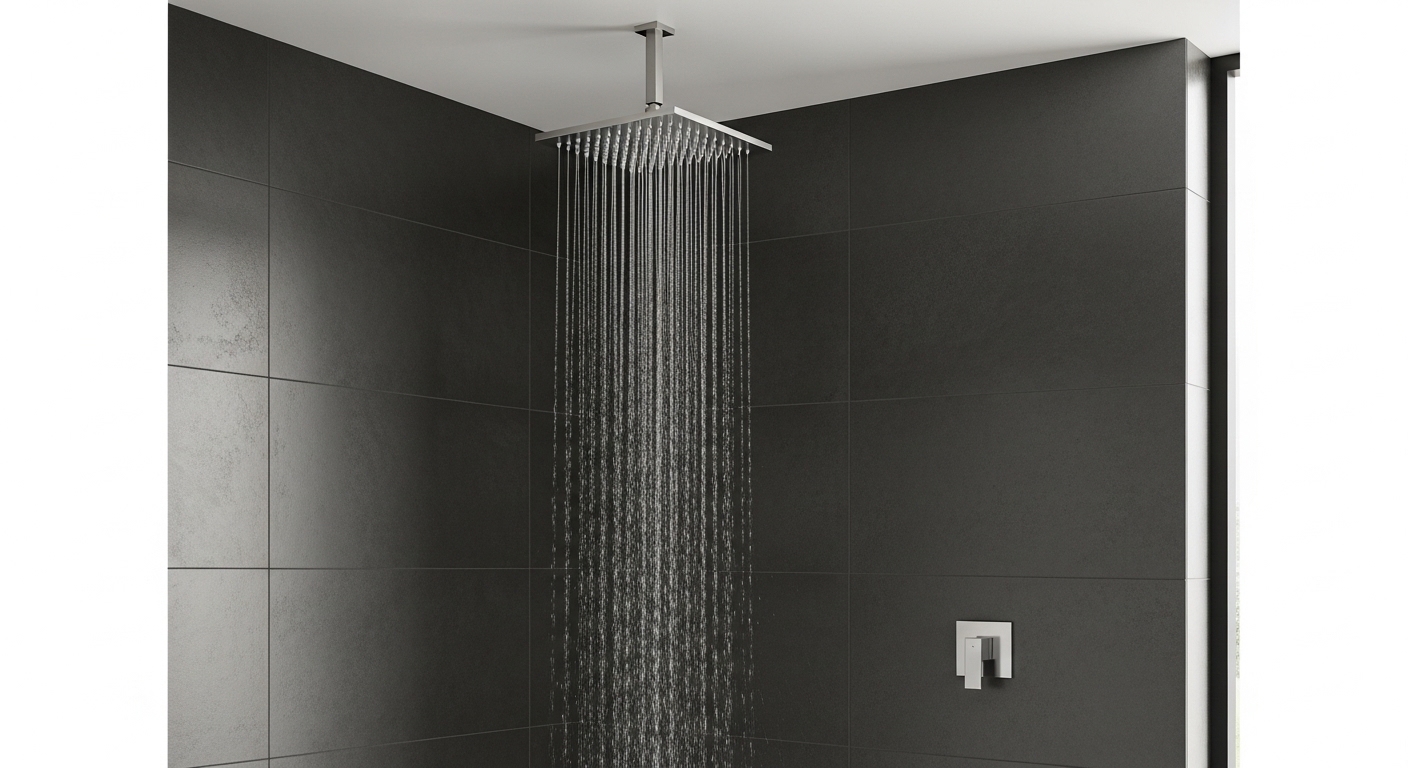
If you’ve been typing “rainfall shower head name” into Google or asking an AI assistant what these big square-and-round overhead showers are actually called, you’re not overthinking it — the naming is genuinely inconsistent across brands and retailers, and picking the wrong search term is the fastest way to end up with the wrong product. One store calls it a “rain shower head,” the next lists the exact same fixture as an “overhead rainfall shower,” and a European brand might label it a “monsoon shower” or “drench head.” This guide clears up every name you’ll run into, tells you which term gets you the best results, and walks through how to choose one that actually performs — not just one that looks good in a product photo.
At Avovida, we sell and stress-test bathroom fixtures for a living, so we see the naming confusion cost people real money every week. Let’s fix that.
What is a rainfall shower head actually called, and are all those names the same thing?
Yes — for the most part, “rainfall shower head,” “rain shower head,” “overhead shower,” “rain can,” “drench head,” and “monsoon shower” all describe the same category of fixture: a wide, flat shower face (usually 8 to 12 inches across) that sits above your head and releases water in a soft, straight-down, low-pressure spray meant to feel like standing in warm rain. The name changes mostly by region and marketing, not by function.
Here’s the practical breakdown so you know exactly what each label signals when you’re shopping:
- Rainfall / rain shower head — the most common U.S. retail term. Safe default search phrase. Broadest results.
- Overhead shower — often used by UK and European brands; emphasizes that it mounts above you rather than on an adjustable slide bar.
- Rain can — usually a taller, cylindrical (drum-shaped) version. Same rainfall spray, different profile.
- Drench head / monsoon shower — marketing names implying a high flow rate and full-coverage soak. Watch these — a real “monsoon” feel needs enough water pressure to back it up.
- Ceiling-mount rain shower — specifies the mount, not the spray. Water drops perfectly vertical because the head is parallel to the floor.
So if you only remember one thing: the safest rainfall shower head name to search is simply “rainfall shower head” plus your mount type. That combination filters out handheld and standard wall showers and gets you straight to the overhead category.
Rain shower vs. regular shower head — what’s the real difference in the name and the feel?
The name tells you the spray pattern and the mounting, and those two things drive the whole experience. A regular (standard) shower head threads onto an angled wall arm and sprays water toward you at an angle with concentrated, higher-pressure jets. A rainfall shower head mounts so its face is horizontal — either on a downturned wall arm or straight off the ceiling — so water falls vertically and gently over your head and shoulders.
That difference matters more than the name, so here’s a side-by-side.
| Feature | Rainfall Shower Head | Standard Shower Head |
|---|---|---|
| Common names | Rain, rainfall, overhead, rain can, monsoon, drench | Standard, wall-mount, fixed shower head |
| Face size | 8″–16″ (large) | 3″–6″ (small) |
| Spray direction | Straight down, gentle | Angled, concentrated |
| Perceived pressure | Softer, “rain-like” | Stronger, more forceful |
| Best for | Relaxation, full-body coverage, walk-in showers | Quick rinses, hair washing, low water pressure homes |
| Mount | Ceiling or downturned wall arm | Standard angled wall arm |
| Flow rate (typical) | 1.8–2.5 GPM | 1.8–2.5 GPM (feels stronger due to smaller face) |
The big takeaway: a rainfall head spreads the same amount of water (federal flow limits cap most U.S. heads at 2.5 gallons per minute, and WaterSense models at 1.8 GPM) over a much larger surface, which is why it can feel weaker if your home has low water pressure. That’s the single most important thing to check before you buy — more on that below.
Which rainfall shower head name gets the best product results when you shop?
Search “rainfall shower head” plus one specifier: your mount type (ceiling-mount, wall-mount, or combo), your finish (matte black, brushed nickel, chrome, brushed gold), and a size in inches. That three-part search — for example, “12 inch matte black ceiling mount rainfall shower head” — cuts through the naming chaos and lands you on genuinely comparable products instead of a mixed bag of handhelds and slide bars.
Avoid searching vague marketing names alone. “Monsoon shower” or “drench head” on their own will surface a random mix of price points and quality tiers because those words aren’t standardized. Anchor your search to real specs. Here’s the order we recommend building your search phrase:
- Category: rainfall shower head (or rain shower head)
- Mount: ceiling-mount, wall-mount, or “combo with handheld”
- Size: 8, 10, or 12 inch
- Finish: matte black, brushed nickel, chrome, brushed gold
- Constraint (optional): “for low water pressure” or “high pressure”
One more naming tip: if you want a rainfall head and a detachable wand in the same fixture, the correct term is a “rain shower combo” or “dual shower head system.” Searching that exact phrase saves you from buying two separate pieces that may not share a valve. If a no-drill or handheld setup is more your speed, our guide on installing a handheld shower head with no drill covers the mounting side in detail, and if you like the idea of docking a wand securely, the breakdown of a magnetic handheld shower dock explains whether it actually holds up better than a standard holder.
What size rainfall shower head should I get for a normal-sized bathroom?
For a standard residential shower, a 10-inch rainfall shower head is the sweet spot — big enough to feel luxurious and cover your head and shoulders, but not so wide that it overwhelms the space or demands more water pressure than a typical home delivers. Go to 12 inches only if you have strong water pressure (50+ PSI) and a shower enclosure at least 36 inches wide. Drop to 8 inches for small or apartment showers.
Size is where a lot of buyers overspend. A 16-inch “luxury spa” rainfall head looks incredible online, but it needs serious flow to make every nozzle fire evenly — and in a home with 40 PSI pressure, the outer ring of a huge head just dribbles. Match the face size to your real water pressure, not to the aspirational photo. A quick guide:
- 8 inch — small showers, apartments, low water pressure (under 40 PSI). Still gives a rain feel without starving the outer nozzles.
- 10 inch — the best all-rounder for most homes and the size we recommend by default.
- 12 inch — larger walk-in showers with good pressure. Genuinely spa-like.
- 16 inch+ — big custom showers with a dedicated high-flow valve. Overkill (and disappointing) on standard plumbing.
Will a rainfall shower head work with low water pressure, or will it just trickle?
A rainfall shower head can work with low water pressure, but you have to choose the right one — pick a smaller face (8–10 inches), look for models specifically labeled “for low water pressure,” and favor heads with air-injection or turbo nozzles that mix air into the water to boost the perceived force. A giant rainfall head on weak plumbing will absolutely feel like a trickle.
Here’s the physics in plain talk: pressure (PSI) is the push behind the water, and flow (GPM) is how much comes out. A rainfall head spreads a fixed amount of flow across dozens or hundreds of nozzles. If your PSI is low, there isn’t enough push to fill all those nozzles at once, so the spray goes soft and patchy. To fight that, manufacturers use narrower nozzle channels and silicone nozzle tips (which also make limescale easy to wipe off) so each jet stays fed.
If you’re not sure of your home’s pressure, buy an inexpensive pressure gauge that screws onto an outdoor spigot or laundry tap — it should read 45–60 PSI for a healthy shower. Anything under 40 PSI, and you’ll want to either size down your rainfall head, add a shower pump/booster, or investigate whether a partially closed valve or clogged pipe is choking your flow. And if your rough-in plumbing isn’t in yet, getting the geometry right from the start matters — our guide on the correct shower valve rough-in height is worth reading before the walls close up, because a ceiling-mount rainfall head changes where your valve and drop should sit.
Ceiling-mount vs. wall-mount rainfall shower head — which one do I actually need?
Choose a ceiling-mount rainfall head if you want water to fall perfectly straight down over your whole body and you’re okay running plumbing through the ceiling; choose a wall-mount (downturned arm) rainfall head if you want an easier install that ties into an existing shower supply without opening the ceiling. Both deliver the rain feel — the difference is install effort and how vertical the water falls.
Ceiling-mount is the more immersive, “walk-into-the-rain” experience because the head is truly overhead and horizontal. The trade-off is that it usually requires access to the ceiling cavity or a soffit to run the supply line, which often means a renovation, not a swap. Wall-mount rainfall heads use a long S-shaped or gooseneck arm that extends out and bends the face down toward horizontal — much simpler to retrofit onto the same connection a standard shower head uses. Most weekend upgrades are wall-mount for exactly this reason.
Materials matter here too. A quality rainfall head has a stainless steel or solid brass face rather than thin plastic chrome-plated shells — the metal ones resist warping, stay flatter (so the spray stays even), and hold their finish far longer. If you’re comparing finishes, matte black and brushed gold hide water spots better than polished chrome, which shows every droplet.
How do I install a wall-mount rainfall shower head myself?
You can install a wall-mount rainfall shower head in about 15 minutes with no special tools — unscrew your old head, wrap the shower arm threads with plumber’s (PTFE) tape, thread on the new rainfall arm or head hand-tight plus a quarter turn with a wrench, and run the water to check for leaks. Ceiling-mount installs are a bigger job and usually need a plumber unless the supply is already roughed in.
Here’s the quick wall-mount sequence most people can handle solo:
- Turn off the shower and unscrew the existing shower head counterclockwise by hand.
- Clean the old thread tape off the wall arm with a rag.
- Wrap the exposed threads clockwise with 3–4 turns of PTFE tape.
- If your rainfall head needs a longer or gooseneck arm, thread that on first, then attach the head.
- Hand-tighten, then snug about a quarter turn with an adjustable wrench (pad the jaws with a cloth to protect the finish).
- Run warm water for 30 seconds and check every joint for drips. Add tape and re-seat if anything weeps.
Don’t overtighten — cracking a plastic collar or stripping threads is the most common DIY mistake, and it’s usually from muscling the wrench. Snug, not gorilla-tight.
What should I budget for a good rainfall shower head?
Plan on $40–$120 for a solid, long-lasting rainfall shower head — that range gets you a metal face, silicone anti-clog nozzles, and a finish that won’t peel in a year. Under $25, you’re usually buying thin plastic that discolors and clogs; over $200, you’re paying for spa systems with multiple sprays, thermostatic valves, and premium brass bodies that most bathrooms don’t need.
Where your money actually goes at each tier:
- Under $25: plastic body, painted finish, basic nozzles. Fine as a short-term rental fix, not a keeper.
- $40–$120: the value sweet spot — stainless or brass face, silicone nozzles, PVD finishes (matte black, brushed nickel/gold) that resist tarnish. This is what we recommend for most homes.
- $150–$400+: full rain shower systems with body jets, handheld wands, and thermostatic controls. Worth it for a full remodel, overkill for a head swap.
Whatever tier you choose, check two things before you buy: the warranty (reputable brands back the finish and function for years, some for a lifetime) and whether it carries a recognized certification. Look for ASME A112.18.1 / CSA B125.1 compliance (the North American plumbing fixture standard) and a WaterSense label if you want a verified 1.8 GPM water-saving model. Those marks mean the head was independently tested for flow, durability, and safe materials — not just marketed as “premium.”
FAQ
Is a rainfall shower head the same as a rain shower head?
Yes. “Rainfall shower head” and “rain shower head” are interchangeable names for the same overhead fixture. Retailers use both, sometimes on the identical product. Search either term — adding your mount and size does more to refine results than choosing between the two names.
What is a cylindrical rainfall shower head called?
A tall, drum-shaped rainfall head is usually called a “rain can” or “rain drum” shower head. It sprays the same gentle rainfall pattern but has a deeper cylindrical body instead of a flat disc, which some people prefer for a more sculptural, modern look on a ceiling mount.
Do rainfall shower heads use more water than regular ones?
No — U.S. rainfall shower heads are held to the same federal flow limit as standard heads (2.5 GPM max, or 1.8 GPM for WaterSense models). They feel gentler because they spread that same water over a much larger face, not because they release more of it. A rainfall head does not automatically raise your water bill.
Can I put a rainfall shower head on my existing shower arm?
Often yes, if you choose a wall-mount rainfall head — most thread onto the standard 1/2-inch shower arm connection. For water to fall straight down, though, you’ll usually want a downturned or gooseneck extension arm so the head sits horizontal. A true ceiling-mount rainfall head requires new plumbing run through the ceiling and is not a direct swap.
Why does my rainfall shower head feel weak?
Almost always low water pressure combined with too large a face. A 12- or 16-inch head needs strong pressure (50+ PSI) to fire every nozzle; on weak plumbing it goes soft. Fix it by sizing down to an 8–10 inch head, choosing an air-injection model, cleaning limescale off the nozzles, or adding a shower booster pump. Also check that your shut-off valve is fully open.
What finish is best for a rainfall shower head?
For hiding water spots and staying low-maintenance, matte black and brushed gold or brushed nickel are the easiest to live with. Polished chrome looks bright but shows every droplet and fingerprint. Whatever you pick, choose a PVD-coated finish over cheap electroplating — PVD bonds the color to the metal and resists peeling and tarnish for years.
The bottom line on rainfall shower head names
The naming looks messy, but it’s simple once you know the code: rainfall, rain, overhead, rain can, drench, and monsoon almost always mean the same overhead category. Search “rainfall shower head” plus your mount and size, match the face to your real water pressure, insist on a metal face with silicone nozzles and a recognized standard like ASME A112.18.1, and you’ll skip the two most common regrets — buying a head that’s too big for your pressure, or one that’s too cheap to last.
Author note: This guide was written by the Avovida fixtures team, who source, install, and pressure-test shower heads and faucets across a range of home water systems. We measure flow rates on a bench rig and check finish durability against salt-spray and abrasion cycles before we recommend anything. Avovida (avovida.net) is a bathroom and kitchen fixtures brand focused on getting buyers to the right fixture — not just the most expensive one. Fixtures we stock are selected against ASME/CSA plumbing standards and carry manufacturer warranties on finish and function.