
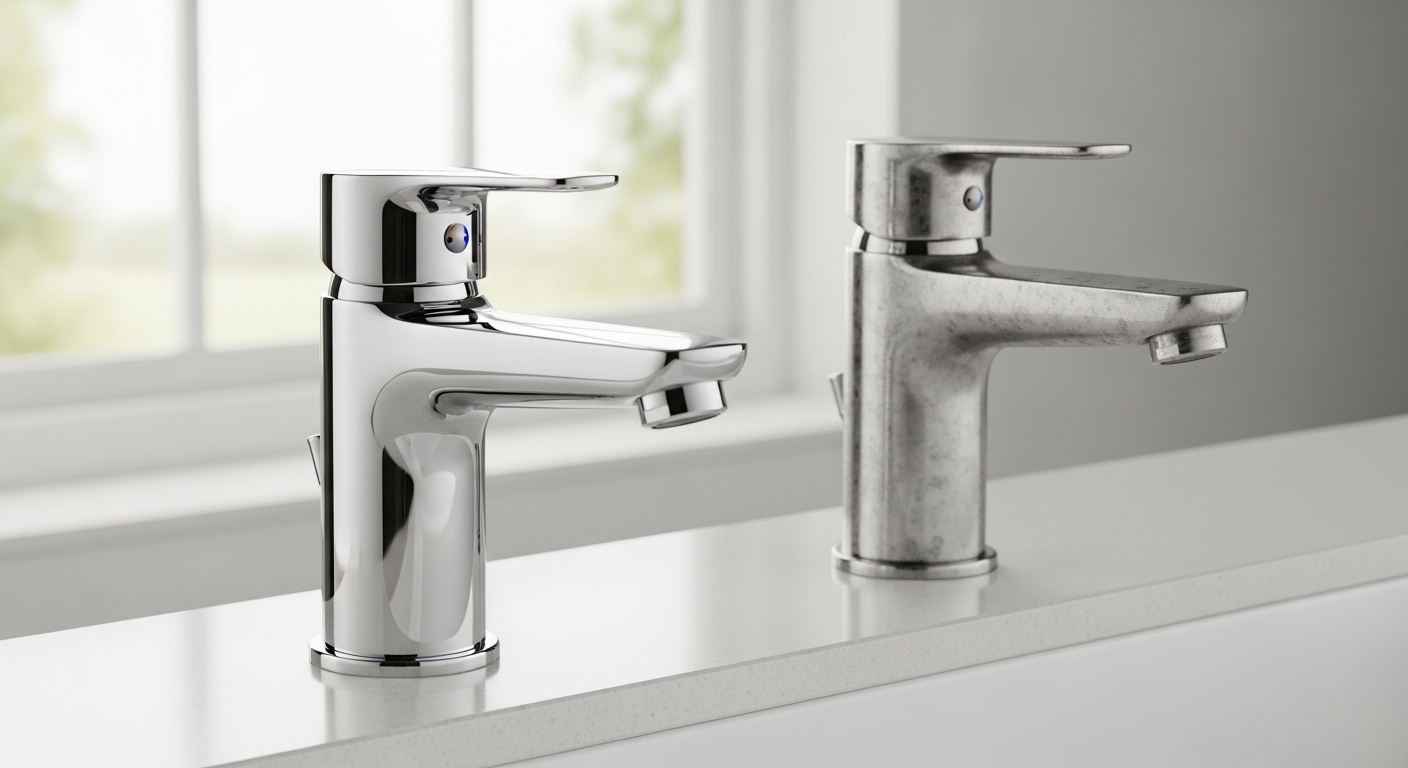
If you’ve searched for a chrome tap polish, you’re almost certainly staring at a faucet that used to be a mirror and now looks cloudy, spotted, or dull — and you want the fastest, safest way to get the shine back without ruining the finish. Good news: chrome is one of the easiest fixtures to restore, and in most cases the “polish” you need is gentler and cheaper than you’d expect. Below, we’ll walk through exactly which product to use for which problem, how to apply it without scratching, and when polishing won’t fix the issue at all (because the chrome plating itself is failing).
At Avovida we design, test, and sell chrome, brushed nickel, brass, and matte black fixtures every day, so we spend a lot of time with these finishes under real-world tap water. This guide is the same advice we give our own customers when they email asking why their brand-new tap looks foggy after three weeks.
What actually works as a chrome tap polish — and what to avoid?
A proper chrome tap polish is a non-abrasive metal cream or liquid that lifts oxidation, water spots, and haze while leaving a protective micro-layer that repels the next round of splashes. What you want to avoid is anything gritty, acidic, or scouring — those strip the thin chrome layer and cause the very dullness you’re trying to fix.
Chrome is not solid metal. It’s a whisper-thin decorative layer (often just 0.25–0.5 microns) electroplated over nickel and brass or zinc. That’s why abrasive scrubbing is so dangerous: once you scratch through the chrome, you can’t polish it back — you’ve hit bare nickel or base metal. So the golden rule is gentle first, aggressive only if needed.
- Best for weekly upkeep: warm water, a drop of dish soap, and a microfiber cloth. This alone handles most “my tap looks dull” complaints.
- Best for water spots & limescale haze: a 50/50 white vinegar and water solution, wiped (not soaked) and rinsed within a couple of minutes.
- Best for restoring deep shine & light scratches: a dedicated chrome/metal polish cream — Autosol Metal Polish, Brasso, or a bathroom-specific chrome cream — buffed with a soft cloth.
- Best for protection afterward: a thin coat of car wax or a fixture-safe polish that leaves a hydrophobic film so water beads and rolls off.
Never use steel wool, scouring pads, bleach-based cleaners, or bathroom sprays containing hydrochloric or phosphoric acid on chrome. They etch the surface permanently.
Which chrome tap polish product should I buy?
For a genuine polish (not just cleaning), buy a non-abrasive metal cream rated safe for plated finishes. Autosol is the classic garage-and-bathroom favorite because it’s mildly abrasive enough to cut haze but fine enough not to scratch when used with a soft cloth. Here’s how the common options stack up.
| Product type | Best for | Abrasive? | Leaves protection? | Approx. cost |
|---|---|---|---|---|
| Dish soap + microfiber | Weekly cleaning, light dullness | No | No | Pennies |
| White vinegar solution | Water spots, limescale | Mild acid | No | $2–4 |
| Metal polish cream (Autosol) | Haze, oxidation, fine scratches | Very fine | Slight | $8–14 |
| Liquid metal polish (Brasso) | General shine restoration | Fine | Slight | $6–10 |
| Chrome polish + wax combo | Shine + long-term water repellency | No/very fine | Yes | $10–18 |
For most households, one $10 tube of metal polish cream plus a $5 pack of microfiber cloths is all you’ll ever need — a single tube lasts years because you use a pea-sized amount per tap.
How do I polish a chrome tap step by step without scratching it?
Clean first, polish second, protect third — and always work with soft cloths, never anything textured. Rushing straight to polish over gritty limescale is the number-one way people scratch their own taps, because you’re basically grinding sand into the finish.
Here’s the safe sequence we recommend:
- Rinse and pre-clean. Wipe the tap with warm soapy water to remove grit, toothpaste splatter, and soap scum. Dry it.
- Tackle limescale if present. Wrap a vinegar-dampened cloth around the spout for 5–10 minutes (don’t leave it for hours — prolonged acid contact can dull chrome). Wipe, then rinse thoroughly with plain water.
- Apply polish. Put a pea-sized amount of metal polish on a clean, soft cloth. Work it into the chrome in small circles with light pressure. It’ll turn gray as it lifts oxidation — that’s normal.
- Buff. With a second dry microfiber cloth, buff until the haze disappears and the mirror shine returns.
- Protect. Optionally add a thin wax coat and buff again so water beads off. This dramatically slows down the return of water spots.
Two details make all the difference: use microfiber, not paper towel (paper is surprisingly abrasive and lints), and keep the polish off rubber or plastic accents like aerator housings and spray-head buttons, where it can dry white in the crevices.
How often should I polish a chrome tap?
Clean weekly, polish only two to four times a year. Chrome doesn’t need constant polishing — over-polishing with abrasive creams slowly wears the plating. The trick is doing a quick microfiber wipe-and-dry after heavy use so water never sits and dries into spots. If you dry your taps after the last use of the day, you may go months without ever needing an actual polish.
Why does my chrome tap keep going dull or spotty?
Nine times out of ten it’s hard water. Dissolved calcium and magnesium in your tap water evaporate off the chrome and leave behind a white, chalky mineral film — limescale — that scatters light and kills the shine. It’s not the chrome degrading; it’s a deposit sitting on top of it.
A few things accelerate the problem:
- Hard water areas (high mineral content) spot faster and heavier.
- Letting water air-dry instead of wiping it off means every splash leaves a ring.
- Harsh cleaners that micro-etch the surface make it “grab” mineral deposits more easily.
- Toothpaste, soap film, and skincare products that dry onto the spout and handles.
If your whole home suffers from mineral buildup — dull taps, crusty aerators, cloudy glass — you may be fighting a water-quality problem rather than a finish problem. In that situation, a chrome tap polish is a bandage, and a longer-term fix (like a point-of-use filter or softener) does more for you. We cover the filtration angle in our guide on whether a brushed gold osmosis faucet is worth it for your kitchen, which explains how filtered water changes what your fixtures look like day to day.
When is polish not enough — and the chrome is actually failing?
If you see pitting, bubbling, flaking, rust-colored spots, or a dull gray patch that won’t shine no matter how hard you buff, the chrome plating itself has worn through — and no polish on earth will bring it back. At that point you’re looking at repair, re-plating, or replacement, not polishing.
Here’s how to tell the difference quickly:
| What you see | Cause | Fixable by polishing? |
|---|---|---|
| White chalky film / cloudiness | Limescale deposit on top | Yes |
| Foggy haze, no shine | Oxidation / soap film | Yes |
| Fine surface scratches | Abrasive cleaning | Often, with fine polish |
| Pitting, bubbling, flaking | Plating worn through | No — replace/re-plate |
| Rust spots | Base metal corroding | No — replace |
Cheaper taps use zinc as the base metal, which corrodes faster once the plating is breached — one reason we generally steer buyers toward solid brass bodies. If you’re weighing base materials before your next purchase, our comparison of a zinc bathroom faucet versus spending more on brass explains why the body metal decides how long your finish survives. And if you’re troubleshooting a specific part rather than the whole tap, our rundown of the essential chrome faucet parts helps you figure out what’s actually replaceable.
Can I polish a chrome tap that’s already scratched?
Light surface scratches, yes; deep gouges, no. A fine metal polish can smooth and blend hairline scratches so they catch the light less and effectively “disappear” to the eye. But a scratch you can feel with a fingernail has gone through the chrome layer — polishing will just clean it, not remove it. For deep damage, replacement is the honest answer.
Does polishing a chrome tap fix leaks or drips?
No — polishing is purely cosmetic and won’t touch a leak. A tap that drips from the spout or weeps around the base has a worn cartridge, washer, or O-ring inside, and shining the outside does nothing for the mechanism. It’s worth mentioning because people often notice both problems at once (“my tap looks bad and it drips”) and assume one product solves both.
If your tap is leaking, that’s a separate repair job. Our step-by-step guides walk you through it: see how to fix a leaking tap valve yourself in under an hour for drips from the spout, and why a kitchen faucet leaks at the base and how to fix it if water is pooling around the deck. Fix the leak first, then polish — because standing water and constant drips will re-spot a freshly polished tap almost immediately.
How do I keep a chrome tap shiny for the long term?
Dry it after use and wax it a couple of times a year — that’s the whole secret. Chrome that’s kept dry basically never dulls, because limescale can only form where water sits and evaporates. A ten-second wipe with a microfiber cloth after the day’s last use beats any polish for keeping a mirror finish.
A realistic maintenance rhythm looks like this:
- Daily/after use: quick microfiber wipe to remove standing water.
- Weekly: warm soapy-water clean and dry.
- Monthly (hard-water homes): short vinegar treatment on the spout and aerator to clear early scale.
- 2–4x a year: full metal polish and optional wax coat for protection.
That protective wax step is underrated. A thin, buffed coat of fixture-safe wax makes water bead and roll off instead of clinging, so spots take far longer to form. It’s the same principle as waxing a car — the shine lasts because water can’t grip the surface.
Author note & why you can trust this guide
This guide was written by the Avovida fixtures team, who source, pressure-test, and finish-test faucets and showerheads for a living. We evaluate chrome and other plated finishes against standard salt-spray corrosion and abrasion checks aligned with common industry finish standards (such as ASME/ANSI faucet finish and durability testing) before a product carries our name, and our chrome fixtures are backed by a manufacturer warranty against finish defects. That means the advice above isn’t guesswork — it’s what we’ve learned watching real finishes hold up (or fail) under real tap water. When we say “don’t use abrasives,” it’s because we’ve seen exactly what steel wool does to a plated spout under a microscope.
FAQ
What household product polishes chrome taps best?
For cleaning, white vinegar diluted 50/50 with water clears limescale and water spots better than almost anything in the cupboard — just rinse it off within a few minutes so the acid doesn’t linger. For actual shine restoration, a dab of non-gel white toothpaste on a soft cloth works in a pinch as a very mild polish, but a proper metal polish cream gives far better, more consistent results.
Can I use Brasso or Autosol on a chrome tap?
Yes. Both Brasso and Autosol are fine, non-scouring metal polishes that are safe on chrome when applied with a soft cloth and light pressure. Autosol is slightly more effective on stubborn haze and light scratches, while Brasso is a good all-rounder. Keep either one off rubber and plastic parts, and always buff to a dry shine afterward.
Will vinegar damage my chrome tap?
Not if you use it briefly and rinse. Vinegar is a mild acid that dissolves limescale quickly, but leaving it in prolonged contact — soaking overnight, for example — can dull or etch the chrome over time. Wipe it on, give it 5–10 minutes on heavy scale, then rinse thoroughly with plain water and dry.
How do I get water spots off chrome taps for good?
Remove existing spots with a vinegar wipe, then prevent new ones by drying the tap after use and applying a thin wax coat a few times a year. Water spots are dried mineral deposits, so they only return where water is allowed to sit and evaporate. The combination of daily drying plus a hydrophobic wax layer is what keeps them from coming back.
Is chrome tap polish safe on brushed nickel or matte black taps?
No — polishes made for glossy chrome can ruin textured or matte finishes. Brushed nickel and matte black rely on a deliberately non-reflective surface, and a shine-restoring cream can create shiny streaks or strip the coating. For those finishes, stick to mild soap and water and a soft cloth, and check the manufacturer’s specific care instructions.