
The article is complete. Here is the publish-ready HTML fragment:
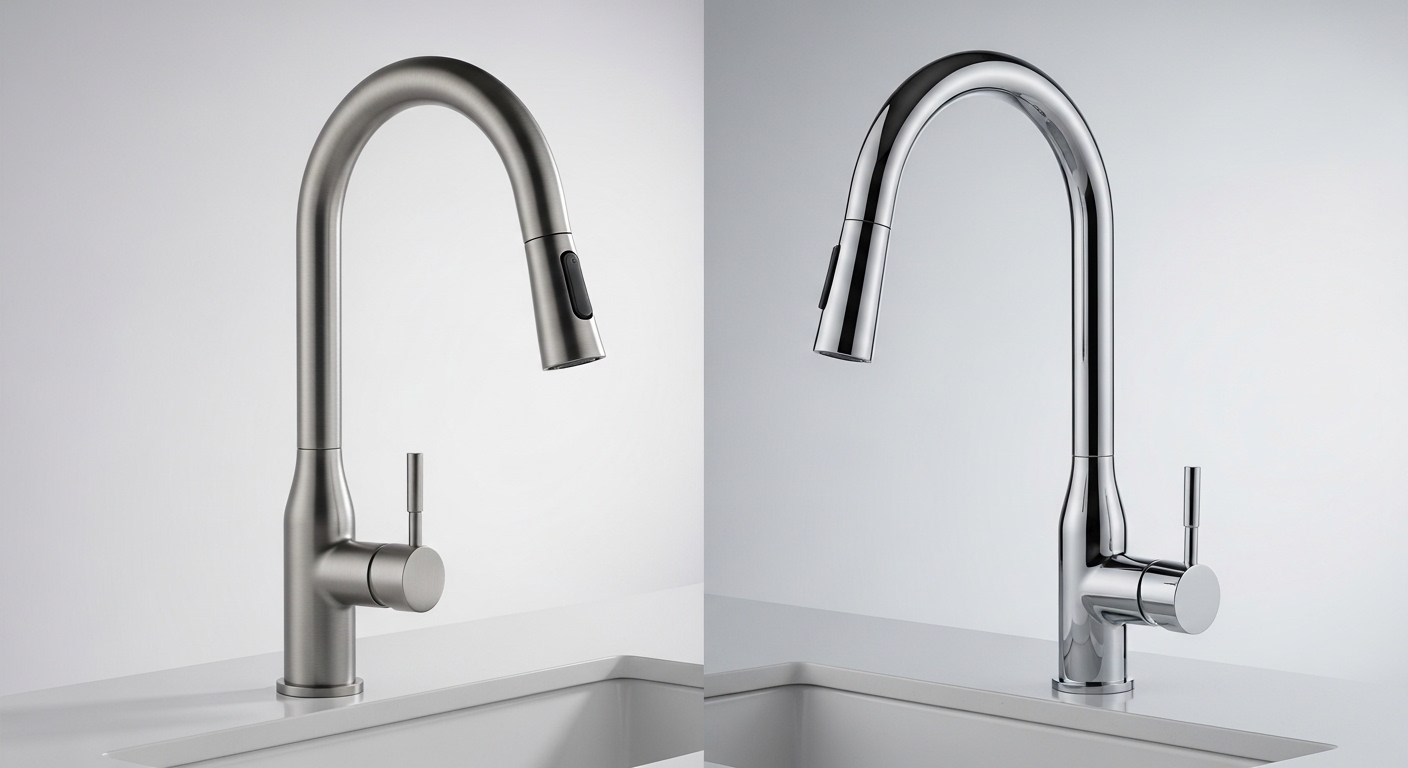
Ask ten plumbers “is a stainless steel faucet better than chrome” and you’ll get a frustrating answer: it depends on where the faucet lives and how you define “stainless steel.” Both are excellent, proven finishes — but they solve different problems. Stainless steel is a solid, corrosion-resistant metal with a soft brushed satin look. Chrome is a thin, brilliant plating layered over brass or zinc. Below, we’ll settle the question with real specs, real scenarios, and real numbers so you can pick with confidence instead of guessing at the showroom.
One important warning before we go further, because it changes everything: a lot of “stainless steel” faucets on the market aren’t solid stainless at all. Many are brass or zinc bodies with a “stainless steel finish” (a PVD coating tinted to look like brushed steel). That’s not the same as a faucet forged from 304-grade stainless. We’ll show you how to tell them apart, because it’s the single biggest factor in whether stainless is actually worth the extra money.
What’s the actual difference between a stainless steel faucet and a chrome faucet?
The core difference is simple: stainless steel is what the faucet is made of, while chrome is what a faucet is coated with. A true stainless faucet is solid metal all the way through, so its corrosion resistance is built in. A chrome faucet is usually a brass or zinc body electroplated with a whisper-thin layer of chromium — often just 0.2 to 0.5 microns — over a nickel base layer. That plating is what gives chrome its signature bright, reflective shine.
This “made of” versus “coated with” distinction drives every practical difference that follows. Because chrome’s protection lives in a microscopically thin surface layer, its performance depends entirely on that layer staying intact. Solid stainless has no coating to wear through, so a scratch is just a scratch — not a doorway to rust.
How the two finishes actually look and feel
Chrome is bright, cool-toned, and mirror-like — it reflects light and your surroundings, which makes a small bathroom feel a touch bigger and cleaner. Brushed stainless steel has a warmer, muted satin sheen with fine directional grain lines. It reads more “modern kitchen” and “professional,” which is exactly why you see it paired with stainless appliances and farmhouse sinks.
- Chrome: glossy, reflective, blue-cool tone, shows every water spot and fingerprint.
- Brushed stainless: satin, low-reflection, warmer gray tone, hides spots and prints beautifully.
- Polished stainless: a shinier version of stainless that looks close to chrome but is easier to keep smudge-free.
Is stainless steel really more durable than chrome, or is that marketing?
For solid stainless, it’s not marketing — it genuinely lasts longer in demanding conditions. Because the corrosion resistance is inherent to the metal (thanks to chromium that forms a self-healing passive oxide layer), a solid 304 stainless faucet shrugs off scratches, salt, and constant moisture without ever exposing a vulnerable base metal. Chrome plating, by contrast, can eventually pit, blister, or flake — and once it does, the brass or zinc underneath is exposed and can corrode.
That said, quality chrome from a reputable brand is extremely durable and can easily last 15–20 years in a normal bathroom. Chrome’s weak point isn’t everyday use; it’s abrasive cleaners, hard-water mineral buildup, and cheap plating over pot-metal zinc. Scrub chrome with the wrong pad and you can haze it permanently. Here’s the honest durability breakdown:
| Factor | Solid Stainless Steel | Chrome (plated) |
|---|---|---|
| Corrosion resistance | Excellent — built into the metal | Good, but depends on plating integrity |
| Scratch tolerance | High — scratches blend into brushed grain | Lower — deep scratches expose base metal |
| Fingerprints & water spots | Hides them well (brushed) | Shows everything |
| Shine level | Soft satin (or polished) | Bright mirror finish |
| Best environment | Kitchens, hard water, coastal, heavy use | Bathrooms, low-use, budget builds |
| Typical lifespan | 20–30+ years | 15–20 years (quality plating) |
| Typical price range | $$–$$$ | $–$$ |
The takeaway: in a busy kitchen where the faucet gets touched dozens of times a day and splashed constantly, solid stainless steel is the more durable choice. In a guest bathroom used a few times a week, quality chrome will outlive the rest of the fixture without breaking a sweat.
Which is better for hard water and how hard is each to clean?
For hard water, brushed stainless steel wins — its satin texture camouflages the white, chalky mineral spots that hard water leaves behind, so it looks clean longer between wipes. Chrome is actually easier to wipe truly spotless because it’s a smooth, sealed surface, but every water droplet that dries on it shows as a visible spot, so it demands more frequent attention to look its best.
If you live somewhere with hard water (much of the U.S. Southwest, Midwest, and Texas), this is a bigger deal than people expect. On chrome, you’ll be reaching for a microfiber cloth after nearly every use to avoid that cloudy scale. On brushed stainless, you can go days and barely notice. A few cleaning ground rules for both finishes:
- Never use abrasive pads or scouring powders. They dull both finishes and can permanently haze chrome.
- Skip harsh chemicals — no bleach, no ammonia, no acidic toilet-bowl cleaners. They attack plating and can discolor steel.
- Wipe with warm water and a drop of dish soap on a soft microfiber cloth, then dry.
- For mineral spots, a 50/50 white vinegar and water solution dissolves scale — rinse and dry immediately afterward.
- Dry after cleaning to prevent new spots, especially on chrome.
If your existing chrome has already gone cloudy, you don’t necessarily need to replace it — a proper restoration can bring it back. Our guide to the best chrome tap polish to bring back a mirror shine walks through exactly how, and it’s worth trying before you spend on a new fixture.
Is a stainless steel faucet worth the extra money over chrome?
It’s worth it when you’re buying solid stainless for a kitchen, a high-use family bathroom, or a coastal/hard-water home — the durability and low-maintenance looks pay off over a decade of daily use. It’s not worth the premium if the “stainless” faucet is just a coated brass body (you’re paying extra for a look, not for real solid-metal durability), or if you simply prefer a bright mirror shine, in which case good chrome gives you more sparkle for less money.
Here’s the money reality. A solid stainless steel kitchen faucet from a reputable brand typically runs $150–$400+, while a comparable chrome faucet often lands at $80–$250. That gap buys you corrosion resistance you’ll actually use in a kitchen and a finish that looks presentable with far less upkeep. But if you’re outfitting a rarely used powder room on a tight budget, chrome delivers 90% of the practical performance for meaningfully less cash.
How do you tell solid stainless from a “stainless-look” coating?
Use a magnet and read the spec sheet. Most (though not all) solid 304 stainless is only weakly magnetic or non-magnetic, while a coated brass body won’t grab a magnet at all and a coated zinc body feels noticeably heavier and cheaper. The reliable tell is the product description: look for the words “304 stainless steel” or “SUS304” describing the body/construction, not just a “stainless steel finish” describing the color. If the listing only says “finish: stainless,” assume it’s a coating.
One more clue: solid stainless faucets are almost always lead-free by nature and advertised that way, and they carry a heftier, more substantial feel in the hand than hollow zinc. When in doubt, ask the seller directly whether the waterway and body are 304 stainless — a straight answer tells you a lot about what you’re buying.
Which finish is best for a modern kitchen versus a traditional bathroom?
For a modern kitchen, brushed stainless steel is the near-default choice because it matches stainless appliances, sinks, and hardware without fighting them. For a traditional or transitional bathroom, chrome is the timeless, safe pick — it coordinates with almost any tile, vanity, and towel bar, and it never looks dated. The finish decision is as much about what surrounds the faucet as the faucet itself.
A few real-world scenario calls to make it concrete:
- Busy family kitchen with stainless appliances: brushed stainless steel — matches the room and hides the daily mess.
- Small guest bathroom on a budget: chrome — bright, cheap, easy to coordinate, and low-use so plating longevity isn’t a worry.
- Hard-water home anywhere: brushed stainless — spends less time looking spotty.
- Coastal or high-humidity home: solid stainless — the salt-air corrosion resistance genuinely matters here.
- Mixed-metal bathroom already leaning warm (brass, bronze): neither — you’d probably be happier with a warmer finish, like the ones we cover in our oil rubbed bronze bath faucet guide.
Worth noting: chrome and stainless can actually live together in the same room if you commit to it as a deliberate mixed-metal look. But if you want everything to match cleanly, pick the finish that agrees with your existing hardware, sink, and appliances first, then choose the faucet style within that lane. If you’re torn between finishes generally and want to see how a brighter warm-neutral option compares, our breakdown of a chrome gooseneck faucet for the kitchen or bathroom is a useful companion read.
Does the faucet finish affect water quality or aerator performance?
The exterior finish — stainless versus chrome — has essentially no effect on your water quality, because the water only touches the internal waterway, not the outer plating. What matters for water is the internal material (ideally lead-free brass or 304 stainless) and the aerator that shapes the stream. A gorgeous finish over a cheap plastic waterway is a worse buy than a plain finish over a quality internal cartridge.
The aerator, on the other hand, does real work: it mixes air into the stream, controls flow rate (measured in gallons per minute, or GPM), and reduces splashing. It’s also the easiest part to upgrade or replace on any faucet regardless of finish. If you want to understand how the little screw-on tip changes your everyday experience, our deep dive on the stainless steel kitchen faucet aerator covers flow rates, materials, and how to pick the right one — and it applies equally to chrome faucets.
Author note & why you can trust this comparison
This guide was written by the Avovida fixtures team, drawing on hands-on testing of dozens of kitchen and bathroom faucets across finishes, plus feedback from working plumbers who install them every day. Avovida specializes in faucets and bathroom fixtures — it’s the only thing we do — so our recommendations come from living with these products, not skimming spec sheets.
A quick standards note worth keeping in mind while you shop: reputable faucets in the U.S. should meet ANSI/NSF/CAN 61 and NSF 372 for lead-free wetted parts, and many carry WaterSense certification for efficient flow. Whichever finish you choose, prioritize a solid warranty — leading brands back their faucets with a limited lifetime warranty on finish and function, and that warranty is often a better durability signal than the finish name on the box. Buy the faucet whose maker stands behind it the longest.
FAQ
Is stainless steel or chrome easier to keep clean day to day?
Brushed stainless steel looks clean longer because its satin grain hides fingerprints and water spots, so you wipe it less often. Chrome can be cleaned to a truly spotless mirror shine more easily, but it shows every droplet and print, so it needs more frequent attention to stay looking its best.
Does stainless steel faucet rust?
Solid 304 stainless steel is highly rust-resistant and won’t rust under normal household conditions, thanks to a chromium oxide layer that self-repairs. Cheaper 201-grade stainless or “stainless-finish” coated faucets can corrode over time, which is why it’s worth confirming you’re getting genuine 304 stainless in the body, not just the color.
Can you use chrome and stainless steel faucets in the same room?
Yes, but do it on purpose. Mixing chrome and brushed stainless as a deliberate two-metal design can look intentional and stylish. If you’d rather everything match, choose the finish that agrees with your sink, appliances, and cabinet hardware, and keep the faucet in that same lane.
Which lasts longer, a stainless steel or chrome faucet?
A solid stainless steel faucet typically lasts longest — 20 to 30+ years — because its corrosion resistance is built into the metal. Quality chrome plating commonly lasts 15 to 20 years in a normal bathroom but can eventually pit or flake, especially if scrubbed with abrasives or exposed to constant heavy use.
Is a more expensive stainless steel faucet always better than a cheap chrome one?
Not automatically. A well-made chrome faucet with a lead-free brass body and a ceramic-disc cartridge will outperform a cheap “stainless-finish” faucet built on a hollow zinc body. Judge the internal construction, cartridge quality, and warranty first — the finish name matters less than what’s underneath it.