
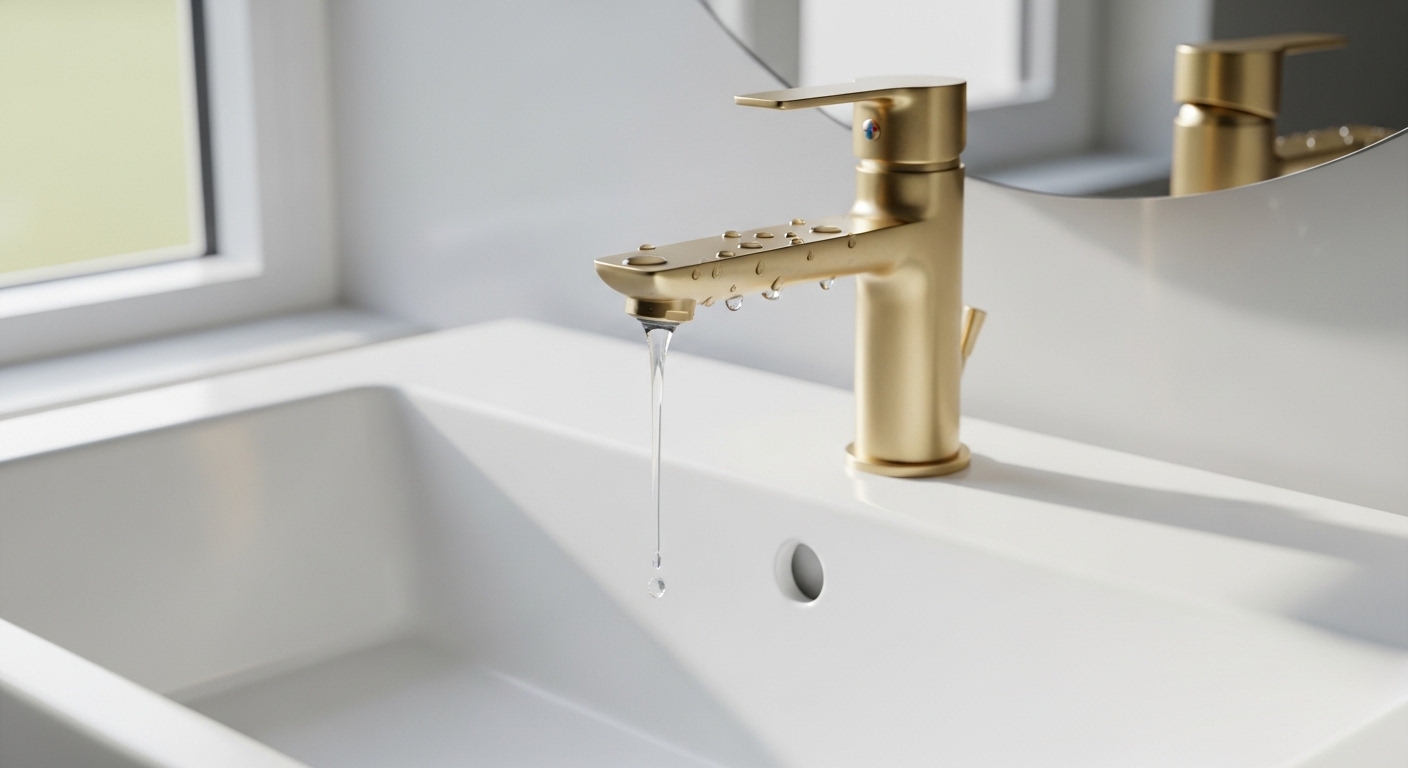
If you’ve been searching for the best basin tap brands UK homeowners actually rate — not the ones with the biggest ad budget — the honest answer is that five or six names come up again and again: Grohe, Hansgrohe, Bristan, Vado, JTP and Roper Rhodes. They dominate UK bathrooms for good reasons: WRAS approval, ceramic disc cartridges, finishes that survive limescale, and the right spout heights and pressure ratings for British plumbing. Below, we break down who each brand is really for, how they compare on price and warranty, and how to pick the one that fits your water pressure and budget.
Which basin tap brands are the most reliable in the UK?
The most reliable basin tap brands in the UK are Grohe, Hansgrohe and Bristan — all three use German or UK-engineered ceramic disc cartridges that resist drips far longer than cheap rubber-washer valves. Grohe and Hansgrohe lead on premium build; Bristan leads on reliable value with a strong UK service network.
Reliability in a basin tap comes down to three things: the cartridge, the body, and the finish. A ceramic disc cartridge (two polished ceramic plates that slide against each other) is the part that decides whether your tap drips in three years or fifteen. Solid brass bodies resist corrosion far better than the zinc-alloy bodies you find in budget no-name taps. And a quality PVD or chrome finish is what keeps a tap looking new in a hard-water area instead of pitting and flaking.
Here’s how the major UK brands stack up across the things that actually matter:
| Brand | Typical price (mono basin mixer) | Origin / heritage | Cartridge | Guarantee | Best for |
|---|---|---|---|---|---|
| Grohe | £90–£250 | German, est. 1936 | Grohe SilkMove ceramic | 5 yrs (often extendable) | Premium reliability |
| Hansgrohe | £110–£300 | German, est. 1901 | Ceramic disc | 5 yrs (15 on some ranges) | Design + longevity |
| Bristan | £35–£120 | UK, est. 1977 | Ceramic disc | 5 yrs | Value + UK support |
| Vado | £70–£200 | UK, est. 1989 | Ceramic disc | Up to 15 yrs | Mid-range design |
| JTP | £45–£150 | UK supplier | Ceramic disc | 5–10 yrs | Modern styles, value |
| Roper Rhodes | £40–£130 | UK, Bath-based | Ceramic disc | Up to 10 yrs | Affordable quality |
If you only remember one thing: any of these six will outlast a £15 supermarket tap many times over, and all carry WRAS approval, which we’ll explain next.
What is WRAS approval and does my basin tap really need it?
WRAS approval means a tap has been independently tested to confirm it won’t contaminate your drinking water and meets UK Water Supply Regulations. While it isn’t strictly illegal to fit a non-approved tap, you should always choose a WRAS-approved basin tap in the UK — it’s effectively the baseline standard plumbers and building control expect.
WRAS (the Water Regulations Advisory Scheme) checks materials, backflow prevention and lead content. Every brand in our table above sells WRAS-approved basin mixers as standard. Where it matters most is with cheap imported taps sold on marketplaces — many use materials that can leach into water or fail backflow rules. For a fixture that feeds water you’ll brush your teeth with, this isn’t a corner worth cutting.
- Check the listing for the WRAS logo or the words “WRAS approved.”
- Confirm the cartridge type — ceramic disc, not rubber washer.
- Look for solid brass body construction rather than unspecified “metal.”
- Match the pressure rating to your home (more on that below).
How do I match a basin tap to my home’s water pressure?
Match your basin tap to your water pressure by checking whether your system is high-pressure (combi boiler or unvented cylinder, usually 1.0 bar or more) or low-pressure (gravity-fed tank in the loft, often 0.1–0.5 bar). Most UK basin taps need a minimum of 0.5 bar; if you have a gravity-fed system, look specifically for “low pressure” taps rated from 0.1 or 0.2 bar.
This is the single most common reason a brand-new tap disappoints UK buyers: the tap is fine, but it was never designed for the home’s pressure. A high-flow designer spout fitted to a low-pressure gravity system will dribble; a tight low-pressure aerator on a high-pressure combi can spray everywhere.
Here’s the quick rule of thumb for British plumbing:
- Combi boiler or unvented cylinder? You have high pressure — almost any tap works, including high-flow designer models.
- Cold water tank in the loft feeding the bathroom? You’re likely gravity-fed and low pressure — buy a tap explicitly rated for low pressure (0.1–0.3 bar).
- Not sure? Measure the vertical distance from the bottom of your loft tank to the basin tap. Every 1 metre of height ≈ 0.1 bar.
Grohe, Hansgrohe and Vado clearly state minimum pressure on every product; Bristan and JTP both publish dedicated low-pressure ranges. If you live in a flat with a combi, you can essentially ignore pressure and choose on looks and budget. If you’re in an older house with a tank, pressure should be your first filter, before brand or finish.
What’s the best basin tap brand for under £100?
For under £100, Bristan is the best all-round basin tap brand in the UK — you get a WRAS-approved ceramic-cartridge mono mixer with a 5-year guarantee and genuine UK spares support, usually in the £40–£80 range. JTP and Roper Rhodes are excellent alternatives if you want more contemporary styling at a similar price.
The under-£100 bracket is where most UK bathroom refreshes actually happen, and the good news is that you don’t have to compromise on the parts that matter. A Bristan mono basin mixer at £55 uses the same fundamental ceramic disc technology as a £200 designer tap — the price difference goes into finish quality, spout design and brand cachet, not basic function.
Where the premium brands pull ahead under £100 is harder: Grohe and Hansgrohe rarely have full basin mixers at this price, though their entry ranges (Grohe Start, Hansgrohe Logis) sometimes dip just over £80–£100 on sale and are worth grabbing. If you want that German engineering on a budget, watch those entry lines.
If you’re weighing finishes at this price point, brushed and matt options have become hugely popular — but they need a little care to stay looking sharp. Our guide on how to protect faucet finishes from scratches is worth a read before you commit, especially for matt black and brushed brass, which show wear differently than chrome.
Chrome, brushed brass or matt black — which basin tap finish lasts longest in hard water?
In hard-water areas, polished chrome lasts longest and hides limescale best because it’s easy to wipe clean and doesn’t show water spots as harshly as dark finishes. Brushed brass and brushed nickel are excellent mid-choices, while matt black looks stunning but shows limescale and water marks the most, demanding regular wiping.
Most of the UK sits in a hard or very hard water zone — London, the South East, East Anglia and much of the Midlands all have high mineral content. That limescale is the real enemy of a basin tap’s appearance, not the tap quality itself.
| Finish | Hard-water performance | Maintenance | Style |
|---|---|---|---|
| Polished chrome | Excellent — hides spots | Low — quick wipe | Classic, universal |
| Brushed nickel | Very good | Low–medium | Warm, understated |
| Brushed brass | Good | Medium | Warm, on-trend |
| Matt black | Fair — shows scale | High — wipe daily | Bold, modern |
| Polished nickel | Very good | Medium | Premium, soft sheen |
A quality PVD (physical vapour deposition) coating dramatically improves how a coloured finish holds up — it’s far more scratch- and tarnish-resistant than electroplating. Grohe, Hansgrohe and Vado use PVD on their coloured ranges; it’s worth confirming before you buy a brass or black tap. If you love the warm metallic look but want maximum longevity, polished nickel is a brilliant middle ground — we cover it in depth in our guide to whether a polished nickel faucet bath setup is worth it. And if you’re drawn to the luxe end, the question of whether a deVOL brass faucet is worth the splurge covers what you’re really paying for with premium brass.
Are expensive German brands like Grohe and Hansgrohe actually worth it?
Yes, if you plan to keep the tap 10+ years or want the smoothest handle feel and best finish durability — Grohe and Hansgrohe genuinely outperform budget brands on cartridge longevity and coating quality. But for a rental, a quick refresh, or a low-traffic guest bathroom, a Bristan or JTP tap delivers 90% of the experience at a third of the price.
What you’re paying for with the German brands is real engineering, not just branding. Grohe’s SilkMove cartridge has a noticeably smoother, lighter action that doesn’t degrade over years of use. Hansgrohe’s finishes resist scratching and tarnishing better in independent abrasion testing. Both offer generous spares availability a decade later — which matters, because the most sustainable tap is one you can repair rather than replace.
That said, “worth it” depends entirely on context. In a main family bathroom used six times a day, the premium pays for itself in fewer drips and a tap that still feels good in year eight. In a downstairs cloakroom used twice a week, you’ll never notice the difference, and the money is better spent elsewhere. Be honest about how hard the tap will work before you spend £250 on it.
Mono mixer, two-taphole or wall-mounted — which basin tap type should I buy?
Choose a mono basin mixer (single tap, single hole) for most modern basins — it’s the easiest to fit, gives you blended temperature control, and suits 95% of UK basins. Pick a 3-hole or two-taphole set only if your basin already has multiple holes, and wall-mounted taps only for countertop basins where the tap rises from the wall behind.
The type is dictated as much by your basin as your taste. Look at how many tap holes your basin has before you shop — retrofitting holes into ceramic is fiddly and risks cracking.
- Mono basin mixer: One hole, one lever. The default choice, easiest install, best for combi/high-pressure homes.
- Two-taphole / pillar taps: Separate hot and cold. Traditional look, often needed for period or heritage basins.
- 3-hole basin set: Two handles plus central spout. For wider basins with three pre-drilled holes.
- Wall-mounted mixer: Spout and lever emerge from the wall. Striking with countertop basins, but needs the valve buried in the wall — plan it before tiling.
- Tall / countertop basin mixer: A high spout designed to reach over a vessel basin that sits on top of the counter.
If you’re swapping like-for-like and just want a tidy upgrade, a mono mixer matching your existing single hole is the no-drama choice. If you ever do hit a drip down the line, plenty of basin tap leaks are DIY-fixable — our walkthrough on how to fix a leaky two-handle faucet without calling a plumber covers the cartridge and washer swaps that solve most issues.
Where should UK buyers actually buy their basin taps?
Buy from a specialist bathroom retailer or the brand’s own approved stockists rather than unbranded marketplace listings — you get genuine WRAS-approved stock, valid guarantees, and access to spare cartridges later. Major UK sheds and bathroom specialists all stock the brands above, and prices for the same model can vary by 20–30%, so it pays to compare.
One word of caution on marketplaces: there’s a flood of near-identical “designer” basin taps from unbranded sellers that copy the look of Grohe or Vado at a fraction of the price. They often lack WRAS approval, use zinc bodies, and have no spares path — when the cartridge fails in two years, the whole tap goes in the bin. If you’ve ever compared kitchen mixers at the big sheds, the same logic applies; our look at white kitchen mixer taps B&Q shoppers compare shows how to read past the showroom finish to the actual spec.
FAQ
What is the most reliable basin tap brand in the UK?
Grohe and Hansgrohe are the most reliable premium basin tap brands in the UK thanks to their ceramic disc cartridges and durable finishes, while Bristan is the most reliable value brand with strong UK aftercare. All three rarely drip within their guarantee period when fitted correctly to a compatible pressure system.
How much should I spend on a good basin tap?
Budget £40–£80 for a solid, WRAS-approved ceramic-cartridge mono mixer from Bristan, JTP or Roper Rhodes that will last 10+ years. Spend £90–£250 if you want premium Grohe or Hansgrohe engineering, smoother handle action and the best finish durability for a high-traffic main bathroom.
Do all basin taps fit all basins?
No. Check how many tap holes your basin has first — a mono mixer needs one hole, a 3-hole set needs three, and pillar taps need two. Also confirm the tap’s minimum pressure rating matches your system, since a high-flow tap on a low-pressure gravity system will only trickle.
Are matt black basin taps a bad idea in hard-water areas?
They’re not a bad idea, but they need more upkeep. Matt black shows limescale and white water spots more than chrome, so in hard-water regions like London and the South East you’ll need to wipe the tap dry regularly. A quality PVD-coated black finish from a brand like Vado or Grohe holds up far better than a cheap painted one.
What’s the difference between a basin tap and a basin mixer?
A “basin tap” is the general term for any tap on a washbasin, while a “basin mixer” specifically blends hot and cold water through a single spout and lever. Traditional separate hot and cold pillar taps are basin taps but not mixers; almost every modern single-lever basin tap sold in the UK is a mono basin mixer.
How long should a quality basin tap last?
A quality WRAS-approved basin tap with a ceramic disc cartridge should last 10–15 years, and often longer if you replace the inexpensive cartridge when it eventually wears. Premium brands like Hansgrohe back some ranges with guarantees up to 15 years, reflecting that expected lifespan.
A note on how we compare basin tap brands
About the author: This guide was written by Avovida’s fixtures editorial team, who specialise in faucets, basin mixers and bathroom fittings. We assess taps the way a fitter and a homeowner would — on cartridge type, body material, pressure compatibility, finish durability in hard water, WRAS approval and real guarantee terms — rather than on marketing claims. Avovida is an independent specialist in faucets and bathroom fixtures at avovida.net, and we reference manufacturer testing, WRAS certification and published warranty documents in every brand comparison. Recommendations here are based on widely available UK product specifications current to 2026; always confirm a specific model’s pressure rating and WRAS status on the listing before you buy.