
Over the past few years, the deep adjustment in the real estate industry has acted like a row of dominoes, triggering chain reactions across upstream and downstream industries such as building materials, home furnishings, and sanitary ware. When “stock competition” became a buzzword, and as the incremental dividends from sales channels gradually faded, the outside world inevitably grew increasingly worried about the future of the sanitary ware industry—has this traditional manufacturing sector, so deeply tied to real estate, truly hit its growth ceiling and entered a “sunset” phase?
But then we saw that on June 24, at the “2026 World Brand Conference and China’s 500 Most Valuable Brands Launch” hosted by the World Brand Lab, Jomoo Group once again made the list alongside Tencent, Huawei, Haier, China Mobile and other top-tier leading Chinese brands, ranking first in the home furnishing and sanitary ware industry for the 16th consecutive year, with its brand value even breaking through the 200-billion mark for the first time, reaching 217.569 billion yuan. This weighty report card is not only a powerful rebuttal to the “sunset theory,” but more like a beam of light piercing through the haze, illuminating the path forward for the transformation and upgrading of China’s sanitary ware industry.
With the posture of a front-runner, Jomoo has found a code for “breaking through against the tide” for China’s traditional manufacturing industry amid the red ocean of stock competition.
Part 01
The Competitive Logic of the Stock Market Is Being Reconstructed,
Currently, the global sanitary ware industry is undergoing unprecedented structural transformation. Sluggish global consumption, compounded by the real estate downturn cycle, has pushed the industry fully into a stage of stock competition, with the engine of market growth shifting from “incremental expansion” to “deep cultivation of existing stock.”
The international sanitary ware giants that long occupied the top of the pyramid are now facing the awkward predicament of collective growth stagnation. Relevant data shows that the “century-old brand” Hansgrohe has seen its global sales decline for 2 consecutive years; Kohler’s global profit margin is also declining further; and TOTO’s 2025 financial report shows that the company’s 2025 revenue in the Chinese market fell 18% year-on-year. By contrast, Jomoo’s brand value was 15.276 billion yuan in 2016, broke through 50 billion to reach 50.578 billion yuan in 2021, and this year has even crossed the 200-billion threshold to 217.569 billion yuan, achieving exponential growth over the course of 10 years. Not only that, but Jomoo’s products across multiple categories have already topped global and domestic sales rankings.
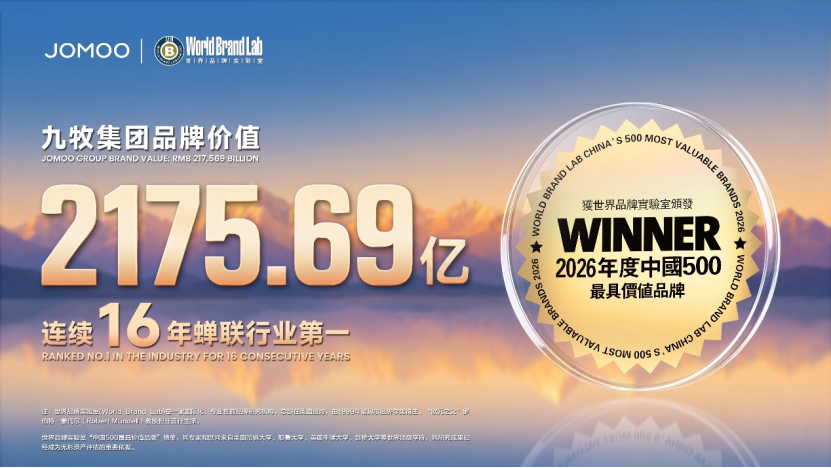
Jomoo Group’s brand value breaks through 200 billion yuan
Behind this contrast of cold and hot lies a fundamental reconstruction of the competitive logic of the sanitary ware industry. As the industry enters the stage of deep cultivation of existing stock, the competitive focus has shifted to intelligent innovation and rapid response to user scenarios. Many international brands have relied too heavily on traditional manufacturing advantages and have been slow to position themselves in the new intelligent track, giving domestic brands room to reconstruct the value coordinates.
The leap of Jomoo’s 200-billion brand value and the growth of its market share are not merely a simple grab for market share. The deeper significance lies in the fact that it has broken the industry’s original stratified pattern of “foreign brands at the high end, domestic brands at the low end.”
Part 02
Anchoring the Top-Level Strategy of “Technological Sanitary Ware, World Jomoo,”
If the leap in brand value is the towering mountains above the sea surface, then the strategic layout beneath the water is the most solid foundation of Jomoo’s counter-trend growth. Back in 2023, Jomoo Group officially proposed its core strategy of “Technological Sanitary Ware, World Jomoo,” fully transforming toward a technology-driven ecosystem platform. This long-term strategic layout has also become the core driver supporting the continued rise of the brand’s value.
On the R&D side, Jomoo invests no less than 10% of its sales revenue in R&D every year, a ratio that is absolutely leading in the global sanitary ware industry. Relying on 16 R&D centers worldwide and a high-caliber R&D team of over 5,000 people, Jomoo has mastered a large number of core technologies in the field of intelligent sanitary ware, amassing a technological reserve of more than 20,000 patents.
Jomoo’s Green Lights-Out Factory
In the field of intelligent manufacturing, Jomoo has laid out 15 high-end digital-intelligent factories around the world, among which the “Jomoo Smart Toilet Green Lights-Out Factory” is a benchmark within the industry, achieving full-process automation and digitalization from production to logistics, greatly enhancing production efficiency and product quality.
In terms of multiple brands, through the acquisition of international top luxury brands such as France’s THG and Germany’s Poggenpohl, Jomoo has quickly completed its puzzle in the luxury sanitary ware field. Combined with its own brands Jomoo JOMOO and Xiaomu Sanitary Ware, it has formed a full-tier brand matrix covering luxury, high-end, mass-market, and young demographics, greatly satisfying the diverse needs of consumers across different circles.
In terms of global layout, Jomoo implements a “one country, one strategy” localized operation approach: establishing a flagship showroom in Hanoi, Vietnam, an experience center in Riyadh, Saudi Arabia, and ten high-end stores in Europe, setting up a Southeast Asia regional operations headquarters, with business covering more than 120 countries worldwide, building millions of offline sales outlets and more than 10,000 high-end brand experience stores. Rather than engaging in simple product exports, it deeply takes root in regional markets. Jomoo has successfully shed the shallow “go global” model of early foreign-trade enterprises that “only sold products,” shifting toward building an integrated living ecosystem of brand, service, and operations around the world.
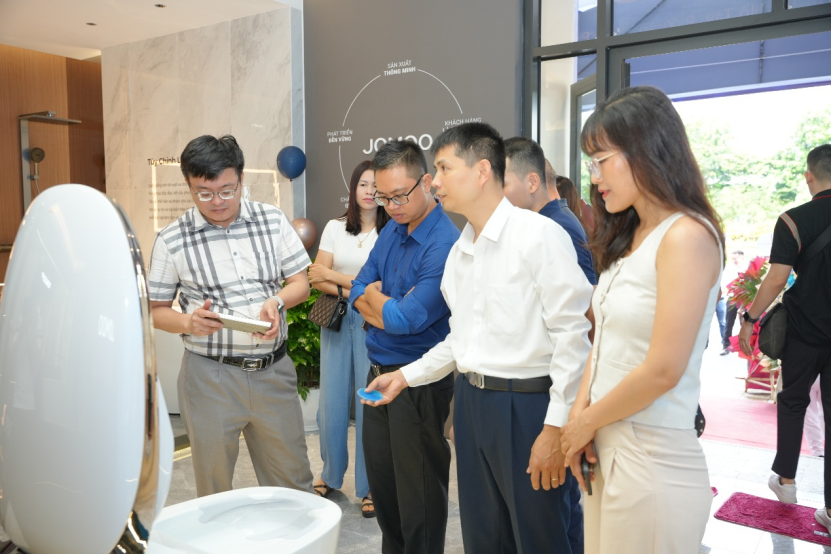
Jomoo Implements Its Global Layout
Unlimited R&D investment, intelligent manufacturing building a solid foundation, multiple brands covering stratified markets, localized deep cultivation worldwide……From this series of long-termist strategic layouts, it is not hard to see that Jomoo has completely bid farewell to the old script of the traditional sanitary ware industry that relied on cost competition and scale expansion, shifting toward a new home field where technology shapes brand premium.
Part 03
The Jomoo Model,
Returning to the sanitary ware industry, Jomoo’s ability to make the list alongside top-tier leading Chinese brands as one of “China’s 500 Most Valuable Brands” is clearly not merely the glory of a single enterprise; it is more like a clarion call for the entire Chinese sanitary ware industry to break through upward.
Over the past few decades, domestic sanitary ware brands generally adopted the model of low-price volume sales or OEM contract manufacturing, lacking independent technology and brand voice, and were stuck at the bottom of the “smile curve” in the global industrial chain.
But as the consumer market upgraded and iterated and the global trade environment grew increasingly complex, this low-price model dependent on cost advantages saw its growth space severely squeezed, leading to serious price involution and profit losses in the industry.
Jomoo Breaks Through with Technological Innovation
However, crises often also breed turning points. Especially at present, the market environment is undergoing profound changes. The wave of AI intelligence is sweeping the globe; cultural confidence in domestic brands is awakening, and Chinese elements are increasingly taking to the international stage; and global living consumption concepts are upgrading, placing higher demands on the health, intelligence, and environmental attributes of products. The overlay of these three waves has created a rare window of opportunity for Chinese sanitary ware brands to shed the low-end label and overtake on the curve.
As a pioneer in breaking through the industry, Jomoo has provided a complete and actionable methodology for sanitary ware brands to break out against the tide: establishing product differentiation through self-developed core technologies, seizing stratified market demand through precise positioning, expanding market increments through diversified channel layouts, and achieving the leap from “going global” to “going local” through deep localized operations.
At present, China’s sanitary ware industry does not lack products. From basic sanitary fixtures such as faucets and toilets, to integrated AI full-bathroom suites; from affordable single items to top-luxury private-residence custom sanitary ware—whether in terms of category or production capacity, everything has already become greatly enriched. This time, Jomoo’s milestone of its brand value breaking through 200 billion not only greatly boosts the morale of the national sanitary ware industry’s collective breakthrough, but also provides a mature and vivid reference sample for the sanitary ware industry’s journey toward globalization.
As more and more Chinese sanitary ware brands bid farewell to extensive growth and join the ranks of high-quality development driven by technology and led by brands, China is bound to move from being a major sanitary ware manufacturing nation to a strong sanitary ware brand nation, occupying a more important position in the global sanitary ware industry landscape.
Welcome to follow World Sanitary Ware’s official video account ↓↓↓
Originally published in WeChat by Wei Yu Xin Wang on 2026-06-29. Translated and edited for English-language readers.