
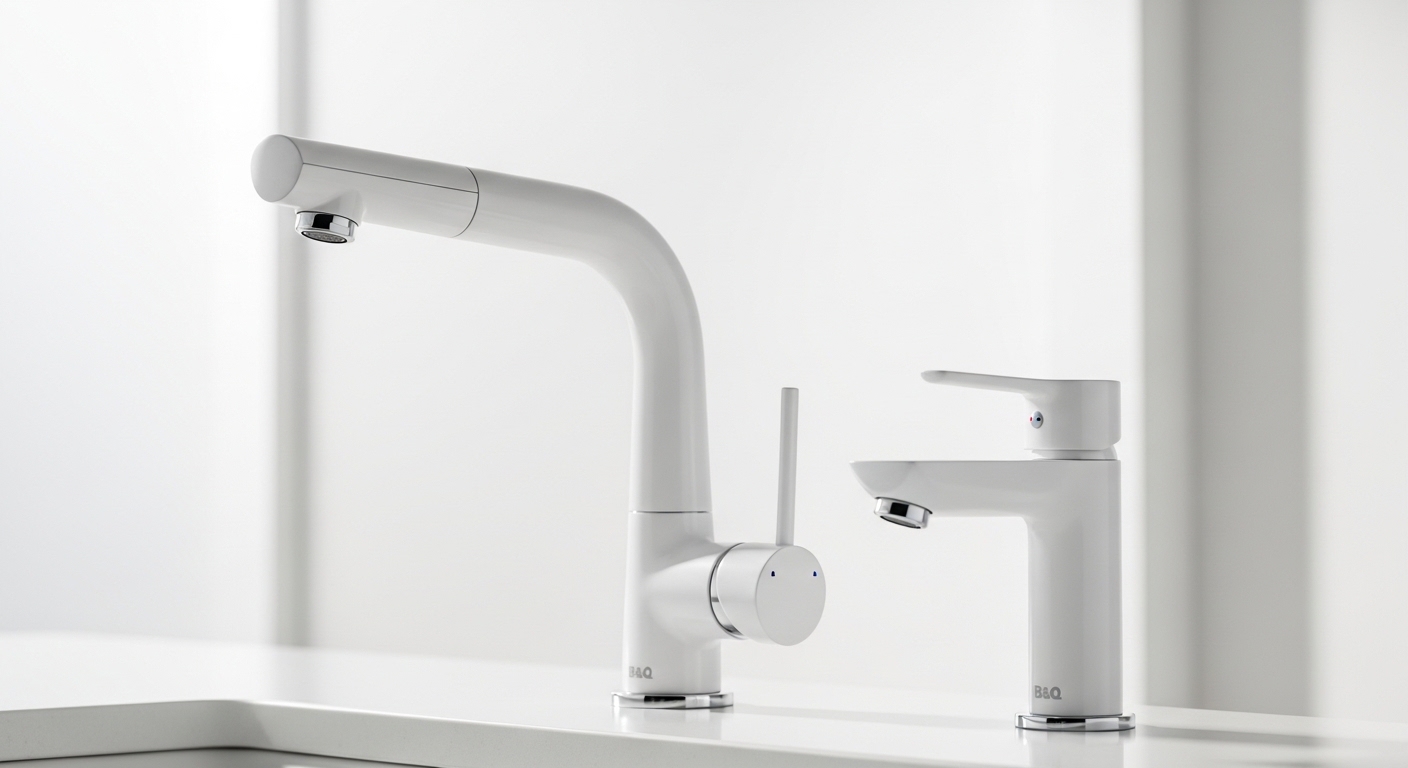
If you’ve been searching for white kitchen mixer taps b&q style listings, you already know the look you want: a crisp, contemporary faucet that pops against a stone or wood countertop and ties together a bright, airy kitchen. The hard part isn’t the color — it’s separating a tap that photographs well from one that actually performs at the sink for the next decade. White finishes are beautiful, but they expose flaws faster than chrome, so the engineering underneath the coating is what you’re really buying. This guide walks you through every decision a careful shopper makes before checkout, from valve cartridges to spout height, so you end up with a faucet you love using, not just looking at.
At Avovida we test and write about faucets for a living, and white kitchen mixers are one of the most-returned categories in the entire fixture market — almost always for reasons that were predictable before purchase. Let’s make sure that doesn’t happen to you.
Why White Kitchen Mixer Taps B&Q Buyers Should Compare Before Adding to Cart
Big-box retailers like B&Q are a great place to gauge popular styles and price brackets, but the in-store and on-page information is usually thin on the details that decide long-term satisfaction. When people search for white kitchen mixer taps b&q, they’re typically comparing two or three lookalike models that differ enormously in cartridge quality, coating durability, and warranty terms — none of which is obvious from a thumbnail.
A white kitchen mixer tap is a single-fitting faucet that blends hot and cold water through one body and, in most modern designs, one lever. “Mixer” simply means hot and cold are combined internally rather than coming from two separate pillar taps. The white part is a surface treatment applied over brass or stainless steel, and the way that treatment is applied is the single biggest predictor of how the tap will age. So before you compare prices, compare construction.
Here’s the mindset shift: don’t shop for the whitest photo. Shop for the most durable white finish at a flow rate and spout shape that fits your sink. Get those three right and the aesthetics take care of themselves.
What Actually Makes a Kitchen Mixer Tap “White”
Not all white faucets are created equal. The word “white” on a product page can describe three very different manufacturing processes, and they don’t wear the same way. Understanding them is the fastest way to dodge a tap that yellows, chips, or peels within a year.
Powder-Coated White
Powder coating is an electrostatically applied dry pigment that’s baked onto the metal body in an oven. Done well, it produces a thick, even, impact-resistant layer that resists chipping better than paint. It’s the most common method in the mid-range and the best balance of cost and durability. The risk is thin or uneven application on budget units, which shows up as chalky edges around the spout tip and lever.
Ceramic-Glazed and Porcelain-Style White
Premium white taps sometimes use a fired ceramic or porcelain-style glaze for a deep, glassy white that resembles fine dishware. It’s the most scratch- and stain-resistant of the white finishes and won’t fade under UV from a sunny window. The trade-offs are price and weight, plus a hard surface that can show a chip rather than a scuff if struck by a heavy pot.
Enamel and Lacquer White
Lower-cost taps may use a sprayed enamel or clear lacquer over white paint. These look great out of the box but are the most likely to discolor near the hot outlet and to dull where a dish brush or sponge constantly rubs. If a price looks too good for a “white kitchen mixer,” this is usually why.
Matte White vs. Gloss White: A Quick Comparison
Beyond the manufacturing method, you’ll choose between a matte and a gloss surface. This is partly taste and partly maintenance. Matte hides water spots and fingerprints but can hold onto soap film in hard-water areas; gloss wipes clean instantly but shows every droplet. Here’s how the common white kitchen mixer options stack up.
| Finish Type | Durability | Hard-Water Spotting | Typical Price Band | Best For |
|---|---|---|---|---|
| Matte Powder-Coated White | High | Low (hides spots) | $$ | Busy family kitchens, modern decor |
| Gloss Powder-Coated White | High | Medium | $$ | Easy daily wipe-downs |
| Ceramic / Porcelain-Style White | Very High | Very Low | $$$ | Premium, heritage, and statement kitchens |
| Enamel / Lacquer White | Low to Medium | Medium | $ | Short-term, rental, or budget refresh |
| White + Chrome Two-Tone | High | Medium | $$–$$$ | Transitional kitchens, mixed hardware |
If you take one thing from this table: a matte or ceramic white powder coat is the sweet spot for most kitchens, while sprayed lacquer is the finish most likely to disappoint. Whichever you pick, the coating still has to survive daily contact with pans, rings, and dish brushes — which is why finish protection matters as much as finish choice. We cover that in detail in our guide on how to protect faucet finishes from scratches, and the advice applies doubly to white because every mark is more visible.
Key Features to Check Before You Buy a White Kitchen Mixer
Color aside, a kitchen mixer is a working machine. These are the specifications that separate a tap you’ll be happy with from one you’ll quietly resent every time you fill a pot. Run through this checklist on any listing — including B&Q-style ones — before you commit.
- Ceramic disc cartridge: This is the heart of the tap. Ceramic discs deliver smooth lever action and stop drips far longer than rubber-washer designs. Look for a stated cartridge diameter (35mm or 40mm is common) and a replaceable cartridge.
- Spout height and reach: Measure from the deck to the bottom of the spout (clearance for filling pots) and the horizontal reach to the center of your drain. A spout that lands behind the drain splashes the counter.
- Swivel range: A 360° swivel is ideal for double-bowl sinks; 180° is fine for a single bowl against a wall.
- Flow rate and aerator: An aerated stream around 1.8–2.2 GPM gives good rinsing power without excessive splash, and an aerator reduces splashback on a shallow sink.
- Pull-out or pull-down spray: A retractable spray head adds reach for rinsing and cleaning; check that the hose retracts smoothly and the white finish extends onto the spray head.
- Connection type and hose length: Most modern mixers use flexible braided tails with standard fittings — confirm they reach your shutoff valves.
- Deck thickness compatibility: Confirm the mounting hardware fits your countertop or sink ledge thickness.
- Water pressure rating: Some imported designs need a minimum bar/psi to perform; verify yours matches your home’s supply.
Tick those boxes and you’ve already filtered out the majority of returns-bound taps. The cartridge and the finish are the two items worth paying extra for — everything else is comfort and convenience.
Spout Styles and How They Fit Your Sink
White looks dramatically different depending on the spout silhouette, and the silhouette also dictates function. A tall gooseneck reads modern and makes filling tall pots easy, but it can splash in a shallow sink. A lower C-spout is gentler on splash and suits a deep single bowl. A pull-down spray spout offers the most flexibility but adds visual bulk. Match the shape to how you actually use the sink: heavy pot-fillers and produce-rinsers benefit from height and a spray head, while small kitchens with shallow basins do better with a contained, lower arc.
For double-bowl sinks, prioritize swivel range and reach so the stream can cover both basins. For a window-front installation, check the open height of the lever — a high-arc tap with a top-mounted handle may not clear a low window sill when fully open.
Water Quality, Filtration, and Your White Tap
White finishes make hard-water residue and limescale more visible than darker metals, so water quality is part of the buying decision, not an afterthought. In hard-water regions, mineral spotting around the aerator and base is the most common complaint about any light-colored faucet. A point-of-use filter or a regular descaling routine keeps a white tap looking new and protects the cartridge and aerator from clogging.
If you’re already rethinking your kitchen water, it’s worth pairing the new tap with filtration. Our complete buyer’s guide to wide faucet water filters for oversized spouts explains how to match a filter to a larger or pull-out kitchen spout, and if you live somewhere with notably hard or heavily treated supply, our 2026 tap water filter buyer’s guide covers choosing a system for cleaner, better-tasting water at the kitchen faucet. Cleaner water means fewer mineral deposits — which means your white finish stays bright with less scrubbing.
How to Install a White Kitchen Mixer Tap
Most single-hole white kitchen mixers are a manageable DIY job with basic tools, though the white finish demands a little extra care to avoid scuffs during fitting. Here’s the standard sequence.
- Shut off the water at the under-sink isolation valves and open the old tap to relieve pressure.
- Disconnect and remove the old tap, loosening the supply tails and the mounting nut from below.
- Clean the deck so the new gasket seats flat and clear of old sealant or debris.
- Fit the new tap, threading the braided hoses through the hole and seating the rubber gasket or O-ring; protect the white spout with a soft cloth while you work.
- Tighten the mounting nut hand-tight plus a quarter turn — over-tightening can crack ceramic-style coatings.
- Connect the supply hoses to the correct hot and cold valves, snug but not forced.
- Restore water slowly, check every joint for leaks, and run both hot and cold to flush the aerator.
If your supply lines are old or you’re moving from two pillar taps to a single mixer, budget for a plumber — the cost is small relative to protecting a premium white fixture and your cabinetry from a slow leak.
What to Expect on Price
White kitchen mixers span a wide range. Budget enamel/lacquer models sit at the bottom and are best treated as short-term or rental fixes. The reliable middle is occupied by matte and gloss powder-coated taps with ceramic cartridges — this is where most shoppers should aim. Ceramic and porcelain-style white taps command a premium for their durability and depth of color, and pull-down spray models add cost for the convenience. Remember that the cartridge and finish quality, not the brand sticker, drive long-term value; a mid-priced tap with a great cartridge and a real warranty beats a pricier one with neither.
About Avovida: Testing, Standards, and Warranty
Author note: This guide was written by the Avovida fixtures editorial team, who specialize in faucets, shower systems, and bathroom hardware. We bench-test cartridges for drip resistance, run finish-abrasion checks on coated taps, and evaluate spout reach and flow on real sink configurations rather than relying on manufacturer spec sheets alone.
Avovida is a dedicated faucet and bathroom-fixtures brand, not a general home store — our entire catalog and content library is built around getting taps, mixers, and finishes right. When we recommend a feature, it’s because we’ve seen how it behaves over repeated use. We advise buying white kitchen mixers that meet recognized plumbing and lead-safe drinking-water standards (look for compliance marks appropriate to your region), that ship with a clearly stated multi-year warranty on both the cartridge and the finish, and that offer replaceable parts so the tap can be serviced rather than scrapped. A faucet that’s certified, warrantied, and repairable is one you can trust at the heart of your kitchen.
FAQ
Are white kitchen mixer taps harder to keep clean than chrome?
Not necessarily — but they show different things. White hides the scratches and water spots that stand out on chrome, while chrome hides the soap film and limescale that can show on a matte white finish. A quick daily wipe and an occasional descale keep either looking great. In hard-water areas, a matte white or ceramic-glazed finish hides spotting best.
Do white finishes yellow or fade over time?
Quality powder-coated and ceramic-glazed white finishes resist yellowing and UV fading for years. The finishes that discolor are usually sprayed enamel or lacquer, especially near the hot-water outlet. Choosing a baked or fired finish and following good cleaning habits prevents almost all discoloration.
Can I find white kitchen mixer taps similar to B&Q listings elsewhere?
Yes. Big-box listings are a useful style and price reference, but comparable and often better-specified white mixers are widely available from specialist faucet brands. Compare the cartridge type, finish method, spout reach, and warranty rather than the photo, and you’ll find equivalent or superior taps across retailers.
What flow rate should a white kitchen mixer have?
For everyday kitchen use, an aerated flow around 1.8–2.2 GPM gives strong rinsing without excessive splash. Pull-down spray heads often add a higher-pressure spray mode for cleaning. If your home has low water pressure, confirm the tap’s minimum pressure rating before buying.
Will hard water damage a white tap?
Hard water won’t damage a quality finish, but the mineral spotting is more visible on light colors and can clog the aerator over time. Regular descaling and a point-of-use water filter keep both the appearance and the internal components in good shape, which is why we suggest pairing a white mixer with filtration in hard-water regions.
How long should a good white kitchen mixer tap last?
With a ceramic disc cartridge and a baked or fired finish, a well-made white kitchen mixer should perform for 10–15 years or more, especially if the cartridge is replaceable. Look for a multi-year warranty covering both the mechanism and the finish as a sign of build quality.