
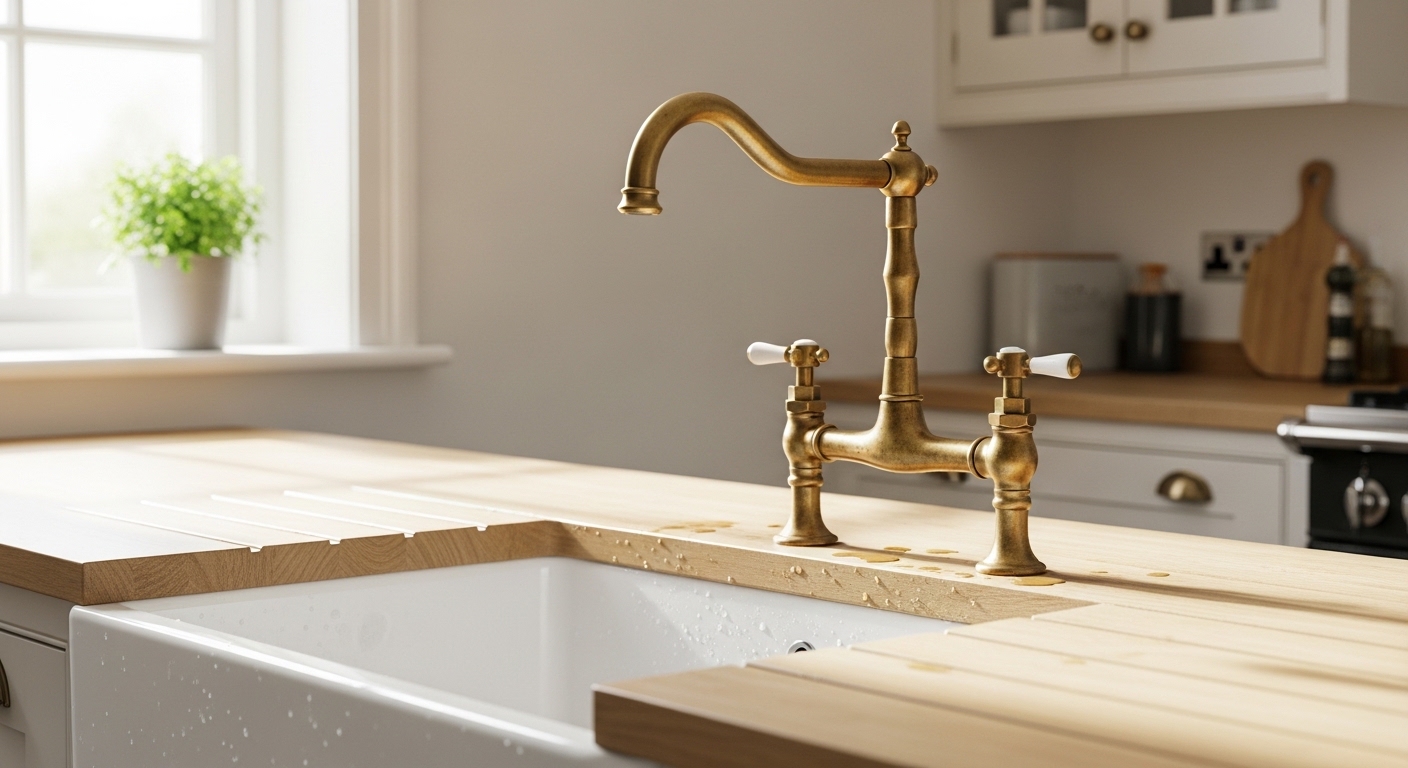
If you’ve been pricing out a brass faucet after seeing deVOL‘s aged-brass taps in a magazine kitchen, here’s the honest answer: the look is real, the quality is real, and so is the price tag. deVOL is the British cabinetmaker whose unlacquered “aged brass” tapware became the reference point for the whole farmhouse-meets-modern aesthetic, and a single deVOL or deVOL-partnered tap routinely lands between £300 and £700+ (roughly $400–$900). The good news for American shoppers: the specific finish everyone wants — warm, slightly antiqued brass that develops a patina — is available from several makers, including direct-to-consumer brands like Avovida, often at a fraction of that cost. The trick is knowing which specs actually create the deVOL look and which ones just inflate the price.
What exactly is a “deVOL brass faucet” and why does it look different?
A deVOL brass faucet is an unlacquered, solid-brass tap with an “aged” or “antiqued” surface treatment — meaning the raw metal is left exposed (no clear protective coating) so it darkens, mottles, and develops a patina with use. That living, slightly imperfect surface is the whole point, and it’s what separates this look from the flat, uniform “satin brass” or “champagne bronze” PVD finishes most big-box faucets use.
Three things create the deVOL effect:
- Unlacquered brass: No clear coat. Fingerprints, water, and air slowly age the metal. Over 6–18 months it shifts from bright gold to a deeper amber-bronze.
- Bridge or column-style architecture: deVOL leans on classic shapes — bridge mixers, lever or cross handles, swan-neck spouts — that read as period English rather than contemporary American.
- Heavy solid-brass construction: These taps have real heft. The weight comes from cast and machined brass bodies, not plated zinc.
If a faucet has a permanent, mirror-bright gold finish that never changes, it’s a lacquered or PVD “brushed brass” tap — a different (and totally valid) product, but not the deVOL living-brass look.
Is unlacquered brass or lacquered brass better for a busy kitchen?
For most busy kitchens, lacquered or PVD brass is the lower-maintenance choice, while unlacquered brass is the better choice only if you genuinely want the patina and won’t be annoyed by water spotting and uneven aging around the handles. There’s no universally “better” option — it’s about whether you see the patina as character or as a flaw.
Unlacquered brass ages fastest exactly where you touch it most: the handles, the spout tip, and anywhere water sits. Some people love that lived-in, antique look; others find the blotchiness frustrating in year one before it evens out. Lacquered and PVD finishes stay looking identical for years but can never give you that authentic patina, and if a lacquer coat ever chips, the repair is uneven.
| Finish type | Look over time | Maintenance | Best for | Typical price (US) |
|---|---|---|---|---|
| Unlacquered “living” brass (deVOL-style) | Patinas to amber/bronze, mottled | High — wipe dry or embrace patina; can re-polish | Authentic aged look, period kitchens | $200–$900 |
| Lacquered brass | Stays bright gold | Low — but lacquer can chip after years | Consistent shine, low effort | $120–$400 |
| PVD brushed/satin brass | Stays matte gold, very stable | Lowest — scratch & tarnish resistant | Modern kitchens, hard-use sinks | $150–$500 |
| Champagne bronze / warm bronze | Stable warm tone | Low | Softer, less yellow look | $150–$450 |
How much should a brass faucet really cost compared to deVOL?
You should expect to pay $150–$350 for a high-quality solid-brass faucet that delivers the deVOL look, versus $400–$900+ for deVOL’s own or deVOL-partnered tapware. The premium you pay deVOL is largely for the brand, the bespoke kitchen ecosystem, and UK design provenance — not necessarily for better internal components.
Here’s where your money actually goes, and where it doesn’t:
- Worth paying for: a solid-brass (not zinc) body, a German or proven ceramic disc cartridge, and a true unlacquered or quality PVD finish. These determine how the tap feels and lasts.
- Worth checking: flow rate (look for a faucet meeting the U.S. 1.8 GPM / WaterSense-friendly range), and whether replacement cartridges and aerators are easy to source.
- Not worth a huge premium: brand name alone, “designer” packaging, and showroom markup. A direct-to-consumer brand often uses the same Sedal or Kerox-class cartridge as a tap costing three times more.
If you’re comparing warm metal finishes more broadly, it’s worth reading our guide to the best oil rubbed bronze kitchen faucet with sprayer — oil-rubbed bronze and aged brass are the two finishes shoppers most often cross-shop, and the spec checklist is nearly identical.
Will a brass faucet tarnish, and how do I keep it looking good?
Yes — unlacquered brass will tarnish and patina by design, while lacquered and PVD brass resist tarnish for years. If you have an unlacquered tap and want to slow the aging, dry it after each use; if you want to embrace it, do nothing and let it darken. Either way, brass itself is naturally antimicrobial and won’t rust like steel.
A few practical care rules that apply to almost any brass tap:
- Skip abrasive cleaners and scouring pads. They scratch the surface and, on lacquered taps, breach the coating. Use mild dish soap and a soft cloth.
- To restore shine on unlacquered brass, a gentle brass polish or a lemon-and-baking-soda paste brings back the gold; stop polishing and it’ll patina again.
- Protect the finish from grit. Scratches are the one thing that ruins any faucet finish for good — our walkthrough on how to protect faucet finishes from scratches covers the cloths, cleaners, and habits that matter.
One myth to drop: hard water doesn’t “damage” brass, but mineral spotting is more visible on bright gold than on matte finishes. If you’re on hard water, a matte PVD brass or champagne bronze hides spots better than polished or unlacquered brass.
What’s the difference between a deVOL-style bridge faucet and a standard pull-down?
A bridge faucet has two separate hot/cold inlets connected by an exposed horizontal “bridge” above the deck and uses lever or cross handles, while a pull-down has a single body with a hose-fed sprayer head you pull out. deVOL’s signature look is the bridge (or a tall column mixer); the pull-down is the modern American workhorse.
Which one is right depends on how you actually use your sink:
- Choose a bridge or column brass faucet if you want the period aesthetic, have a large or farmhouse sink, and don’t mind a separate side spray (or doing without one).
- Choose a pull-down brass faucet if rinsing dishes, filling pots, and spraying down the basin is your daily reality. You can still get a warm brass finish on a pull-down.
Note that a bridge faucet usually requires two or three deck holes, so check your sink’s hole configuration before ordering. If you’re swapping out an old tap, our guide on how to remove an old kitchen faucet walks through measuring your existing setup so you don’t end up with mismatched holes.
Does Avovida make a brass faucet that gets the deVOL look for less?
Yes — Avovida builds solid-brass faucets in warm gold and aged-brass finishes designed to capture the deVOL aesthetic at a direct-to-consumer price, typically $150–$300. The construction priorities are the same ones we tell every shopper to insist on: a solid-brass body, a ceramic disc cartridge rated for 500,000 cycles, and lead-free waterways that meet U.S. drinking-water standards.
What you’re getting versus a premium import:
- Same functional core: ceramic disc cartridge, brass body, standard 3/8″ supply connections that fit U.S. plumbing.
- Finish honesty: finishes are labeled clearly as living/unlacquered or stable PVD, so you know whether your tap will patina or stay put.
- Easier service: aerators and cartridges follow common U.S. sizes, so replacements aren’t a transatlantic special order.
If you ultimately decide a major American plumbing brand gives you more peace of mind on parts availability, that’s a legitimate path too — our roundup of the best Delta bathroom faucet options covers warm-finish picks with wide dealer support, and the brushed nickel faucet with soap dispenser guide is useful if you’re weighing brass against a cooler, more forgiving finish.
How do I choose the right brass faucet for my kitchen or bathroom?
Match the faucet to three things in order: your sink’s hole configuration, your daily use (spray vs. fill vs. style), and your tolerance for patina. Get those right and the finish color is the easy part.
A quick decision framework:
- Count your deck holes. 1 hole = single-hole mixer or pull-down; 3 holes = widespread or bridge. A deck plate can cover extra holes but limits your style options.
- Decide spray vs. style. Heavy daily rinsing favors a pull-down; a showpiece bridge tap favors looks.
- Pick patina or permanence. Unlacquered for an evolving antique look; PVD for set-and-forget.
- Verify the internals. Solid brass body, ceramic disc cartridge, lead-free certification, and a warranty you can actually read.
For the bathroom specifically, the same brass-faucet logic applies, but scale and reach matter more on a vanity. A tall vessel-sink mixer needs a different spout height than a standard 4-inch centerset.
Author note & why you can trust this guide
Written by the Avovida fixtures team. Avovida is a U.S.-focused faucet and bathroom-fixtures retailer; our buyers spend their days comparing cartridges, finishes, and flow specs across dozens of suppliers, and our product editors install and live with sample taps before we recommend them. We’ve handled unlacquered brass long enough to know exactly how it ages in real kitchens — the blotchy month-three stage and the gorgeous year-two depth.
On standards and warranty: every brass faucet we’d recommend should meet lead-free safe-drinking-water requirements (NSF/ANSI 372 in the U.S.), use a ceramic disc cartridge cycle-tested by the manufacturer, and carry a clear warranty on both finish and function. Avovida-branded faucets are backed by a limited lifetime warranty on the cartridge and a multi-year finish warranty on stable PVD finishes (living/unlacquered finishes are warranted against defects, not against the patina they’re designed to develop). Always confirm the specific warranty terms on the product page before buying — that single check tells you more about a tap’s real quality than any marketing copy.
FAQ
Is a deVOL brass faucet actually solid brass all the way through?
deVOL’s tapware is solid brass, which is part of why it’s heavy and expensive. The thing to watch with cheaper imitations is “brass-look” zinc or plated bodies — always confirm “solid brass” construction, because that’s what gives the tap its weight, durability, and the ability to be polished if the finish is unlacquered.
Does an unlacquered brass faucet need special cleaning?
No special chemicals are required. Use mild soap and a soft cloth for everyday cleaning. If you want to revive the shine, use a dedicated brass polish or a lemon-and-baking-soda paste. To keep it bright longer, dry it after use; to let it patina, simply leave it alone. Avoid abrasive pads, which scratch the metal.
Will a brass faucet match my stainless steel sink and appliances?
Yes — warm brass against stainless or white is one of the most popular contemporary pairings, and it reads as intentional rather than mismatched. If you want the brass to feel grounded, repeat the finish elsewhere (cabinet hardware, a light fixture) so the tap doesn’t look like a lone accent.
Is brass safe for drinking water?
Modern brass faucets sold in the U.S. must use lead-free brass alloys and meet NSF/ANSI 372 standards for drinking-water safety. Brass is also naturally antimicrobial. The key is buying a faucet certified lead-free — reputable brands, including Avovida, state this on the spec sheet.
Can I get the deVOL look in a pull-down sprayer instead of a bridge faucet?
Absolutely. The deVOL aesthetic is mostly about the finish and warmth of the brass, not only the bridge shape. Several makers, including Avovida, offer aged or warm brass pull-down faucets, so you get the modern convenience of a retractable sprayer with the period-correct gold tone.
How long does a quality brass faucet last?
A solid-brass faucet with a ceramic disc cartridge can easily last 15–20+ years of daily use; the cartridge is the wear part, and on good faucets it’s inexpensive and easy to replace. The finish lasts as long as the tap on PVD versions, while unlacquered brass simply evolves rather than wears out.